Longform'd. I prossimi 10 anni (parte 2)
 

Come abbiamo già scritto, esattamente due settimane fa, commentare gli alti-e-bassi dei mercati, settimana per settimana, per noi investitori nella situazione attuale è totalmente inutile.

Ancora meno utile, se possibile, è perdere le proprie energie e la propria attenzione dietro alle Banche Centrali e alla massa (enorme) di stupidaggini che si scrivono e si dicono sul “prossimo rialzo dei tassi”, sul “pivot” e sul “picco dell’inflazione”.

In quante altre occasioni abbiamo letto i medesimi argomenti, nel 2022? Ricordate marzo? Maggio? Luglio? Settembre?

I fatti del 2022 dimostrano che “pivot” e “picco di inflazione” sono cose del tutto irrilevanti, nel 2022 e poi anche nel 2023, per la gestione di portafoglio: si tratta di fatti che NON ESISTONO, si tratta di PAROLE che circolano tra gli operatori di mercato (banche di investimento e promotori finanziari). Parole, non fatti.

I rendimenti, e rischi, degli asset finanziari NON dipendono da queste chiacchiere.

Nel 2022, e poi nel 2023 e nel 2024, rendimenti e rischi degli asset trattati sui mercati finanziari NON dipendono dalle Banche Centrali, dai Governi, e meno che mai dalla media a 200 giorni, da resistenze e supporti, dalle “probabilità di rimbalzo”, e meno ancora dal “posizionamento dei Fondi” oppure dal “livello di pessimismo degli operatori”.

Più che mai, oggi, solo i fatti determinano l’andamento futuro dei mercati. E proprio la settimana del 24-28 ottobre 2022 ne è un PERFETTO esempio.

Quella appena conclusa è una settimana ricca di fatti, fatti che ricorderemo ancora tra cinque oppure dieci anni. E non stiamo parlando del rimbalzo delle Borse che vedete sopra nei due grafici.

Vediamo di che cosa si tratta, mettendo i fatti di questa settimana nella prospettiva che è più utile per la gestione del portafoglio titoli (e quindi anche per i portafogli modello di Recce’d).

Facciamo alcuni passi indietro, e prendiamo la rincorsa.

La scelta (disastrosa, catastrofica, irresponsabile) sia dei Governi sia delle Banche Centrali del G7, nel 2020, è stata quella di reagire alla pandemia creando, alimentando ed infiammando una enorme illusione.

L’illusione della ricchezza.

Con la irresponsabilità che è tipica di chi sa che non verrà mai chiamato a pagare per i danni fatti, Governi e Banche Centrali dell’Occidente hanno infiammato le menti delle masse facendo credere a tutti che:

  • la ricchezza si crea schiacciando un bottone (parole testuali della Federal Reserve)

  • politiche basate sulla creazione di squilibri non hanno alcuna ricaduta negativa

  • il valore delle attività finanziaria, se siamo tutti d’accordo, più salire indefinitamente senza conseguenze

La storia economica del Mondo offriva, a questo proposito, insegnamenti preziosi. L’arroganza dei banchieri centrali e dei Governi ha fatto sì che quegli insegnamenti della storia fossero ignorati.

A distanza di due anni, ancora nessuno ammette: “ho sbagliato”. Ancora nessuno, ad oggi, ha il coraggio di spiegare il perché di quel disastroso errore, o meglio somma di errori.

I danni sono per tutti: tutti paghiamo il carburante, il pane, l’energia elettrica, i ricambi per le automobili, le rate del mutuo.

E siamo appena all’inizio.

Chiunque possieda una minima conoscenza dell’economia e dei suoi modi di funzionamento lo ha già capito: e qui ci riferiamo al negoziante ed all’imprenditore ed all’agricoltore e al direttore della ASL, e sicuramente non al professore universitario oppure al banchiere centrale oppure all’uomo di Goldman Sachs.

Lo stesso mercato finanziaria è chiarissimo, nei suoi segnali di questi ultimi mesi: i disperati e inutili tentativi dei banchieri centrali e dei Governi di “abbellire il porco” (put lipstick on a pig) diventano, ogni giorno che passa, sempre meno efficaci e più ridicoli. Sono invece vistose le crepe sui mercati, che ci annunciano quello che sta per accadere.

Parliamo dunque dei fatti, della realtà. Abbiamo seguito, per l’intera settimana, grazie al nostro Bollettino quotidiano The Morning Brief, gli utili trimestrali in uscita in particolare negli Stati Uniti.

I titoli che chiamano FAANG oppure Big Tech, come tutti i lettori sanno alla perfezione, sono stati il SOLO ED UNICO fattore che spiega il rialzo della Borsa USA, ovviamente negli anni della pandemia, ma pure prima, nel decennio precedente. Togliete quei titoli dall’indice S&P 500, ed oggi i guadagni risulterebbero pari a ZERO.

Non facciamo qui riferimento alle Borse europee, per il semplice fatto che le Borse europee NON SONO SALITE nel medesimo periodo: come si dice in gergo, è “denaro morto”.

I titoli cosiddetto FAANG, oppure FAAMG, oppure BIG TECH, hanno nel corso dell’ultimo decennio dato la direzione alla Borsa USA, facendone così la SOLA Borsa che è salita dopo la Grande Crisi Finanziaria del 2007 - 2009.

Ma non è tutto: I titoli cosiddetto FAANG, oppure FAAMG, oppure BIG TECH, hanno nel corso dell’ultimo decennio acquisito una dimensione (sia in termini di capitalizzazione di Borsa sia in termini di fatturato dell’Azienda) che rivaleggia con le dimensioni di alcuni Stati dell’Unione Europea.

In termini di influenza politico-sociale, quelle Aziende sicuramente oggi sono PIU’ importanti di alcuni Stati dell’Unione Europea.

La settimana che si è appena conclusa ci ha messo, proprio di fronte agli occhi, una realtà che per i meno informati è nuova, e che per tutti gli investitori consapevoli è drammatica: realtà così grandi, e così influenti, possono in sole 24 ore perdere il 20% del loro valore. Un quinto.

Questo significa che cosa: che avete appena visto, proprio sotto i vostri occhi, il Mondo cambiare nei suoi valori più grandi, nelle proprie dimensioni fondamentali. Il Mondo, rispetto a come era lunedì scorso, oggi è profondamente cambiato.

Non soltanto i valori di Borsa: anche il potere di influenza sociale e politica, le relazioni internazionali, la scala relativa di importanza.

Per tutti noi, e per tutti voi, come conseguenza, adesso diventa decisivo avere la capacità di immaginare un Mondo diverso da quello degli ultimi dieci anni, e proiettare su questo Mondo diverso credibili previsioni di rischio e rendimento per tutti gli asset finanziari.

Se no, come le fate le scelte di portafoglio? Tirando i dadi? Oppure illudendovi che “tutto rimane come era prima”?

Vogliamo anche oggi suggerire al lettore del sito di fare tutto quanto molto rapidamente: non c’è più tempo, il tempo è già esaurito. I fatti si succedono con grande rapidità, come sicuramente tutti ricordate.

Non ci sono dubbi: lo ricordano tutti gli investitori che investirono in AOL, America Online, quando era una delle Società a più grande capitalizzazione al Mondo. Oggi non esiste più.

Ricordate? In quegli anni, i promotori finanziari spiegavano che (con assoluta certezza) il Mondo andrà così e così, l’economia cambierà così e così, e chi ha una posizione dominante nel settore “dot.com” per sempre continuerà a guadagnare una montagna di soldi.

AOL non esiste più, purtroppo quel tipo di venditore porta-a-porta esiste ancora.

Per ora.

Se utilizzate il motore di ricerca Yahoo, scoprirete che la stessa Yahoo fu quotata nel 1996 più o meno a zero, ed aveva raggiunto i 110 dollari USA già a fine 1999, ovvero tre anni dopo.

Anche allora, nel dicembre 1999, quelli che oggi si fanno chiamare “consulenti finanziari” suggerivano, ai loro Clienti, di comperare Yahoo. Con i medesimi argomenti che abbiamo già visto per AOL.

Grazie alla “bolla della pandemia”, come vedete nel grafico qui sopra, Yahoo ha recuperato dai 20 dollari USA ai 44 dollari USA, ventidue anni dopo.

Ventidue anni dopo, e quindi oggi, l’indice americano della Tecnologia, che si chiama Nasdaq, grazie alla “bolla di tutto” della pandemia oggi vale più di 11 mila punti. Ma per voi investitori è utile ricordare che dai massimi del 2000 si è poi ritornati ai 5000 punti soltanto quindici anni dopo, nel 2015, e grazie alla più ampia operazione di politica monetaria della Storia, consistita nell’acquisto massiccio di titoli sui mercati finanziari e nella conseguente distorsione dei prezzi degli stessi titoli, la più ampia della Storia appunto.

Le probabilità che quella stessa operazione, di supporto e gonfiaggio dei mercati finanziari, si ripeta nei prossimi dieci anni sono pari a zero. E tutti voi sapete il perché (avendo appena letto del tasso di inflazione in Italia, ed avendo appena fatto rifornimento di carburante, latte, pane, eccetera).

Il tutto, tutto ciò che avete appena visto, sono fatti: voi investitori dovete essere capaci prima di analizzarli, e poi di tradurli in scelte operative sui vostri portafogli titoli. In una coerente strategia di investimento

Un primo suggerimento. Se avete dato retta a quelli che vi suggeriscono: “prendete lo smartphone, parlatene con gli amici, e poi fate da soli”, siete su una cattiva strada. Molto pericolosa, e per niente produttiva di risultati.

Come diceva qui sopra l’immagine: lasciate perdere.

Noi in Recce’d NON siamo in grado di garantire i risultati, ma almeno siamo in grado di evitare i gravi errori di valutazione, che poi si traducono nei fatti che leggete nell’immagine sopra, ed anche nell’immagine che segue.

Noi siamo, questa è una certezza, in grado di fare MEGLIO di così.

Recce’d ha un metodo. Una strategia proprietaria molto disciplinata. Recce’d ha capacità di stima e previsione, sia per i rendimenti attesi per il futuro, sia per i rischi futuri di ribasso (downside). Recce’d ha esperienza, una somma di esperienze. Recce’d ha trasparenza: totale, in tutti gli aspetti, noi non teniamo nulla nascosto e non soffriamo dei conflitti di interesse che da vent’anni generano gli utili di Fideuram, Mediolanum, FINECO e tutte le altre reti di promotori finanziari il cui fatturato è determinato dalle retrocessioni delle commissioni su prodotti come UCITS, polizze e Fondi Comuni di Investimento. Proprio per questo, Recce’d ha costi inferiori a tutta la concorrenza.

Questo è ciò che fa di Recce’d un’esperienza superiore e vincente: nel 2022, negli ultimi tre anni, negli ultimi cinque anni, negli ultimi dieci anni.

Non vi basta? Avete di meglio? Bene per voi, e fateci sapere: non non abbiamo conoscenza di queste realtà superiori, ed abbiamo sempre voglia di imparare cose nuove.

Abbiamo divagato, e ci scusiamo: ma il tema appena di questa nostra divagazione è profondamente intrecciato con quello del nostro Post di oggi.

Non c’è modo, infatti, di spiegare i due grafici che vedete sotto, se non con gli argomenti che avete appena letto qui sopra.

In che modo, per quale ragione, sulla base di quali fatti oppure elementi di valutazione, la pandemia 2020 ha raddoppiato il valore di un’Azienda come Apple? Per quale ragione, sulla base di quale calcolo, la pandemia 2020 ha moltiplicato per 5 il valore di Tesla?

Ovvio che si tratta di stupidaggini, di sciocchezze, di una forma di isteria collettiva, di una vera e propria idiozia finanziaria.

Che è il medesimo malessere che si manifesta nel dibattito sul “pivot”, sul “picco dell’inflazione”, sul “picco dei tassi di interesse”, dibattito che sui mercati ritorna ogni mese, ed ogni mese viene smentito.

Se qualcuno si domanda “che cosa c’è dietro al rimbalzo” dell’ultima settimana, la spiegazione è semplicissima: il rimbalzo fa l’interesse del Governo (ad esempio, negli Stati Uniti per le Elezioni di Medio Termine), le Banche Centrali (che hanno già perso la faccia, e adesso voglio indorare la pillola), delle banche di investimento come JP Morgan e Goldman Sachs, e ovviamente delle Reti di vendita (come FINECO, Fideuram, Mediolanum, e tutte le altre).

Il rimbalzo fa l’interesse di tutti: tranne che degli investitori finali. Per loro, tra quindici giorni, sarà ancora peggio di oggi.

Ma oggi … oggi nessuno vuole essere il primo a dirlo, e nessuno vuole essere il primo a muoversi. Ognuno ha paura di fare la propria mossa prima dell’altro. C’è la paura di “fare la figura del fesso” cambiando in modo radicale la composizione del proprio portafoglio di investimenti, quando al contrario sarebbe la sola cosa redditizia da fare oggi. La massa però sceglie di “fare finta di non vedere”, di “rifiutare la realtà”: non è una cosa nuova di questi anni, è una cosa che si era già presentata nel passato, e sempre con il medesimo esito. Si tratta di un problema di “psicologia delle masse”, ben conosciuto anche grazie a studi scientifici.

Lasciamo però da parte la psicologia, e ritorniamo ai fatti: che sono poi quelli che determinano i rendimenti degli investimenti.

Concentriamoci sui fatti, ed in particolare sul fatto che gli investitori del Mondo ricorderanno, per molti anni, la settimana tra il 24 e il 28 ottobre 2022, una settimana che ha cambiato il presente, ma soprattutto il futuro: un autentico game-changer.

Non l’inflazione, non la Fed o la BCE, non la recessione: è questo, il vero PIVOT, quello di cui voi investitori dovete occuparvi, quello sulla base del quale fare le vostre scelte di investimento.

Voi investitori, tutti, dovete ripartire dai fatti e dai dati di questa settimana, che abbiamo appena raccontato nel Post, e poi realizzare che a voi, per molti anni è stata venduta una rappresentazione del mondo del tutto irrealistica e del tutto irrazionale, che noi vi sintetizziamo con l’immagine qui sotto.

Da qui, da questa immagine, siete obbligati oggi a ripartire, e a ridisegnare tutte le vostre scelte sugli investimenti.

Ci sarà un momento, e non è tanto distante, nel quale tutti, voi compresi, si domanderanno: “possibile che il titolo a più ampia capitalizzazione di Borsa al Mondo fosse di un produttore di telefonini con fotocamera incorporata?”.

Dovete utilizzare i dati, e le informazioni, che Recce’d vi ha evidenziato in questo Post per formarvi un’opinione a proposito di questo, e non del “pivot” oppure di quello che fanno i ragazzini che comperano opzioni alla Borsa di New York.

La capacità di concentrare l’attenzione sui fattori rilevanti e ignorare “i rumori di fondo” spiega perché quasi tutti gli investitori oggi soffrono di perdite non recuperabili (perché NON sono solo minusvalenze) mentre invece i portafogli modello di Recce’d sono ampiamente in positivo.

Per chiudere il nostro Post, vi offriamo la possibilità di leggere che cosa ha scritto, in settimana, il New York Times, sul tema del nostro Post..

Google this week reported a steep decline in profits. Social media companies such as Meta said that advertising sales — the heart of their businesses — have rapidly cooled off. And Microsoft, perhaps the tech industry’s most reliable performer, predicted a slowdown through at least the end of the year.

Tech companies led the way for the U.S. economy over the past decade and buoyed the stock market during the worst days of the coronavirus pandemic. Now, amid stubborn inflation and rising interest rates, even the biggest giants of Silicon Valley are signaling that tough days may be ahead.

The companies are navigating the same problems as the rest of the economy. Pumped up by aggressive consumer spending during the pandemic, they invested to keep up with demand. Now, as that spending is slowing, they’re trying to adjust. It hasn’t been easy.

Amazon, which had 798,000 employees at the beginning of 2020, is reining in expansion of its warehousing operations, mothballing buildings, pulling out of leases and delaying plans to open facilities. The company employed 1.52 million people in the second quarter, almost 100,000 fewer than at the end of March.

Most companies would love to have the problems of the tech industry’s leaders. Between them, Google and Microsoft made $31.5 billion in profits in their most recent quarter. On Thursday Apple is expected to say that it made more than $20 billion in profits in a quarter that will otherwise be considered a disappointment.

But their sudden slowdown is exposing a weakness. The big tech companies haven’t really found a new, very profitable idea in years. Despite years of investment in new businesses, Google and Meta still rely mostly on ad sales. The iPhone, 15 years after it upended the industry, still drives Apple’s profits.

That has left some of them vulnerable to the disruptive upstarts that they once were. YouTube, which is owned by Google, and Meta’s Facebook and Instagram social media platforms are being upended by the much younger TikTok. Meta said on Wednesday that its profit in the most recent quarter was down more than 50 percent from a year ago.

The slowdown has been more severe among companies in young markets like crypto and the gig economy but also the more staid chip makers. The value of Bitcoin has plunged by two-thirds this year, dragging a host of start-ups down with it. Uber, the ride-hailing pioneer, has slashed spending as investors have lost their patience with unprofitable businesses.

Semiconductor companies are cutting spending on factories and machinery as sales of PCs, smartphones and appliances slow. Texas Instruments told financial analysts on Tuesday that the contagion is spreading to sales for things like heating controls and factory robots. Covid-related lockdowns in China and the growing threat of trade and technology restrictions have made things worse.

“We’re in for a dark winter,” said Brent Thill, a technology analyst with the investment firm Jefferies. “From small to big to large — no one is immune.”

Google and Microsoft assured investors this week that they would slow hiring and monitor rising energy and supply chain costs. Apple has said it plans to be more deliberate about how it expands its work force as the economy struggles.

Other companies are embarking on new strategies. Netflix, weakened by slowing subscription growth, hopes to revive its business next month with the release of a lower-priced service that is subsidized by ads.

Meta is pouring billions into the construction of a so-called metaverse, which it hopes will be tech’s next big thing. But that investment is costing the company a lot of money. Meta said its Reality Labs division, which is responsible for the virtual reality and augmented reality efforts that are central to the metaverse, had lost $3.7 billion compared with $2.6 billion a year earlier.

“Look I get that a lot of people might disagree with this investment,” Mark Zuckerberg, Meta’s chief executive, said on a call with financial analysts on Wednesday. “But from what I can tell, I think this is going to be a very important thing and I think it would be a mistake for us to not focus on any of these areas, which I think are going to be fundamentally important to the future.”

For nearly three years, tech companies ballooned as businesses sent workers home and schools shifted classes online. The fallout from Covid-19 played to the industry’s strengths.

Employees and students splurged on smartphones and computers. Businesses supported remote work by purchasing cloud storage and videoconferencing software. And people stuck at home resorted to online shopping, which forced small businesses to pour money into digital ads in hopes of snagging potential customers.

It is proving impossible for tech companies to maintain that growth. Smartphone and computer sales are slowing worldwide. Cloud computing spending is being scrutinized by businesses troubled by the slowing economy. Shoppers have returned to stores and started spending their money on travel, concerts and sporting events — the in-person moments they once sacrificed.

Apple is expected to report on Thursday that iPhone sales rose 7 percent for its fiscal year that ended in September, a sharp deceleration from the nearly 40 percent increase it posted last year. Wall Street analysts predict that sales will decline next year as customers in its two biggest markets, the United States and China, struggle with economic slowdowns.

A similar turnabout in computer sales threaten to compound Apple’s woes, as well as drag down its longtime rival, Microsoft. The computer market is deteriorating at its fastest rate in decades. The decline is hobbling Apple’s Mac business and led Microsoft to forecast a roughly 30 percent decline in Windows sales over the final months of this year.

“There were so many PCs purchased in the last two years that there’s no demand,” said Mikako Kitagawa, a technology analyst with Gartner, a market research firm. “Plus, hiring is frozen, so businesses don’t need new PCs.”

Microsoft has shaken off sluggish computer sales before by leaning into the explosive growth of its cloud computing product, Azure. But that business has begun to soften as cloud customers look to reduce spending.

Microsoft said on Tuesday that Azure sales increased 35 percent, a slowdown from earlier this year. Industry analysts expect Amazon, which reports earnings on Thursday, to also say that growth of its cloud computing business has slowed.

The industry’s slackening started with a downturn in online advertising sales. The cracks in that business began to form early this year when Apple introduced privacy changes that made it harder for Meta and Snap to target their digital advertising. On Wednesday, Meta warned that it didn’t see any relief on the horizon to the declining ad market.

“We’ve still got a ways to go,” said Steve Milunovich, a longtime Wall Street analyst who now consults for technology companies. “This reset is overdue.”

Reporting was contributed by Karen Weise, Nico Grant, Don Clark and Ryan Mac.

Valter Buffo
I tre Grandi Rischi 2023: 1) La trappola della liquidità
 

Come già abbiamo scritto, analizzare oggi l’andamento giorno-per-giorno dei mercati finanziari, e domandarsi “che cosa potrebbe salire” oppure “che cosa potrebbe scendere”, oggi è tempo del tutto sprecato, buttato via. Gli spettacoli TV del sabato sera hanno contenuti di maggiore sostanza, e sono anche più divertenti. Guardate quindi “Tale e quale” se proprio volete intrattenimento.

Recce’d non si occupa di intrattenere gli investitori, come fanno invece tutti i venditori di Fondi Comuni, con “imitazioni di gestori di portafoglio a domicilio”. Un “Tale e quale” che vede impegnate migliaia di persone a fare finta di sapere come si costruisce e gestisce un portafoglio, esercitandosi in quella attività che gli stessi Capi delle Reti di promotori finanziari, da sempre, chiamano “il piccolo chimico”, con il beneplacito delle Autorità. Parlando di inflazione, recessione, debito pubblico, ed altri argomenti di cui hanno una conoscenza non professionale, solo per sentito dire.

Fanno come quelli che imitano i cantanti al “Tale e quale”, ma non sanno cantare.

Recce’d invece no: niente imitazioni, Recce’d si occupa solo di sostanza, di valutazioni, di metodi, di indici e di asset class. E dei vostri rendimenti, ovviamente. Con la necessaria competenza professionale.

Guardiamo dunque alla sostanza, che è quella che trovate in questo Post (e nei precedenti): tutto il resto, tutto, tutti quei dettagli, quelle minuzie, quelle piccolezze, tutto quanto è stato creato solo allo scopo di farvi perdere di vista la sostanza, che non è “quale prodotto finanziario scegliere”.

Ciò che un investitore è chiamato a fare, nella parte finale del 2022, è capire dove siamo. dove ci troviamo, e dove siamo diretti. La volatilità dei mercati oggi è "folle” e resterà così ancora per un po’ di tempo: inutile quindi analizzare il prodotto della follia, il giorno-per-giorno. Molto meglio lasciare che la follia collettiva si sfoghi.

Concentriamoci dunque sulla domanda: dove siamo oggi? In che situazione siamo? Quali sono oggi le caratteristiche dei mercati finanziari che daranno la direzione di medio termine agli indici ed agli asset finanziari?

Non siamo i soli a ritenere che siano tre oggi i temi fondamentali, dalla cui evoluzione dipende poi l’evoluzione di medio termine degli indici di mercato. Tre temi, dunque, da comprendere, ed approfondire al massimo che è possibile.

I tre temi sono:

  1. la liquidità dei mercati

  2. il credito (inteso come “costo del credito”, del fare credito)

  3. il costo ufficiale reale del denaro, ovvero il “time-value of money”

Per i lettori del sito, gratuitamente, Recce’d offrirà in successione la propria analisi di questi tre punti. L’analisi sarà presentata in forma sintetica, mentre per gli approfondimenti e le estensioni dovrete contattarci attraverso i canali del nostro sito che già conoscete.

In questo primo Post di una serie di tre, noi oggi analizziamo il tema “liquidità dei mercati”.

Che cosa si intende, quando si parla di liquidità dei mercati finanziari? Lo spiegheremo con un esempio semplice, che vuole aiutare i lettori a capire perché oggi questo argomento per noi investitori ha maggiore rilevanza di inflazione, recessione, disoccupazione, tassi ufficiali di interesse, utili.

Immaginate di detenere mille monete d’oro. Immaginate che esista per quelle monete d’oro un mercato organizzato ed un prezzo pubblico che potete vedere consultando un sito.

Se un giorno decidete di vendere due di quelle monete, e consultando il sito vi rendete conto che subito dopo il prezzo delle monete stesse è sceso, allora in quel momento farete a voi stessi una domanda: posso fidarmi di quel prezzo che vedo a video? E’ davvero quello il valore delle mie monete d’oro? E se domani decidessi di vendere non due monete, ma venti monete, quanto realizzerei dalla mia vendita?

Ora provate a estendere questo esempio al mercato dei Titoli di Stato. L’operatore della sala operativa vede sullo schermo un prezzo, ed una quantità a cui quel titolo è negoziabile subito. Immaginiamo ad esempio un Titolo di Stato degli Stati Uniti, negoziabile schiacciando un tasto al prezzo di 95, per un milione di dollari.

Se la vostra intenzione è vendere non uno, ma dieci milioni, voi già sapete che se inserite quell’ordine di vendita il prezzo che porterete a casa non è più quello che vedete a video. Già sapete che incasserete meno.

E allora che cosa faccio? Aspetto? Ma se domani, poi, fosse peggio di oggi?

Questo è ciò che accade quando il mercato è poco liquido. Per le obbligazioni, ed anche per le azioni (immagine sopra).

In pratica, che cosa accade? Che vedete sul video che il prezzo ufficiale, di Borsa, dei vostri titoli è “X” ma voi sapete già che NON POTETE ottenere quel prezzo, se decidete di vendere una quantità importante sul mercato.

Fondi Comuni di Investimento e Fondi Pensione, per conseguenza, cominciano a pensare non soltanto al presente ma pure al futuro: ai flussi di cassa futuri. I gestori si domandano che cosa succederebbe se domani arrivassero ordini di smobilizzo importanti. E si rendono conto che il valore complessivo del Fondo che gestiscono scenderebbe immediatamente. Il valore di TUTTO il Fondo, a causa delle LORO STESSE azioni.

Come facilmente capite, in questa situazione il gestore del Fondo ha smesso di pensare a inflazione, utili trimestrali, occupazione, recessione ed altro: sarà concentrato unicamente su sé stesso, e sul proprio Fondo da gestire.

Come si esce da questa situazione? Nessuno lo sa.

Se qualcuno avesse pensato che “è sufficiente aumentare la liquidità”, beh … quel “qualcuno” allora vive fuori dalla realtà, oppure non paga la propria bolletta dell’energia elettrica.

La politica di “aumentare la liquidità”, delle Banche Centrali, nell’ultimo decennio, ha già fatto danni a sufficienza. Danni enormi. Servono altre soluzioni, soluzioni diverse, e subito.

Il Ministro del Tesoro degli Stati Uniti, Yellen, ha espresso preoccupazione nel modo che leggete nell’immagine qui sopra, mentre dalla Federal Reserve sono arrivate le parole del Governatore Waller che leggete nell’immagine qui sotto.

In sintesi, Waller ha detto che … è sufficiente che il venditore dei titoli abbassi i prezzi

In effetti, è possibile affermare che “scarsa liquidità” equivale a “valore più basso dei titoli rispetto ai cosiddetti prezzi di mercato”. Lo leggete anche nell’immagine che segue.

Per fare tornare, immediatamente, la liquidità sui mercati finanziari, sarebbe sufficiente abbattere tutti i prezzi ai quali si offrono i titoli: azioni ed obbligazioni.

Per quale ragione i prezzi non si adeguano immediatamente?

Nel caso delle obbligazioni, una discesa dei prezzi corrisponde ad un aumento dei rendimenti delle obbligazioni stesse.

Un aumento che, a sua volta, provoca poi altre conseguenze, che in questo Post non andremo a descrivere: sarà sufficiente ricordare l’ultimo, tumultuoso, mese dei Titoli di Stato nel Regno Unito, e le recentissime dimissioni di Liz Truss.

I mercati, quindi, tengono in conto il fatto che “qualcuno NON VUOLE che i prezzi scendano troppo”.

Ma quel “qualcuno” ha davvero il potere di reggere su tutti i mercati? I mercati medesimi dubitano.

I mercati dubitano che tutti noi siamo caduti in una trappola circolare.

I fatti del Regno Unito, nell’ultimo mese, hanno reso ancora più evidente la trappola nella quale sono cadute, nel 2022, tutte le Banche Centrali dei Paesi del G7: non è possibile fare allo stesso tempo la battaglia contro l’inflazione e la battaglia contro il rialzo dei rendimenti delle obbligazioni.

Si sta girando in tondo, senza arrivare da nessuna parte. E senza risolvere: al contrario, peggiorando la situazione.

Le stesse Banche Centrali, ed insieme a loro i Governi, se ne sono già resi conto. In qualche caso, in modo molto duro: è appunto il caso del Governo del Regno Unito, ma nell’ultima settimana è diventato anche più evidente il caso del Giappone.

Per conseguenza, leggiamo ogni giorno di ipotesi sempre più strampalate ed incredibili: il Ministro del Tesoro degli Stati Uniti, allo scopo di frenare il rialzo dei tassi, ha proposto di fare comperare i Titoli di Stato … al Tesoro.

Secondo questa ipotesi di Yellen, il Tesoro USA emette obbligazioni per raccogliere denaro per finanziare il proprio deficit, ma allo stesso tempo acquista Titoli di Stato per frenare il rialzo del costo del proprio deficit, aumentando in questo modo il proprio deficit, e quindi facendo salire il costo …

… assurdo, come in una commedia di Ionesco.

E come si legge qui sotto, tutti nel retro della propria mente stanno pensando all’episodio LTCM nel 1998 o peggio all’episodio Lehman Brothers del 2008.

Non c’è più recessione, inflazione, utili trimestrali, occupazione: a muovere i mercati oggi sono … solo i mercati, e i dubbi sulla capacità dei mercati di tenersi in piedi nell’attuale contesto.

E, come abbiamo scritto più in alto, quello che raccontiamo in questo Post, è solo uno dei tre grandissimi problemi che mettono in dubbio la stabilità dei mercati finanziari. Gli altri, li affronteremo nelle prossime settimane.

In termini di gestione del portafoglio titoli, in questo autunno del 2022, dovete mettere avanti a tutto questi tre temi, prima di fare le vostre scelte operative. Persino noi di Recce’d, che per anni, ed anni, ed anni, e persino nel pieno della fase “Disneyland” nella quale dominava la stupidità e l’idiozia (2020 - 2021), abbiamo sempre ripetuto di “guardare ai fatti ed alla realtà”, persino noi oggi vi suggeriamo di mettere avanti a tutto i fattori INTERNI ai mercati finanziari.

Per aiutare tutti i lettori, gratuitamente, ad andare al nocciolo della questione, vi offriamo in lettura l’articolo che segue. Un articolo chiaro, autorevole ed utile.

7 ottobre 2022

Raghuram G. Rajan e Viral Acharya

Dopo due anni di quantitative easing, le banche centrali hanno iniziato a ridurre i loro bilanci e la liquidità sembra essere svanita nel giro di pochi mesi, rivelando le gravi vulnerabilità del sistema finanziario. È ormai chiaro che la normalizzazione della politica monetaria sarà estremamente difficile e piena di rischi.

CHICAGO/NEW YORK - Il malfunzionamento del mercato dei titoli di Stato in un'economia sviluppata è un segnale precoce di potenziale instabilità finanziaria. Nel Regno Unito, il "mini-bilancio" proposto dal nuovo governo ha sollevato lo spettro di un debito sovrano insostenibile e ha portato a un drammatico aumento dei rendimenti dei titoli di Stato a lungo termine. Riconoscendo l'importanza sistemica del mercato dei titoli di Stato, la Banca d'Inghilterra è intervenuta correttamente, sia mettendo in pausa il suo piano di scarico dei gilt dal bilancio, sia annunciando che acquisterà gilt nell'arco di quindici giorni a una scala vicina a quella delle vendite previste per i prossimi 12 mesi.

Nel frattempo i mercati si sono calmati. Ma per quanto lodevole sia stata la pronta risposta della BOE, dobbiamo chiederci quale sia la colpa delle banche centrali per l'attuale fragilità dei mercati finanziari. Dopo tutto, mentre i rendimenti dei gilt a lungo termine si sono stabilizzati, la liquidità del mercato dei gilt (a giudicare dagli spread denaro-lettera) non è migliorata. E dall'altra parte dell'Atlantico, anche il mercato dei Treasury statunitensi sta sollevando problemi di liquidità. Molti parametri lampeggiano in rosso, proprio come all'inizio della pandemia COVID-19 nel 2020 e all'indomani del fallimento di Lehman Brothers nel 2008.

Dopo due anni di quantitative easing (QE) - quando le banche centrali acquistano obbligazioni a lungo termine dal settore privato e in cambio emettono riserve liquide - le banche centrali di tutto il mondo hanno iniziato a ridurre i propri bilanci e la liquidità sembra essere svanita nel giro di pochi mesi. Perché il quantitative tightening (QT) ha prodotto questo risultato? In un recente articolo scritto insieme a Rahul Chauhan e Sascha Steffen (che abbiamo presentato alla conferenza della Federal Reserve Bank of Kansas City a Jackson Hole in agosto), dimostriamo che il QE potrebbe essere molto difficile da invertire, perché il settore finanziario è diventato dipendente dalla liquidità facile. Questa dipendenza si manifesta in diversi modi.

Le banche commerciali, che di solito detengono le riserve fornite dalle banche centrali durante il QE, finanziano i propri acquisti di attività con depositi a vista a breve termine che rappresentano potenti pretese sulla loro liquidità in tempi difficili. Inoltre, sebbene le riserve delle banche centrali delle economie avanzate siano le attività più sicure del pianeta, offrono bassi rendimenti, per cui le banche commerciali hanno creato ulteriori flussi di reddito offrendo ad altri un'assicurazione sulla liquidità garantita dalle riserve.

In genere si tratta di limiti di carta di credito più elevati per le famiglie, di linee di credito contingenti per i gestori patrimoniali e le società non finanziarie e di relazioni con i broker-dealer che promettono di aiutare gli speculatori a soddisfare le richieste di margini (richieste di ulteriori garanzie in contanti). Gli speculatori non si limitano agli hedge fund, come abbiamo appreso di recente nel Regno Unito.

Piuttosto, includono anche i fondi pensione, normalmente riservati, che si sono impegnati in investimenti cosiddetti liability-driven: Per compensare il basso rendimento dei gilt a lungo termine indotto dal QE, hanno aumentato il profilo di rischio delle loro altre attività, assumendo una maggiore leva finanziaria e coprendo qualsiasi rischio di interesse con derivati. Se da un lato la loro posizione coperta assicurava che un aumento dei tassi di interesse avrebbe avuto un impatto uguale sui valori delle loro attività e passività, dall'altro generava richieste di margini sulle loro posizioni in derivati. Non disponendo della liquidità necessaria per far fronte a tali richieste, si sono affidate a banchieri con liquidità inutilizzata. In sintesi, durante i periodi di QE, il settore finanziario genera sostanziali richieste potenziali di liquidità, consumando di fatto gran parte delle riserve emesse. La quantità di liquidità di riserva è quindi molto inferiore a quella delle riserve emesse, il che può diventare un grosso problema in caso di shock, come un allarme indotto dal governo.

Il nostro studio rileva inoltre che, nel caso degli Stati Uniti, la QT rende le condizioni ancora più rigide, perché il settore finanziario non riduce rapidamente i crediti emessi sulla liquidità, anche quando la banca centrale si riprende le riserve. Anche questo rende il sistema vulnerabile agli shock: un incidente in agguato. Durante l'ultimo episodio di QT negli Stati Uniti, anche aumenti relativamente piccoli e inattesi della domanda di liquidità - come un'impennata del conto del Tesoro presso la Fed - hanno causato una massiccia dislocazione nei mercati dei PcT. Questo è esattamente ciò che è accaduto nel settembre 2019, spingendo la Fed a riprendere le iniezioni di liquidità.

L'inizio della pandemia, nel marzo 2020, ha rappresentato uno shock di liquidità ancora maggiore, con le società che hanno attinto alle linee di credito delle banche e gli speculatori che hanno cercato aiuto per soddisfare le richieste di margini. Le banche centrali hanno debitamente inondato il sistema di riserve. Si può solo immaginare l'entità dell'intervento che sarebbe stato necessario se lo shock fosse stato pari a quello del 2008. Una crisi ancora più profonda avrebbe spinto alcuni depositanti a correre in cerca di contanti, inducendo alcune banche ad accumulare liquidità di riserva per far fronte a richieste inaspettate sui depositi accumulati durante il boom. In altre parole, maggiore è l'entità e la durata del QE, maggiore è la liquidità a cui i mercati finanziari si abituano e più tempo occorrerà alle banche centrali per normalizzare i propri bilanci. Ma poiché gli shock finanziari, reali e fiscali non rispettano i tempi delle banche centrali, spesso costringono a nuovi interventi delle banche centrali, come abbiamo visto nel Regno Unito.

I responsabili della politica monetaria si trovano quindi in una posizione molto difficile. Una banca centrale può avere bisogno di alzare i tassi per ridurre l'inflazione. Ma se contemporaneamente deve fornire liquidità per stabilizzare i mercati dei titoli di Stato, rischia di inviare un messaggio contraddittorio sulla sua posizione politica, per non parlare del timore che sia diventata un finanziatore diretto del governo. Questo non solo complica la comunicazione delle politiche, ma potrebbe anche prolungare la lotta all'inflazione.

Se le banche centrali hanno sempre avuto il dovere di fornire liquidità d'emergenza, farlo su base prolungata e su larga scala è un problema completamente diverso. I nostri risultati suggeriscono che il QE sarà piuttosto difficile da invertire, anche perché il QT stesso aumenta la vulnerabilità del sistema agli shock. Se la BOE merita un elogio per essere intervenuta in soccorso, le banche centrali più in generale devono riflettere sul proprio ruolo nel rendere il sistema così vulnerabile.

Mercati oggiValter Buffo
Longform’d. I prossimi dieci anni (parte 1)
 

L’attualità dei mercati giorno-per-giorno, in questa parte del 2022, è particolarmente poco interessante. Tutto si svolge come noi vi avevamo anticipato, i mercati sono (evidentemente) tutti in una posizione di allerta, come in attesa che succeda quel “qualcosa” che tutti temono e nessuno per ora nomina.

Chi vince e chi perde, in una situazione come questa?

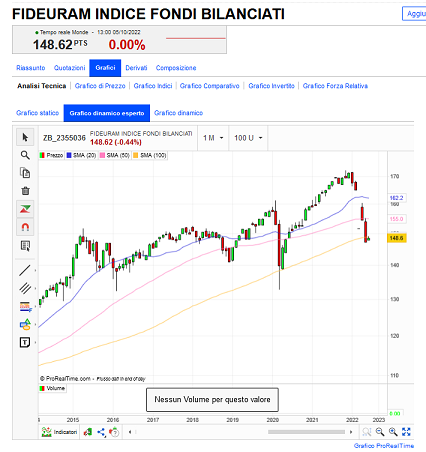
Chi perde è chiarissimo: perdono tutti quelli che si sono affidati alla cosiddetta “asset allocation” tradizionale che viene proposta (imposta) da chi vende polizze UCITS e Fondi Comuni di investimento (i numeri li trovate su tutti i quotidiani, ma pure nella pagina HOME del nostro sito, oppure nel grafico che apre questo Post, che vi racconta gli ultimi SETTE anni dei VOSTRI investimenti in Fondi Comuni, quello che si dice “un bell’affare”).

Chi vince? Chi sa fare bene il mestiere della gestione di portafoglio, sia nelle varie forme “riservate” sia nelle forme innovative, come ad esempio i portafogli modello.

Fare bene oppure fare male, in questo ambito professionale, è funzione dei risultati, pesati per il rischio. Il resto, sono solo chiacchiere.

C’è quindi un numero, molto ristretto purtroppo, di investitori che si è salvato dall’attuale disastro, grazie al fatto di avere saputo scegliere strategie di investimento ed interlocutori diversi (molto diversi) da quelli scelti dalla massa degli investitori, ed imposti da un assetto del settore del risparmio che indirizza (forzatamente) gli investitori verso soluzioni che fanno comodo solo agli Istituti che hanno ottenuto una normativa di settore che protegge gli interessi del cartello che domina il settore.

Chi oggi sta guadagnando, in qualche caso molto bene, guadagna grazie al fatto di avere anticipato i fatti che oggi tutti leggono sui quotidiani, autonomamente oppure grazie a consulenti professionali, competenti, e trasparenti (nel senso che operano senza conflitto di interesse).

Da oggi in avanti, però, che cosa sarà necessario fare, del proprio portafoglio titoli?

In questo particolare momento dei mercati, delle economie e delle società, l’investitore ha prima di tutto l’obbligo di alzare la sguardo: è infatti una gravissima ingenuità, in questo momento, perdere il proprio tempo e la propria attenzione dietro a cause perse, del tipo “quando arriva il rimbalzo”.

l contrario, è necessario alzare lo sguardo, come dicevamo: intercettare subito i cambiamenti che investono ed investiranno le Istituzioni e le società, e proprio su quella base capire (in anticipo) che cosa sta per accadere sui mercati finanziari. E quindi ai vostri e nostri soldi investiti sui mercati (ma pure nell’immobiliare: fate bene attenzione!).

Noi come sempre forniremo ai lettori un aiuto concreto, che negli ultimi anni ha dimostrato a tutto il pubblico, in forma pubblica, i suoi benefici, sia come performance sia come protezione del patrimonio dagli eventi avversi.

Tutto è, come detto, pubblico, e quindi documentato e documentabile: fate bene attenzione anche a questo aspetto, è qualificante rispetto a tutta la concorrenza delle Reti di promotori finanziari e delle banche.

Un esempio: volete rivedere quello che noi avevamo scritto più due anni fa, avvisandovi (del tutto gratuitamente) a proposito di chi era ed è anche oggi il peggiore nemico del vostro risparmio?

Vi suggeriamo, poi, di rileggere anche ciò che scrivevamo venti mesi fa.

E ciò che poi abbiamo scritto nel 2021.

Come potete facilmente riscontrare, questo è proprio ciò che oggi leggete aprendo un quotidiano: un primo esempio ve lo forniamo qui sotto, e ci è arrivato questa settimana, dal Financial Times. Altri esempi li leggerete di seguito.

A French leader once called the dollar America’s “exorbitant privilege”. Today’s world might go for blunter language. Vector of pain, anyone? Green monster? Whatever we call it, the strong dollar’s victims have one culprit in mind — the Federal Reserve. Even Josep Borrell, the EU’s foreign policy chief, is joining in.

This week he warned that the Fed was exporting recession in the same way the euro crisis was imposed by Germany’s post-2008 dictates. Much of the world is now in danger of becoming Greece. Such finger-pointing is mostly unfair to the Fed. The US central bank clung for too long to its “team transitory” dismissal of inflation and is thus tightening at speed to restore its credibility. But it is only following the rules. It is hard enough to achieve full US employment with low inflation. Adding foreigners’ wellbeing to its mandate would make the job paralysingly complex. The Fed is nevertheless the engine of global contraction. Monetary pain is America’s fastest growing export. The big unknown is, who will pick up the pieces. Here, as the world’s leading power, the US has often been prone to neglect. In today’s so-called polycrisis world it also risks missing a chance to restore America’s brand. The Fed has one tool — monetary policy. Higher US interest rates are spreading at pandemic speed.

As a whole, the US has many options. One such lever is the Bretton Woods institutions — the IMF and the World Bank, which are holding their annual meetings in Washington this week. The question is whether the US wants to cushion the blow to the developing world as its debt servicing costs go through the roof? History tells President Joe Biden which road not to take. The Fed’s last period of steep tightening started under Paul Volcker in the late 1970s. Higher US rates helped trigger far deeper recessions in the global south. Africa and Latin America both suffered a lost decade of growth that was deepened by the IMF’s punitive bailout conditions. Structural adjustment was a cure worse than the disease. The 1970s had been awash with recycled Opec capital that made dollar borrowing hard to resist. The Fed’s quantitative easing has had the same effect over the past decade. It is little consolation that inflation today looks less rampant than 40 years ago. In some respects emerging markets have it worse this time. Africa was neither responsible for the pandemic nor the war in Ukraine. The first is undoing years of human development gains. The second has unleashed a wave of food and energy inflation. Now the Fed is adding a potential debt-servicing crisis to the cocktail.

These upheavals did not originate in the global south but the costs will chiefly be borne there. That is without mentioning climate change, which is also harshest in those parts of the world least responsible for creating it. Biden has so far found little bandwidth to confront these challenges. He had a chance to make US vaccine technology available to the developing world. Indeed, he initially vowed to suspend Covid vaccine patents. That now looks like an empty gesture since his administration did not follow up. As a result, a third of the world’s population has not yet had one vaccine while most westerners have had at least two — some as many as five. Had the US taken a stronger lead, the world’s inflation-inducing supply bottlenecks would not have been as chronic.

Biden’s $1.9tn stimulus — the American Rescue Plan — threw fuel on an inflationary fire that is coming back to haunt Democrats. If they lose control of Congress next month, that bill will partly be to blame. The same applies to the roughly half a trillion dollars of student loan forgiveness he announced in August. Again, though, the brunt is felt by the rest of the world through imported austerity. The road to hell is paved with good intentions. Not for the first time, progressive-minded steps to help disadvantaged Americans are regressive for the world’s disadvantaged.

The Fed has earned some of the resentment it is getting. It should have reacted earlier to inflation, which would have meant a less punitive response. It is not as if inflation was hard to spot. On that count, Jay Powell, the Fed chair, deserves some blame. But America’s big shortcoming is political not technocratic. The global face of the problem is the mighty dollar but its causes lie deeper. The US can be oblivious at big moments to the spillover effects of what it does at home, which often come back to bite it. Call it exorbitant indifference.

edward.luce@ft.com

Non stiamo a tradurre questo articolo, e neppure i successivi: utilizzando un traduttore online, si può risolvere in pochi secondi, ma in ogni caso i contenuti possono essere intuiti da tutti. Il messaggio è chiarissimo: i quotidiani più autorevoli oggi dicono tutti: “Fight the Fed”.

Lo abbiamo scritto, in lingua italiana, nei nostri Post del 2020 e 2021 (tre link poco più in alto), che dicevano con largo anticipo proprio le stesse cose che leggete oggi, nell’articolo sopra del Financial Times qui sopra, e anche sotto nell’articolo del Wall Street Journal.

Politicians may debate whether big-government socialism or free-market capitalism leads to better economic outcomes. Their constituents may worry about rising prices and declining prospects for retirement. But neither group has the power to create money with no questions asked, manipulate the cost of capital, or counteract movements in financial markets. The central bankers are in charge—and perhaps that should change.

Even if duly elected leaders try to make good on campaign promises, they face hurdles if monetary authorities, domestic and global, disagree. What happened in Britain is a cautionary tale for nations that have relinquished to central banks the keys to economic performance. British Prime Minister Liz Truss, together with her finance minister, Kwasi Kwarteng, last month announced plans to spur investment and economic expansion by cutting taxes for individuals and businesses. Days later, they were verbally lashed by Mark Carney, a former governor of the Bank of England, for “working at some cross-purposes” with the nation’s central bank.

Mr. Carney, who is now United Nations special envoy on climate action and finance, lamented that the new U.K. government was trying to stimulate short-term growth just as the Bank of England was trying to restrain it to control inflation. While the approach championed by Ms. Truss and Mr. Kwarteng aims to expand economic output by providing incentives to increase supply, the Bank of England is committed to fighting inflation by reducing demand—which requires raising interest rates to choke off growth. When the budgetary plans were poorly received by market investors, the central bank had to buy long-term government bonds to rescue the pound in foreign-exchange markets—causing interest rates to fall.

Then there’s the audacity of the International Monetary Fund, which publicly rebuked the U.K. government’s budget and urged it to “re-evaluate the tax measures, especially those that benefit high income earners.”

Since when did unelected monetary officials gain the authority to tell political leaders what to do? It’s unseemly, but perhaps not surprising: When government organizations are imbued with breathtaking powers to determine financial conditions, it magnifies their clout—and elevates their status.

The coterie of major central banks that manage the global economy are leery of spurring demand through excessive fiscal stimulus. But there is a difference between government overspending, which borrows from the future to pay for current consumption, and tax-cutting incentives now to spur more production down the road. Government borrowing to finance socialist redistribution isn’t the same as government borrowing to invest in entrepreneurial capitalism.

But central banks, led by the U.S. Federal Reserve, have embraced the notion that curbing demand is the road to monetary redemption. That same Fed not long ago failed to anticipate the pervasive inflationary pressures unleashed through the extraordinary fiscal and monetary measures to mitigate the economic consequences of the Covid-19 shutdown.

Fed Chairman Jerome Powell insists that “price stability is the responsibility of the Federal Reserve,” but this is posturing rather than accountability. The central bank doesn’t compensate Americans for expropriating some of their wealth by diminishing the dollar’s purchasing power. And the 58% of Americans invested in the stock market won’t be comforted by former New York Fed President William Dudley’s warning this year that the Fed will “have to inflict more losses on stock and bond investors” to contract economic activity through tightened financial conditions. Citizens harmed by such moves have little recourse.

While Mr. Powell championed “supportive” monetary policy to foster economic growth and “as strong a labor market as possible for the benefit of all Americans” in announcing the Fed’s revised monetary policy framework in August 2020, he now seeks to raise interest rates to “restrictive” levels and believes “we need to have softer labor market conditions.” So much for maximizing employment.

Beyond the Fed’s dual mandate, our central bank is responsible for providing a stable monetary and financial system. But for all its powers to set interest rates, it’s not clear that supply-and-demand forces wouldn’t have set rates more appropriately and achieved better results. Is credit allocated more efficiently through central planning or free-market price signaling?

The hair-trigger reaction of financial markets to the latest utterances of monetary authorities is unsettling. Government bond yields and currency values are vulnerable to the interplay of derivative financial instruments structured on underlying assets that world-wide total about $600 trillion, according to the Switzerland-based Bank for International Settlements. Contracts based on interest rates or foreign-exchange instruments account for 96% of that total.

It is time to question whether central banks have become too powerful, too prominent and too political. In the name of preserving central bank independence, lawmakers have ceded huge swaths of their own responsibility for ensuring the welfare of citizens through sound economic policies. By doing so, elected representatives have granted influence to unelected officials that is inconsistent with democratic norms and limited powers.

It will require a Copernican revolution to shift the field of monetary theory from an understanding of economic performance that doesn’t put central banks at its core. But it’s a change that must be made if we are to prevent further demoralization of free markets and free people.

Ms. Shelton, a monetary economist, is a senior fellow at the Independent Institute and author of “Money Meltdown.”

Nell’articolo del Wall Street Journal, che nessuno al Mondo potrà accusare di essere “contrarian”, si chiede “un cambiamento del ruolo della Federal Reserve”, e si parla poi di “Rivoluzione Copernicana nella politica monetaria”.

Ai lettori, Recce’d suggerisce di NON perdere tempo con la classica domanda del private banker (“quando arriva il rimbalzo”) e concentrare invece la propria attenzione su questi due punti appena citati, e sollevati nell’articolo del WSJ.

Il Mondo, quello vero, intorno a voi viene ripensato e ridisegnato in questi mesi: quindi smettete subito, se state ancora pensando ad un futuro simile al recente passato.

Chiedetevi invece:

  1. chi ha vinto, e chi ha perso nel 2020-2022?

  2. perché pochi hanno vinto, e la massa ha perso?

  3. perché 24 mesi fa chi suggeriva “difendetevi dalla Federal Reserve” veniva etichettato come “contrarian”, ed oggi invece lo scrivono il Financial Times ed il Wall Street Journal?

Per aiutarvi a trovare le risposte giuste, potete utilizzare i tre link che vi abbiamo proposto più in alto.

E poi, potete rileggere con grande attenzione i due articoli qui sopra, ed anche il terzo articolo che trovate qui sotto di seguito, di fonte Bloomberg, dal titolo più che esplicito.

By

Bill Dudley

10 ottobre 2022 11:00 CEST

Bill Dudley, a Bloomberg Opinion columnist and senior adviser to Bloomberg Economics, is a senior research scholar at Princeton University’s Center for Economic Policy Studies. He served as president of the Federal Reserve Bank of New York from 2009 to 2018, and as vice chairman of the Federal Open Market Committee. He was previously chief U.S. economist at Goldman Sachs.

Federal Reserve officials have been getting an earful about the economic threat that the US central bank’s rapid monetary tightening presents to the rest of the world — complaints that will no doubt be amplified at this week’s meetings of the International Monetary Fund and the World Bank.

The Fed must focus on what’s best for the US, so there’s little it can do to mitigate the global repercussions of its actions. That said, it should at least do a better job of explaining itself.

The complaints are amply founded: The Fed’s aggressive monetary tightening is undoubtedly imposing stress on the rest of the world, in large part by boosting the exchange rate of the dollar to other currencies. In developed countries, this drives up prices of imports such as crude oil, stoking inflation and forcing central banks to respond with matching rate hikes — even in economies where inflation pressures are relatively mild and growth is weaker. The effects are even harsher in developing countries. Aside from more expensive food and energy imports, they face reversals of foreign capital inflows (which makes financing imports harder) and increasing difficulty servicing their already burdensome dollar-denominated debts.

Yet the Fed will almost certainly stay the course, for two reasons. First, it’s the only way to get US inflation under control. Excessive fiscal and monetary stimulus stoked the demand for goods, services and labor, so the central bank must now tighten and push up unemployment enough to slow wage and price increases. If it fails to act aggressively enough, inflation will become more embedded, forcing the Fed to act even more forcefully later with even harsher consequences for the US and global economy.

Second, the Fed’s congressional mandate is to achieve maximum sustainable employment consistent with price stability for the US economy. Congress made no mention of what’s best for the rest of the world. Of course, the Fed pays attention to global developments such as the war in Ukraine, but only to the extent that they have implications for the US economic outlook. Fed officials explain their policies to their foreign counterparts, but no adjustments are made just because the latter are unhappy. This is standard operating procedure for central banks everywhere. What’s different is how much US monetary policy affects everyone else.

Still, the Fed could do more on the communication side. Specifically, officials would do well to be more forthcoming about what went wrong, and why they now must raise short-term rates by more than 400 basis points in just nine months. A couple talking points:

  • The way the Fed implemented its new monetary policy framework, which from 2020 sought to target a longer-term average of 2% inflation, proved particularly ill-suited to the economic environment. The Fed’s self-imposed constraints were too extreme and inflexible: “Liftoff” from zero rates couldn’t happen until the economy had reached full employment and inflation had climbed above 2% and was expected to stay there for some time. Also, the Fed had to make “substantial” progress toward these goals before even beginning to taper the asset purchases known as quantitative easing, which had to be fully wound down before rate increases could begin. As a result, the federal funds rate was still at zero in early March, even though the economy had clearly overheated.

  • The Fed made two important forecasting mistakes. Inflation pressures were much broader and more persistent than anticipated, and the labor market became much tighter much faster than expected.

Humility is always valuable when you have inadvertently made life more difficult for others. Also, by recognizing its mistakes, the Fed might provide some reassurance that it won’t repeat them. It’s not much to offer countries struggling to cope with the consequences, but it’s better than the alternative of saying nothing at all.

Come avete appena letto qui sopra, adesso persino chi per un decennio è stato al governo della Federal Reserve in pubblico parla male di quello che ha fatto la Federal Reserve e dice che “la Federal Reserve deve al Mondo un mea culpa”: ma potrebbe iniziare proprio lui, Bill Dudley, Governatore della Fed di New York fino a pochi anni fa.

Peccato, per lui e per noi, che non abbia avuto la lucidità e/o il coraggio di fare considerazioni come queste quando lui era al governo di quella Istituzione.

Noi di Recce’d invece lo abbiamo fatto quando ancora era utile, e questo ha portato i nostri portafogli modello a performances eccezionali, di caratura internazionale.

Oggi però, e lo ripetiamo ancora una volta, la Federal Reserve non è più il protagonista del futuro dei mercati finanziari. Gli investitori debbono sì guardare alla Fed, ma soltanto per comprendere quali saranno le conseguenze della sua (drammatica) uscita dalla scena principale, insieme con la BCE e la Banca del Giappone.

L’investitore deve quindi, essere consapevole di ciò che accade, ma deve anche sapere anticipare i futuri protagonisti, i fattori che nel futuro prossimo e lontano daranno la direzione ai mercati finanziari.

Gli investitori, oggi, non debbono perdere tempo cn “il prossimo rimbalzo dei mercati” e devono invece occuparsi del prossimo decennio.

Noi come sempre del tutto gratuitamente attraverso questo Post mettiamo a disposizione dei lettori elementi concreti di valutazione: ad esempio con l’articolo che segue e chiude il Post.

Provate a immaginare quanti danni avreste evitato al vostro patrimonio, seguendo nel corso degli anni i nostri suggerimenti, che Recce’d vi ha offerto gratuitamente, chiedendovi di leggere con grande attenzione proprio articoli come questo.

E se oggi volete approfondire, siamo sempre stati disponibili, e lo siamo anche oggi stesso.


Rana Foroohar October 9 2022

Over 40 years ago, the Reagan-Thatcher revolution was born. Taxes were slashed. Unions were quashed. Markets were deregulated and global capital unleashed. But economic pendulums swing.

And over the last couple of weeks, it’s become quite clear that anything remotely related to trickle-down theory is now political Kryptonite. The most obvious example is, of course, the backlash against UK prime minister Liz Truss’s bizarre plan to lower taxes on the rich after announcing major spending on energy subsidies. Trussonomics is now off the table, and the prime minister’s own leadership is in jeopardy. But it’s not only the UK that is facing the downhill slope of neoliberalism. I recently met a senior Biden administration official who told me that many chief executives are now coming to Washington and asking for “a signal from government — where should we invest? Should we be in Vietnam or Mexico? Which sectors do you want us in?”

While the government isn’t yet in the business of picking winners and losers, the White House has already made the shift to a post-neoliberal era — and many in the business community are preparing for it as well. CEOs may not like the idea of a deglobalising world with more regulation, greater state control and growing labour power. But they can usually find a way to make money as long as they understand the rules of the market. So what are the new rules?

The Biden administration recently put out a clear blueprint of the economy it wants, which included five key elements. One is empowering workers, which it has endeavoured to do by using federal budgets to support unionised labour. Another is leveraging as much fiscal policy as is possible in a polarised Congress to bolster working families in areas such as healthcare and childcare, which are increasingly unaffordable for many Americans. But as commerce secretary Gina Raimondo put it to me a few months ago, government should be about more than just cutting taxes and redistributing wealth.

This administration wants to play a bigger role in directing the supply side of the private sector. In particular, it wants to encourage the making of things, not just via the push to “Buy American”, but through a more fundamental shift in policy focus from distribution to production. That means industrial policy. And while there isn’t yet a fully articulated strategy in Washington, there are clear signs that laissez-faire economics is over.

One of these is the fact that many companies will soon have to choose between the US and China. Formal decoupling between the two countries is gaining steam — there are a record number of American jobs being reshored from China, and calls for stricter rules on technology transfers. Another is that resilience and redundancy in crucial supply chains is becoming ever more important. Just a few days ago, Micron became the second big business (after Intel) to announce a major semiconductor investment in the US, putting $100bn into a new foundry in upstate New York. Federal investment in electric vehicles is also bringing new jobs to beleaguered parts of the South and Midwest. While the strong dollar may become a headwind to the administration’s hopes of growing a larger manufacturing and export economy, the lower cost of energy inputs in the US relative to Europe at the moment is a tailwind.

Support for economic “patriotism” is now the operating principle on both sides of the political divide in Washington. Robert Lighthizer, former US trade representative under Donald Trump, was famously a fan of getting rid of America’s trade deficit. But recently, Democratic California congressman Ro Khanna — a rising figure in progressive circles — called for the same thing, advocating that the US achieve a trade surplus with the rest of the world by 2035. As Khanna put it, “Trade deficits some years are fine, when balanced by trade surpluses in other years. But the country has been in constant trade deficit since 1975”. He believes that the government should help rectify this by offering zero-interest loans for factories, and increased use of federal purchasing to underwrite markets. I heard Khanna speak last week at the launch of “Reimagining the Economy”, a Harvard Kennedy School initiative led by economists Dani Rodrik and Gordon Hanson. It aims to replace neoliberal policy paradigms with something new and is one of several such programmes at major universities around the US. Many of these institutions are vying to become the epicentre of fresh economic thinking, just as the University of Chicago was the epicentre of neoliberalism. Khanna summed up the challenge of the moment: “If we can’t get the economy right, we won’t have a multiracial democracy.”

That phrasing itself represents something new — in the past, the conversations between racial equity and class inequality in the US have been separated. But Democrats are increasingly trying to link the two together, as they work to find the contours of a post-neoliberal economics. That was the topic of another big shindig last week, sponsored by the Roosevelt Institute, in which progressive politicos (many from within the administration) gathered to discuss the details of America’s industrial policy. While these aren’t completely clear yet, one thing is — all of this is the opposite of trickle-down.

rana.foroohar@ft.com

Valter Buffo
Longform'd. Il tema del giorno: "financial instability".
 

Nelle ultime settimane, due eventi (Banca di Inghilterra e Credit Suisse) hanno messo all’attenzione di operatori e commentatori il tema della “financial instability”, che era scomparso da anni.

Tutti i nostri lettori hanno notato che sui media aumenta ogni giorno il numero di riferimenti al 2007, ed alla Grande Crisi Finanziaria 2007 - 2009, ed a Lehman Brothers e Bear Sterns.

Brevemente ne parliamo in questo Post, per approfondire poi durante la settimana nel nostro quotidiano The Morning Brief, dove trovate una messa a punto quotidiana dei nostri portafogli modello (davvero indispensabile in una fase di “financial instability”).

Che cosa intendono operatori e commentatori quando usano questa espressione?

Quando si parla di “financial instability” si fa riferimento ad episodi di instabilità che si presentano, in genere in modo improvviso (per il pubblico), all’interno del settore “banche e finanza”, che include banche, non-banche che fanno credito, banche di investimento, Società di gestione dei Fondi Comuni, Fondi Hedge, e Reti di promotori finanziari, wealth managers, private bankers, robo-advisors, eccetera.

Questi episodi di instabilità ovviamente sono il riflesso di errori nella gestione delle Istituzioni che abbiamo appena elencato, errori che però vengono nascosti al pubblico per un lungo periodo (spesso con la collaborazione delle Autorità, come abbiamo visto in passato), e che spesso vengono ampliati facendo il tentativo di correggerli e salvare la baracca.

Un esempio della settimana scorsa: negli ultimi dieci anni, l’errore delle Banche centrali, che hanno schiacciato per anni il costo del denaro a zero, ha costretto i Fondi Pensione all’utilizzo degli strumenti derivati per aumentare il rendimento dei loro investimenti. I Fondi Pensione a loro volta hanno fatto alcuni errori, utilizzando in modo eccessivo i derivati.

E così siamo arrivati molto vicino ad una situazione di critica: stava per saltare in aria tutto, come ha spiegato la stessa Banca di Inghilterra giovedì 5 ottobre.

Questo fatto, e i fatti di Credit Suisse (Credit Suisse che noi commenteremo poi in una sede diversa) hanno riportato all’attenzione di tutti il concetto di “financial instability”.

In modo esplicito, in settimana ne ha parlato ad esempio Neil Kashkari.

Kashkari, come tutti ricordate, è quel membro della Federal Reserve che in data 8 aprile 2021 diceva “Se vedessi l’inflazione al 4% non ne farei un dramma” (nell’immagine che segue). Dodici mesi dopo, lui come noi ha visto l’inflazione al 9%.

Ma questo, oggi, non c’entra. Oggi ci interessa invece la frase dell’immagine qui sopra, che dice: “Mi aspetto di vedere rotture nei mercati finanziari, ma l’asticella per avere un cambiamento nella politica monetaria è posizionata molto in alto”.

Ecco spiegata la ragione immediata che rende importantissimo il dibattito sulla “financial instability”.

Il tema della “financial instability”, nell’immediato, è rilevante per i mercati finanziari e per gli investitori in ragione del fatto che potrebbe provocare un cambiamento nell’indirizzo della politica monetaria.

Lo abbiamo appena visto tutti, nel Regno Unito: la BoE è ritornata a fare QE, acquistando Titoli di Stato, a sei giorni di distanza dall’annuncio del QT, ovvero della politica di VENDITA dei Titoli di Stato già oggi nell’attivo della Banca Centrale.

Quindi: la “financial instability” può determinare un cambiamento della politica monetaria SENZA che ci siano novità sul fronte dell’inflazione, oppure dell’occupazione, oppure della crescita delle economie.

Kashkari, sopra, ha detto ai mercati: attenzione, per arrivare ad un cambiamento della politica monetaria, l’asticella sta molto in alto. Ovvero: è necessario che il problema della “stabilità finanziaria” si presenti in una forma molto grave. E’ necessaria una crisi molto grave: come fu ad esempio la crisi 2007 - 2009 di cui tanto si scrive e si parla sui media.

Anche Waller, oltre a Kashkari, ha voluto mandare ai mercati il medesimo messaggio.

Waller si è spiegato con maggiore dettaglio: ve lo documentiamo con l’immagine che segue, che però in questo Post non abbiamo lo spazio ed il tempo di approfondire.

Lo faremo in una sede diversa.

Se avete interesse a comprendere più a fondo questo aspetto dell’attualità dei mercati finanziari (aspetto che a giudizio di Recce’d oggi è decisivo per azioni, obbligazioni, materie prime e valute) ci potete contattare attraverso i canali del nostro sito.

Oppure, potete concentrarvi sulla lettura dell’articolo che abbiamo scelto per voi e che trovate qui sotto.

L’articolo di Bloomberg riassume un recente documento della Federal Reserve, articolo che spiega che esistono due diversi “tassi di interesse di equilibrio” per la Banca Centrale:

  1. uno che fa riferimento all’economia reale (inflazione, occupazione, salari, crescita del PIL, bilancia commerciale, eccetera)

  2. un secondo che fa riferimento alla “stabilità finanziaria”

L’argomento sembra molto tecnico, ma al contrario è di immediata utilità per la gestione delle vostre posizioni di portafoglio.

Questo perché, se è vero che esistono due tassi di equilibrio, allora è possibile che la Banca Centrale decida di interrompere la fase di rialzo dei tassi ufficiali, privilegiando quindi il “tasso di equilibrio per la stabilità finanziaria” rispetto al “tasso di equilibrio per l’economia reale”.

Ne riparleremo più in basso, dopo che avrete letto l’articolo che segue.

Il documento della Federal Reserve, a cui fa riferimento l’articolo che segue, è nel nostro archivio e può essere richiesto con una e-mail.

The concept of R** presented in a paper at the New York Fed last week explains the issue facing the Federal Reserve as the market desperately tries to identify the ingredients for a pivot by the central bank.

The paper lays out:

  • R* = neutral rate for the REAL ECONOMY where supply=demand and there’s no inflation, our well-known Goldilocks scenario

  • R** = neutral rate for FINANCIAL STABILITY

The authors argue that after a period of sustained low rates, similar to our current situation, the gap between R** and R* widens, with R** falling below R*. This means with excess leverage built up, the neutral rate for the financial system drops below that of the real economy.

There are parallels to today’s backdrop: real yields have begun to climb, but core PCE is still too high and the labor market is still too strong.

Yet financial stability at these rate levels is already becoming a problem: credit markets are freezing up, liquidity in Treasuries is deteriorating and dollar funding is stretched.

What does this widening gap between R* and R** mean? The financial system becomes unstable before the Fed is able to raise rates high enough to impact the labor market. In effect, the Fed will fail to rein in inflation before it’s forced to pause to tackle financial instability at home. 

This is the same situation that the Bank of England blew wide open last week with their emergency QE operation.

The next scenario for markets to grapple with: how to price a Fed that attempts to manage financial stability concerns (akin to the BOE’s liquidity operations) alongside rate hikes? Perhaps there’s another bout of risk assets plummeting and yields rising before we get to this point.

But Friday’s non-farm payrolls could be a test; a hot print could push this narrative to the next level.

Take a look at the two previous Fed hiking cycles in 2004-2006 and in 2015-2019. Back then maybe the gap between R* and R** was small, so it didn’t matter. We saw cracks in the financial system appear around the same time as the general economy. And, lets be honest, we didn’t have a real inflation fight back then, so the urgency to raise rates into restrictive territory was absent. But with this new, wider gap between the two, could financial instability take center stage before the inflation fight even truly begins?

Ora che abbiamo capito meglio che cosa è la “financial instability”, e che cosa implica per la politica delle Banche Centrali, cerchiamo di fare luce sulle ricadute per noi investitori.

Lo facciamo proponendovi in lettura un secondo articolo, che abbiamo tradotto. E’ assolutamente necessario, per tutti noi investitori, collocare nel modo corretto il fenomeno della “instabilità finanziaria” nel contesto del “cambiamento di regime” del quale questo Blog ha parlato mesi fa.

In aggunta, è necessario legare il tema della “instabilità finanziaria” al tema della “liquidità dei mercati”.

Trovate entrambe le cose proprio nell’articolo che chiude il Post.

I frequent flyer sono abituati alle turbolenze su alcuni voli. Anzi, molti se le aspettano. Tuttavia, nonostante l'attesa, ogni tanto le turbolenze possono creare ansia anche nei viaggiatori più esperti.

È quello che è successo sui mercati la scorsa settimana. Le turbolenze "attese", legate in gran parte a tre continui cambiamenti di paradigma, sono state amplificate da due fattori meno attesi, la cui durata avrà un ruolo importante nel determinare l'ordinato funzionamento dei mercati.

La maggior parte degli economisti, degli investitori e dei trader ha ormai ampiamente compreso che l'economia globale e i mercati finanziari stanno attraversando tre cambiamenti di regime:

  1. Le prevedibili iniezioni di liquidità da parte delle banche centrali e i tassi d'interesse al ribasso sono stati sostituiti da un inasprimento generalizzato della politica monetaria a livello globale.

  2. La crescita economica sta rallentando in modo significativo, poiché le tre regioni dell'economia globale più importanti dal punto di vista sistemico stanno perdendo slancio allo stesso tempo.

  3. La natura della globalizzazione si sta spostando dalla presunzione di una sempre più stretta integrazione economica e finanziaria a una maggiore frammentazione, in parte a causa delle persistenti tensioni geopolitiche.

Questi tre cambiamenti, sia da soli che collettivamente, comportano un aumento della volatilità economica e finanziaria. In termini di distribuzione dei possibili esiti economici e finanziari, lo scenario di base diventa meno attraente e più incerto, mentre aumenta la possibilità di scenari altamente negativi.

Gli sviluppi del mercato della scorsa settimana, tra cui le impressionanti oscillazioni dei prezzi del reddito fisso e dei cambi, sono andati oltre il fatto che gli investitori e i trader hanno dovuto affrontare questi tre scomodi cambiamenti di paradigma. Due ulteriori fattori hanno reso la settimana particolarmente inquietante.

Il primo è stata l'accelerazione della perdita di fiducia nei confronti della politica. I mercati, che per anni hanno apprezzato la Federal Reserve statunitense e il governo britannico come soppressori della volatilità, sono passati a considerarli come fonti significative di instabilità inquietante.

Dopo essersi lasciata sedurre dalla nozione di inflazione "transitoria" e essersi addormentata al volante della politica, la Fed sta giocando un enorme recupero per contrastare un'inflazione elevata e dannosa. Ma essendo rimasta così indietro, è ora costretta ad alzare aggressivamente i tassi in un'economia nazionale e globale in rallentamento. In questo modo, la finestra un tempo spalancata per un atterraggio morbido è stata sostituita dalla scomoda probabilità che la banca centrale faccia precipitare gli Stati Uniti in una recessione, con danni che si estendono ben oltre l'economia nazionale.

Nel Regno Unito, il nuovo governo del Primo Ministro Liz Truss ha optato non solo per le riforme strutturali e la stabilizzazione dei prezzi dell'energia, ma anche per tagli fiscali non finanziati di una portata mai vista negli ultimi 50 anni. Preoccupati dalle implicazioni per l'inflazione e il fabbisogno di prestiti, i mercati hanno fatto scendere il valore della sterlina a un livello mai visto prima nel 1985. Inoltre, hanno provocato la più grande impennata di sempre dei costi di finanziamento, misurata dal rendimento dei titoli di Stato a cinque anni.

Entrambi questi sviluppi sono intrinsecamente destabilizzanti, dal punto di vista economico e finanziario. Ed entrambi sono difficili da invertire nel breve periodo.

Il secondo fattore aggiuntivo riguarda i flussi di fondi e le implicazioni per la liquidità del mercato.

Secondo i dati compilati da Bank of America, circa 30 miliardi di dollari sono usciti dai fondi azionari e obbligazionari al dettaglio per passare alla liquidità. Questo e altri indicatori, come l'aumento record delle opzioni di protezione contro i ribassi azionari, indicano la possibilità di grandi riallocazioni di asset che hanno messo a dura prova l'ordinato funzionamento dei mercati.

Quanto maggiori sono le tensioni sul funzionamento dei mercati, tanto più i trader e gli investitori si preoccupano di non essere in grado di riposizionare i loro portafogli come desiderato. E più non riescono a fare ciò che desiderano, più aumenta il rischio di contagio. Questo vale in particolare per il reddito fisso, dove molte obbligazioni risiedono ora nei bilanci delle banche centrali.

Come illustrato nelle precedenti rubriche di Bloomberg Opinion, mi aspettavo già un aumento della volatilità e un calo dei prezzi mentre i mercati attraversavano i tre grandi cambiamenti di paradigma. Gli sviluppi della scorsa settimana evidenziano il rischio di un'ulteriore instabilità di facciata che complica un viaggio già accidentato verso nuovi equilibri economici e finanziari, rendendo più probabili gli errori di investimento comportamentali.

Mercati oggiValter Buffo
Che recessione ci attende?
 

Ricordate il “soft landing”? Ricordate il dibattito tra “soft” ed “hard” landing?

Il dibattito era al centro dell’attenzione nel primo semestre, perché fino all’estate tutte le banche di investimento sostenevano la visione delle Banche centrali, secondo la quale “ce la faremo a frenare l’inflazione senza provocare la recessione”.

Oggi, come dice El Erian nell’immagine che apre il Post, una “recessione profonda” potrebbe essere persino, per tutti quanti noi, la migliore opzione che ci è rimasta.

Ed infatti tutti hanno cambiato idea, negli ultimi mesi: tranne Recce’d che era già più avanti, e da anni. Noi eravamo “contrarian”, fino a qualche mese fa, oggi siamo diventati “il leader della maggioranza”.

Nessuno oggi utilizza più l’espressione “soft landing” e le Banche centrali, tutte, hanno già promesso al pubblico che “ci sarà da soffrire”.

Ben arrivate! Era ora!

Noi avevamo su questo argomento le idee chiarissime già nel 2021, e lo avevamo reso pubblico anche qui nel nostro Blog.

Moltissimi nostri lettori, però, si affidano ancora alle vecchie Reti di promotori finanziari, che oggi si fanno chiamare wealth managers e personal bankers, e che ai loro Clienti hanno fatto perdere parecchi soldi nel 2022 mantenendoli su posizioni totalmente sbagliate, posizioni che nel corso del tempo erano state giustificate prima con il tema della “inflazione transitoria” e poi con il tema del “soft landing”.

Per tutti questi investitori, è utile ancora oggi rivedere, e correggere, le aspettative sul futuro delle economie. Cosa che noi aiutiamo, in questo Post, selezionando e ripubblicando due articoli dedicati proprio a questo argomento.

Argomento che, come leggete qui sotto, nell’ultima settimana ha portato persino le Nazioni Unite a lanciare un allarme, accompagnato dalla richiesta, a tutte le Banche Centrali, di rallentare nella manovra di rialzo dei tassi di interesse. Ragione ulteriore per un approfondimento del nostro tema.

L’argomento è, ovviamente, di massima attualità anche per le banche di investimento: Citigroup una settimana fa ha rivisto al ribasso il proprio target per la Borsa di New York, motivando questo taglio proprio sulla base delle elevate probabilità di una severa recessione.

Nel primo dei due articoli che abbiamo selezionato per questo Post, leggerete l’intervista di Marketwatch ad un noto gestore di portafoglio, che espone una visione di quello che ci aspetta dall’economia molto vicina a quella di Recce’d.

Ritorneremo anche in altri Post, sui temi di questa intervista. in modo particolare, quando tratteremo della prossima stagione delle trimestrali delle Società quotate, e commentando la strategia di gestione dei nostri portafogli modello.

Keith McCullough, founder and CEO of Hedgeye Risk Management, isn’t one to mince words about financial markets, the Federal Reserve or the economy.

Right now he has a few less-than-charitable things to say about how the Fed’s rate hikes have ground up stock and bond investors.

His investment-research firm’s economic models turned bearish on stocks and bonds at the beginning of 2022. Prices have since tumbled, but McCullough is still bearish. He’s now steering investors to defensive positions primarily in cash, the U.S. dollar, gold and income-producing equities.

McCullough is preparing investors for the painful recession he expects for both Wall Street and Main Street in 2023. To anyone expecting the Fed to realize its rate increases have been excessive and rescue the markets, McCullough is blunt: “There’s no dovish pivot,” he says.

Even if the Fed were to relent, McCullough says the damage is done. “They’re far too late,” he says of the Fed. “Just like it was impossible for them to stop inflation, it’s impossible for them to stop the pending U.S. corporate profit recession or the mainline recession.”

In this recent interview, which has been edited for length and clarity, McCullough outlines his base case for the U.S. economy and the financial markets going into 2023, and advises investors to take shelter from a coming storm many of them have never seen.

‘The recessionary economic data keeps getting worse.’

MarketWatch: In a MarketWatch interview last April, you said “the Fed always screws up” and predicted a bear market for U.S. stocks in the summer. That happened. What do you expect now from the Fed — learn from its mistakes or make more?

McCullough: Recession today is what “transitory” inflation was a year ago. The Fed is as wrong on recession risk as they were on inflation.

I’m about as bearish as I’ve been since 2008. Instead of the economy having a soft landing, I think the landing is going to be hard. The recessionary economic data keeps getting worse, not just in the U.S. but in Europe as well.

Free money forever created behavioral problems and a behavioral bubble for the markets and investors. You believe you’ll have unlimited access to easy money and your behavior, whether you’re building profitless growth companies through storytelling or cryptocurrencies that also are just stories. You’re coming from the mother of all behavioral bubbles that now will be addressed with tighter money. When you’re printing money and the economy is accelerating to the fastest growth rate ever, you’re going to have the mother of all bubbles. Now, GDP is going to slow to zero, and you get the opposite.

MarketWatch: A hard landing for the economy and an economic environment echoing the 2008 financial crisis is a pretty damning verdict. You’re not in the perma-bear camp with some forecasters, so what are you seeing now to have such a pessimistic outlook?

McCullough: On a lot of levels it’s worse now than in 2008. If 2008 was about Wall Street collapsing on itself, on all its conflicts of interests and lies, this one is more about Main Street. Main Street is broke. Main Street is taking all this inflation into their cost of living. Main Street has the highest credit-card interest going back to the 1990s. It’s way worse than 2008 on that basis. If you’re trying to pay your bills with credit, it’s getting worse and worse. And then they’re going to lose their jobs. Labor collapsing is always the last thing to go down. We’re right on the cusp of the labor cycle going the wrong way.

That’s what’s going on right now. GDP and profit growth are both going negative. The Fed is going to see all of that and have to change. The big screw-up people will have is that the minute they see Fed dovishness, they’re going to buy stocks and crypto. Then they’re going to realize they’re in a recession, which is an entirely different setup from what got those bubbles to begin with, which was unlimited easing and fiscal support plus GDP growth.

We have economic deceleration irrespective of what the Fed does. It’s impossible for the Federal Reserve to stop gravity. They’re far too late. Just like it was impossible for them to stop inflation, it’s impossible for them to stop the pending U.S. corporate profit recession or the mainline recession.

MarketWatch: It isn’t just the Fed that could miss the recession signs until it’s too late. Stock investors as well might find themselves on the wrong side of the tracks.

McCullough: The Fed first has to realize that what I’m talking about is the high-probability event. That will take time. It’s not going to take them a month. They have to realize we’re in a recession, then make the commensurate policy pivot. Then, when the Fed does go dovish and realize we’re in a recession, that’s bad for the stock market.

The Pavlovian response is the Fed is dovish, buy stocks. That’s true if you’re not in a recession. This next recession — which could be the biggest profits recession of the modern era — will be quite an education for people who are still bullish, with the expectation that the Fed is going to save them.

MarketWatch: Many Fed-watchers and market analysts expect the Fed to pause or slow rate hikes to assess the effects of their inflation-fighting efforts. Do you see a “Powell pivot” coming?

McCullough: There’s no dovish pivot. The level of inflation is nowhere near the Fed’s target. And there’s a midterm election coming up. They’ve already established that the rate hikes are going to go right up to November. Rate hikes are baked into the cake and anybody looking for it to turn into a birthday cake for the bulls will be sadly disappointed.

An entire generation of Americans hasn’t gone through a recession. A lot of companies in Silicon Valley have never been through a recession, for example. My definition of a U.S. corporate profits recession is when the rate of change of revenue growth has gone negative and the rate of change of year-over-year profit growth has gone negative. The Federal Reserve, even if it were to turn dovish on interest rates tomorrow, will have a hard time stopping the profits recession.

When the rate of economic change is accelerating and the Fed is printing money, you buy anything that’s got a good chart and a good story. You’re going to make a lot of money until the music stops.

And it did. Now we’re seeing the opposite. The rate of change of real GDP growth and inflation are slowing at the same time. You can’t own inflation, commodities or growth now. If you’re still long pretend growth or profitless growth or crypto, I recommend prayer.

MarketWatch: Given the grim picture you’ve drawn, where are you directing investors to put their money to weather the storm?

McCullough: There aren’t many places to hide. Our biggest position in equities is utilities.Utilities is a bond proxy. We still like gold .

If you have to own stocks, we like quality balance sheets, profitable companies that have high-quality cash-flow streams. We’re short growth — all of it. We’re short all of tech. Energy stocks are levered up on the long side. I’ll take my time on that. It is a place I’m interested in buying, but currently we’re only long natural gas and solar through the Invesco Solar ETF We’re bearish on oil , copper — every major commodity other than natural gas. We’re short Europe on the equity side and on the euro . I’m in no rush to cover those shorts. The trend is down for stocks and up for the U.S. dollar .

Also Treasury bonds, but you have to wait, watch and act as the game plays out. If the U.S. 10-year Treasury breaks down below 2.95% that’s a pretty obvious green light to make long-term Treasurys one of your top asset allocations. A lot of people are trying to pick bottoms in stocks. I’m much more interested in buying Treasury bonds than anything else.

A questa utile intervista aggiungiamo le considerazioni più recenti di Nouriel Roubini, che non a caso dai media è stato etichettato come “profeta di sventura”. Come abbiamo già scritto, la nostra visione delle cose è spesso distante da quella di Roubini: in questa specifica occasione però, a nostro giudizio, è particolarmente utile leggere i sui argomenti, tanto quanto fu utile negli anni 2006 e 2007.

Come sempre nelle sue analisi, Roubini mette insieme moltissime cose, argomenti di finanza, di economia, di sociologia, insieme con argomenti che riguardano la politica, l’ambiente, ed altro.

Una lettura attenta vi permetterà, comunque, di cogliere spunti importanti, come ad esempio quello della “fiscal capture” che si lega in modo stretto al tema della “financial instability” (al quale Recce’d oggi dedica un altro Post).

Vi segnaliamo poi il riferimento al portafoglio 60/40, che le nostre Reti di promotori finanziari e private bankers chiamano “portafoglio bilanciato ad asset allocation”, del quale Recce’d ha scritto e scriverà nella pagina SCELTE DI PORTAFOGLIO.

NEW YORK (Project Syndicate)—For a year now, I have argued that the increase in inflation would be persistent, that its causes include not only bad policies but also negative supply shocks, and that central banks’ attempt to fight it would cause a hard economic landing.

When the recession comes, I warned, it will be severe and protracted, with widespread financial distress and debt crises. Notwithstanding their hawkish talk, central bankers, caught in a debt trap, may still wimp out and settle for above-target inflation. Any portfolio of risky equities and less risky fixed-income bonds will lose money on the bonds, owing to higher inflation and inflation expectations.

How do these predictions stack up? First, Team Transitory clearly lost to Team Persistent in the inflation debate. On top of excessively loose monetary, fiscal, and credit policies, negative supply shocks caused price growth to surge. COVID-19 lockdowns led to supply bottlenecks, including for labor. China’s “zero-COVID” policy created even more problems for global supply chains. Russia’s invasion of Ukraine sent shock waves through energy and other commodity markets.

Central banks, regardless of their tough talk, will feel immense pressure to reverse their tightening once the scenario of a hard economic landing and a financial crash materializes.

And the broader sanctions regime—not least the weaponization of the dollar and other currencies—has further balkanized the global economy, with “friend-shoring” and trade and immigration restrictions accelerating the trend toward deglobalization.

Everyone now recognizes that these persistent negative supply shocks have contributed to inflation, and the European Central Bank, the Bank of England, and the Federal Reserve have begun to acknowledge that a soft landing will be exceedingly difficult to pull off. Fed Chair Jerome Powell now speaks of a “softish landing” with at least “some pain.” Meanwhile, a hard-landing scenario is becoming the consensus among market analysts, economists, and investors.

It is much harder to achieve a soft landing under conditions of stagflationary negative supply shocks than it is when the economy is overheating because of excessive demand. Since World War II, there has never been a case where the Fed achieved a soft landing with inflation above 5% (it is currently above 8%) and unemployment below 5% (it is currently 3.7%).

And if a hard landing is the baseline for the United States, it is even more likely in Europe, owing to the Russian energy shock, China’s slowdown, and the ECB falling even further behind the curve relative to the Fed.

The recession will be severe and protracted

Are we already in a recession? Not yet, but the U.S. did report negative growth in the first half of the year, and most forward-looking indicators of economic activity in advanced economies point to a sharp slowdown that will grow even worse with monetary-policy tightening. A hard landing by year’s end should be regarded as the baseline scenario.

While many other analysts now agree, they seem to think that the coming recession will be short and shallow, whereas I have cautioned against such relative optimism, stressing the risk of a severe and protracted stagflationary debt crisis. And now, the latest distress in financial markets—including bond and credit markets—has reinforced my view that central banks’ efforts to bring inflation back down to target will cause both an economic and a financial crash.

I have also long argued that central banks, regardless of their tough talk, will feel immense pressure to reverse their tightening once the scenario of a hard economic landing and a financial crash materializes. Early signs of wimping out are already discernible in the United Kingdom. Faced with the market reaction to the new government’s reckless fiscal stimulus, the BOE has launched an emergency quantitative-easing (QE) program to buy up government bonds (the yields on which have spiked).

Monetary policy is increasingly subject to fiscal capture. Recall that a similar turnaround occurred in the first quarter of 2019, when the Fed stopped its quantitative-tightening (QT) program and started pursuing a mix of backdoor QE and policy-rate cuts—after previously signaling continued rate hikes and QT—at the first sign of mild financial pressures and a growth slowdown.

The Great Stagflation

Central banks will talk tough; but there is good reason to doubt their willingness to do “whatever it takes” to return inflation to its target rate in a world of excessive debt with risks of an economic and financial crash.

Moreover, there are early signs that the Great Moderation has given way to the Great Stagflation, which will be characterized by instability and a confluence of slow-motion negative supply shocks.

In addition to the disruptions mentioned above, these shocks could include societal aging in many key economies (a problem made worse by immigration restrictions); Sino-American decoupling; a “geopolitical depression” and breakdown of multilateralism; new variants of COVID-19 and new outbreaks, such as monkeypox; the increasingly damaging consequences of climate change; cyberwarfare; and fiscal policies to boost wages and workers’ power.

Where does that leave the traditional 60/40 portfolio? I previously argued that the negative correlation between bond and equity prices would break down as inflation rises, and indeed it has. Between January and June of this year, U.S. (and global) equity indexes fell by over 20% while long-term bond yields rose from 1.5% to 3.5%, leading to massive losses on both equities and bonds (positive price correlation).

Moreover, bond yields fell during the market rally between July and mid-August (which I correctly predicted would be a dead-cat bounce), thus maintaining the positive price correlation; and since mid-August, equities have continued their sharp fall while bond yields have gone much higher. As higher inflation has led to tighter monetary policy, a balanced bear market for both equities and bonds has emerged.

But U.S. and global equities have not yet fully priced in even a mild and short hard landing. Equities will fall by about 30% in a mild recession, and by 40% or more in the severe stagflationary debt crisis that I have predicted for the global economy. Signs of strain in debt markets are mounting: sovereign spreads and long-term bond rates are rising, and high-yield spreads are increasing sharply; leveraged-loan and collateralized-loan-obligation markets are shutting down; highly indebted firms, shadow banks, households, governments, and countries are entering debt distress.

The crisis is here.


Nouriel Roubini, professor emeritus of economics at New York University’s Stern School of Business, is chief economist at Atlas Capital Team and author of the forthcoming “MegaThreats: Ten Dangerous Trends That Imperil Our Future, and How to Survive Them” (Little, Brown and Company, October 2022).

Valter Buffo