
Posts in Mercati oggi
La stagione della caccia (aprile 2022)
 

Oggi si apre la stagione delle trimestrali: il periodo nel quale le Società quotate in Borsa hanno l’obbligo di riferire al pubblico sui propri risultati del trimestre che si è appena concluso.

Negli ultimi anni, tutti noi investitori siamo stati abituati a dare per scontato che dalla stagione delle trimestrali uscissero solo buone notizie: questo perché abbiamo tutti vissuto, operato ed investito in un contesto artificiale ed artefatto.

La grande utilità della stagione delle trimestrali, al contrario, deriva proprio dal fatto che NON TUTTO va come si prevede: ci sono buone notizie, anche migliori del previsto, ma pure cattive notizie.

Soltanto così, un investitore capace di investire distingue il buono dal cattivo investimento.

Per qualche anni, i mercati sono stati calati in una situazione artificiale ed artefatta del “tutto è buono”, ma quella stagione è finita, per fortuna.

Per fortuna è finita, e quindi anche la stagione delle trimestrali torna ad occupare il suo ruolo centrale. Ed ecco che Recce’d, prontissima, dopo avere fornito ai propri Clienti nel The Morning brief per ben tre settimane tutte le notizie, i dati e le anticipazioni necessarie, adesso attraverso questo Post regala anche al pubblico dei propri lettori un contributo di informazione selezionata: così che i dati, che comincerete a leggere da oggi, vi risulteranno più chiari, e la reazione del mercato vi risulterà comprensibile.

Che cosa vi serve, per comprendere quello che succede sui mercati, e quindi anche ai vostri soldi?

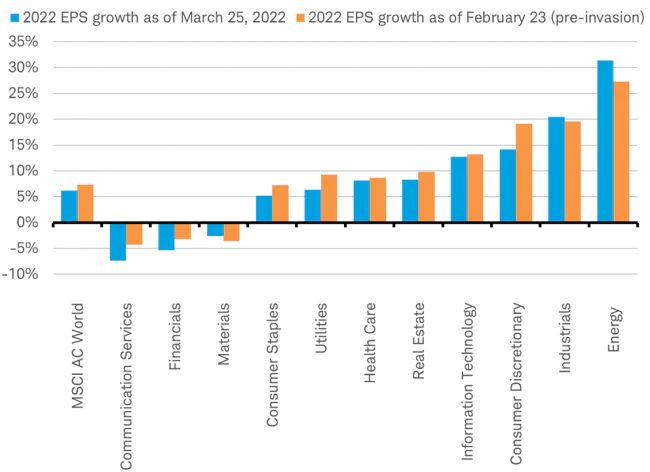
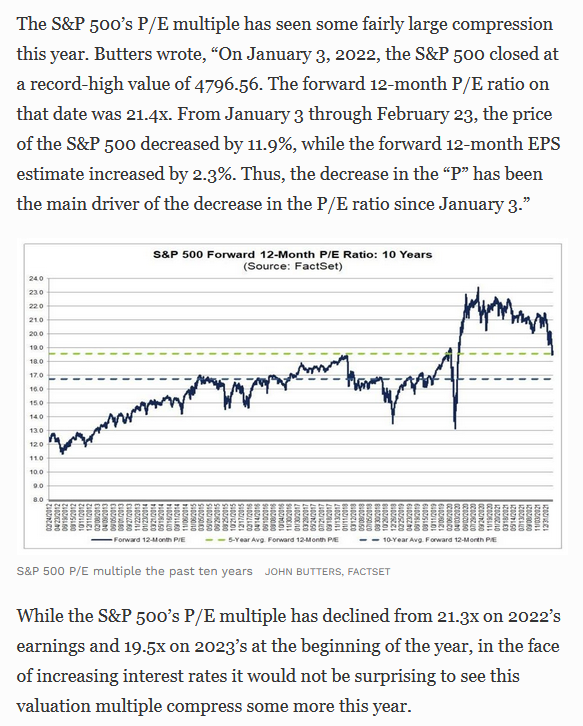
I dati delle immagini di questo Post, ad esempio.

E poi un po’ di semplice matematica, che trovate qui sotto sia nel testo sia nell’immagine. Non vi resta di farveli da soli, due conti, e poi continuare a leggere più in basso.

While we often search for reasons for why the stock market is dropping, sometimes it’s simple math. The yield on the benchmark 10-year U.S. Treasury yield has risen 0.038 percentage point to 2.753% on Monday, and higher bond yields put pressure on valuations by reducing the “equity risk premium,” or the amount of extra return an investor should expect to get from stocks.

The math works like this. The S&P 500 had a price/earnings ratio of 19.35 at Friday’s close. Flip the P/E to get the E/P, or earnings yield, in this case, 5.17%, subtract the 2.75% 10-year yield, and you get an equity risk premium of 2.4%. Now, compare that to the start of the year, when the 10-year traded at 1.5%, and stocks traded at 21.5 times earnings, or an earnings yield of 4.65%. That meant stocks, even at a higher valuation, offered 3.15% more than a Treasury, meaning that investors earned a higher risk premium, despite the S&P 500’s higher P/E at the time.
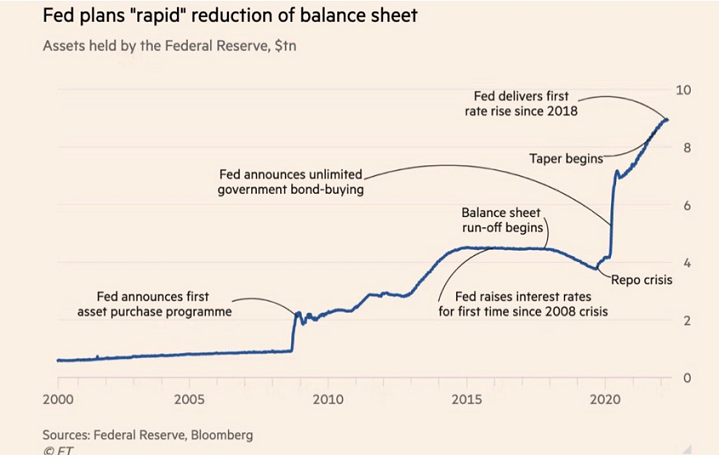
All of this, of course, is due to the Federal Reserve, which is expected to aggressively hike interest rates this year and next as it battles historically high inflation. It may also be planning to begin “quantitative tightening,” or reducing its balance sheet, as early as its May meeting. Last week, comments from a number of officials at the central bank and the minutes from the last Fed meeting suggested the Fed will move aggressively to tighten policy, with a sizable half-point rate hike expected soon.

“Last week’s unexpectedly aggressive pivot by several Fed officials, who are normally considered to be of a more dovish persuasion, [has seen] U.S. 10-year, 5-year, and 2-year yields hit their highest levels in over three years,” said Michael Hewson, an analyst at broker CMC Markets.

In the spotlight this week will be a key U.S. inflation reading. The release Tuesday of the consumer-price index for March will be the last CPI data the Fed receives before its next meeting on monetary policy.

Also in focus is the start of the first-quarter earnings season. While just 15 companies in the S&P 500 will report results, they include major U.S. financial groups JPMorgan Chase (ticker: JPM) and BlackRock (BLK) on Wednesday, before Citigroup (C), Morgan Stanley (MS), Goldman Sachs (GS), and Wells Fargo (WFG) on Thursday.

Detto qui sopra dei multipli e delle valutazioni, passiamo ora a tratare dei temi principali di questa stagione delle trimestrali: ve li abbiamo, per vostra comodità, evidenziati nel brano che segue.

The good news is that corporate sales are forecast to grow briskly in the first quarter, up from expectations earlier this year.

The bad news is that corporate profits are expected to grow about half as fast as sales. This margin compression doesn’t bode well for stock prices during earnings season, particularly since the market has run up in recent weeks.

The earnings should show an economy that continues to steam along, despite rampant inflation and war in Ukraine. Analysts expect first-quarter sales for S&P 500 companies, in aggregate, to have grown 10.7% year-over-year, up from 9.7% expected growth at the start of the year, according to FactSet. The increased revenue estimates come even as the Russian invasion of Ukraine—and Western sanctions on Russian energy—have boosted commodity prices. On top of that, the Federal Reserve has already begun lifting interest rates to curb economic demand and high inflation. Earnings per share on the S&P 500, are expected to rise 4.8% year-over-year, down from 5.7% expected growth at the beginning of the year. 

When sales growth is faster than profit growth, it means companies’ costs are rising faster than sales and their profit margins are declining. For some companies, higher commodity costs are hurting margins. Others are getting hurt by shortages of steel and other metals. And companies of all stripes are paying higher wages to workers. “We are seeing a real margin headwind for the average company,” says Christopher Harvey, chief U.S. equity strategist at Wells Fargo. 

The falling profit margins are particularly noticeable in the industrials sector. Caterpillar (CAT), is expected to see its operating margin fall to 13.4% in the first quarter from 15.3% in the first quarter last year. Even Deere & Co. (DE), which is usually able to lift prices of its farm equipment substantially when its costs rise, is expected to see its operating margin decline to 20.9% from 22% in the same quarter last year. 3M (MMM) is expected to see its operating margin fall to 20% from 22.5% last year. Indeed, the industrial sector has experienced the largest year-to-date decline in first-quarter earnings estimates out of any S&P 500 sector, according to FactSet. 

Meanwhile, the broader stock market, hit hard earlier this year, has been rebounding in recent weeks. The S&P 500 is up about 7% from its closing low of the year, struck on March 8. A more frothy market only makes future gains harder to come by.

So with stocks getting more expensive, it’s less likely that they will post big gains after reporting earnings. The S&P 500’s aggregate forward earrings multiple is now about 19.3 times, up from a low of just under 18 times last month. Stock prices are now reflecting a large expected earnings stream in the future. 

When stocks trade at such a lofty multiple, companies typically need to beat earnings estimates by a large percentage to send share prices moving up. “You’re setting up for an earnings season that needs to be good, both in terms of the numbers that come in and the forward guidance,” says Dave Donabedian, chief investment officer of CIBC Private Wealth US. “The bar is set high. It’s going to be tough to clear the bar.” 

That doesn’t mean equity investors should give up hope on finding good buys during earnings season. Companies whose shares have already been pounded before releasing earnings could see their shares rise after releasing less-than-stellar results. They could be enticing buys at the right moment. “How has the company traded into earnings?” Harvey says. If a stock is down, it presents “a little bit of a better risk/reward because it’s priced in some of the bad news.”

Lulu Lemon Athletica (LULU) is a good example. The company posted a mixed quarter, missing sales expectations and beating EPS estimates. The stock gained almost 10% the trading day after it reported earnings in late March. It had fallen 12% for the year through the day before earnings. 

It’s a tricky market. Finding beatdown names into earnings reports is one viable strategy. 

Abbiamo chiarito, grazie al brano che avete appena letto, quali saranno i temi intorno ai quali si concentrerà l’attenzione di chi investe in Borsa, negli Stati Uniti come in Europa, nel prossimo mese e più. per completare questo lavoro che Recce’d vi offre, ci concentriamo sulla strettissima attualità: da oggi vedremo quali sono i risultati trimestrali delle grandi banche USA, e quindi abbiamo valutato opportuno selezionare per voi un’analisi di questo specifico settore, analisi che vi offriamo in lettura qui di seguito e che chiude il Post.

Subito all’apertura dell’articolo che segue, leggete il tema “caldo”: la ricaduta dell’aumento dei tassi di interesse sui conti delle banche. Con i nostri Clienti, ne abbiamo discusso in dettaglio nelle ultime due settimane. Loro, i nostri Clienti, non avranno sorprese. Per voi lettori del Blog, nell’articolo abbiamo evidenziato i temi ai quali prestare maggiore attenzione nelle prossime due settimane.

For years, bank investors wanted to see the Federal Reserve launch an aggressive series of interest-rate increases. They are finally getting their wish, but it is unlikely to be much help to the stocks in the near term.

The big banks’ earnings begin this week, with JPMorgan Chase (ticker: JPM) the first out of the gate on Wednesday. Analysts are at a bit of a loss over what exactly to expect from the sector in light of the Fed’s promises of bold moves against high inflation on one side, and the war in Ukraine on the other. 

The Fed’s move to lift interest rates should be a boon for net interest income at the banks because that generally widens the gap between what they pay for funds and what they receive from loans. But the recent inversion of the yield curve, with yields on short-term debt above those on long-term securities, has Wall Street worrying about a recession, which obviously benefits no one. 

One thing Wall Street can agree on is that earnings will be weaker than a year ago because the first quarter of 2021 was so strong. Capital markets and trading activity has been slower and investors can’t count on banks releasing billions of dollars of reserves—money set aside to cover pandemic-era loan losses that didn’t materialize—to boost returns. Across the industry, the team at S&P Global Markets Intelligence expects, earnings will fall by 8.4% despite the benefit of higher rates.

“The Federal Reserve’s efforts to combat inflation will boost banks’ net interest margins, but mountains of excess liquidity will prevent the key metric from returning to prepandemic levels in excess of 3.30% until 2026,” according to Nathan Stovall, principal analyst at S&P Global.

It’s a sentiment widely held on Wall Street. Analysts at Baird expect an unspectacular performance from the stocks as earnings roll in.

“Even with rates being higher in recent weeks, sentiment has become more negative, reflecting general macro fears and the group being crowded and consensus earlier this year. With the stocks being de-risked in recent days, we expect the group to trade OK as we move through reporting,” David George, analyst at Baird, wrote in a recent note.

Barron’s warned earlier this year that it was time to be choosy on the banks. While the sector looks safe, some banks are better equipped to navigate today’s challenges than others.

One area of particular concern is how much Russia’s invasion of Ukraine will weigh on the U.S. banks. So far, the direct impact appears to be quite minimal as many banks pulled back on their dealings with Russia in response to sanctions levied following Russia’s annexation of Crimea in 2014. But little exposure doesn’t equal zero exposure.

Goldman Sachs (GS) and JPMorgan recently said that they plan to exit Russia. JPMorgan noted that it could lose $1 billion due to its Russia exposure. Citigroup (C) has said that it stands to lose $4 billion. Goldman’s exposure to Russia is $700 million, according to the bank’s financial filings.

And then there are the knock-on effects of geopolitical concerns. While the banks themselves may not be directly exposed to the crisis, their clients may be feeling the pain more in terms of higher prices and other difficulties running their businesses. No doubt Wall Street will be paying close attention to this when CEOs give their views on the macroeconomic outlook.

In the first-quarter results themselves, analysts expect to see weakness in investment banking, particularly in equity capital markets. Data from Dealogic shows that revenue is down 75% year over year and 61% quarter over quarter. The volume of deals that have been announced year to date has fallen by nearly a third compared with a blockbuster 2021. Backlogs of transactions appear strong, but completing deals is taking longer due to a tougher regulatory climate.

Trading is also going to be a challenging spot. The first quarter certainly brought volatility but it isn’t clear if it benefited banks. Still, strength in currency and commodity trading should offset weakness in equities.

Here’s what Wall Street expects for the big banks, according to FactSet data:

JPMorgan: Earnings of $2.72 per share on $30.6 billion in revenue. Net income of $8.2 billion, down 42% from last year.

Citigroup: Earnings of $1.43 per share on $18.3 billion in revenue. Net income of $3.1 billion, down 59% from last year.

Goldman Sachs: Earnings of $8.95 per share on $12 billion in revenue. Net income of $3.3 billion, down 51% from last year.

Morgan Stanley (MS): Earnings of $1.76 per share on $14.4 billion in revenue. Net income of $3.1 billion down 21% from last year.

Wells Fargo (WFC): Earnings of $0.82 per share on $17.8 billion in revenue. Net income of $3.3 billion, down 30.6% from last year.

Bank of America (BAC): Earnings of $0.75 per share on $23.3 billion in revenue. Net income of $6.2 billion, down 17.7%.

With the smallest expected drop in profits, Bank of America, which reports next Monday, is emerging as the favorite on the Street, with 61% of analysts ranking it a Buy. The consensus price target implies upside of 28% for the stock. While analysts at Keefe, Bruyette & Woods have a Market Perform rating on the stock, they note it is the “safe play” for this quarter, due to fewer risks for its capital markets business and its positive sensitivity to higher rates.

As for the others, expect a bumpy ride.

Mercati oggiValter Buffo
A proposito degli Anni '70, gli Anni '20, delle ragioni per essere ottimisti (e su come si fanno le previsioni)
 

Vi presentiamo in lettura un articolo di Barron’s. Forse, l’articolo più significativo che Recce’d ha letto nel 2022.

Il titolo di Barron’s si richiama al tema di cui si parla di più in questo momento tra gli operatori di mercato: la recessione.

Chiariamo subito: da questo punto di vista l’articolo che segue a noi di Recce’d NON interessa: Recce’d NON condivide ciò che viene detto nell’articolo a proposito della recessione.

Ma ci sono altre cose interessanti, ed importanti: e sono molte.

Le elenchiamo prima di lasciarvi alla lettura:

  1. secondo noi è importantissimo, e diremo FONDAMENTALE per il nostro mestiere, quello che viene detto a proposito di “come si fanno le previsioni”

  2. è utilissimo rileggere del tema degli Anni’20, tema che andava di moda tra operatori e banche di investimento solo sei mesi fa

  3. ovviamente è utile anche leggere ciò che vene detto degli Anni Settanta (tra parentesi, una interpretazione che Recce’d NON condivide)

  4. è molto utile leggere ciò che si dice sui fattori da cui si origina l’inflazione di oggi

  5. è utile riflettere sulle affermazioni in merito a quello che i mercati finanziari oggi hanno già scontato nei prezzi (un rialzo dei tassi ufficiali allo 2,50%) e in merito alla sostenibilità del debito negli Stati Uniti (anche qui, Recce’d NON condivide questa analisi)

  6. infine, un punto che (come sanno benissimo tutti i nostri Clienti) è centrale nella nostra strategia di investimento da ormai due anni: il “ritorno alle cose reali”. Da questo ritorno, deriverà un altro ritorno: il notevole ritorno che i nostri portafogli modello genereranno per i nostri Clienti nel 2022, nel 2023, nel 2024.

Vi proponiamo quindi di leggere l’articolo che segue con grande attenzione (eventualmente facendovi aiutare da un traduttore dal web) e poi riflettere sulle vostre attuali posizioni investite sui mercati finanziari. Noi di Recce’d siamo qui, se desiderate per approfondire e consigliarvi.

When a prominent economist predicts an event will drag down growth by 0.3 percentage point, TS Lombard global macro strategist Dario Perkins usually gets a few social-media alerts thanks to one of his most popular writings.

The piece, a tongue-in-cheek guide to banks’ economic research, calls out 0.3-percentage-point predictions as a commonly used trick of the trade. Also on the list: making radical forecasts but assigning them a 40% probability, and warning of recession dangers while assuring readers the economy looks good for the next 18 months.

“If something happens in the world, and you ask an economist about the impact, they will always say 0.3 percentage points,” says the 43-year-old Perkins, a managing director at the London-based macroeconomic forecasting firm. “The reason is that it’s significant, you can see it, but it doesn’t change everything. It allows this false sense of precision.”

Luckily, he has room to reject the conventions of the forecasting business, after spending a few years as a top-ranked economist at ABN Amro and working for the U.K. Treasury. Rather than providing vague warnings about the dangers of future recession, Perkins says the European economy is already contracting.

He recently chatted with Barron’s on Zoom from his home in a Kent town that he shares with his wife and three children, discussing global inflation, rising interest rates, the 1970s, and the “Tangible ‘20s.” An edited version of our conversation follows:

Barron’s: Between the reopening from Covid-19 and Russia’s invasion of Ukraine, how are you looking at the global economy right now?

Dario Perkins: Before this crisis in Ukraine, this was the hardest economy to interpret that I’ve seen in my career. In late 2020 it was very hard to tell whether the world had totally changed during the pandemic, or whether people were over-extrapolating from massive Covid-19 distortions. And it seemed weird to think that you could just shut down an economy completely, reopen it, and then extrapolate from that reopening process into this idea of the Roaring ’20s.

Nobody’s talking about the Roaring ’20s anymore, but that was certainly a big topic last year, wasn’t it? You can debate about whether the U.S. economy was overheating because of tighter labor markets and wages, but in Europe, there’s been no sense of overheating at all. And now clearly there are lots of people in Europe who are going to really struggle with the fact that 50% of our energy’s just gone up massively in price. The difficulty here is we just don’t know how long this situation is going to last.

Do you think Europe could go into a recession? Where would we see the early signs of that?

The European economy is probably contracting right now, because inflation is hitting 7% to 8% and wages are going up 1%. People are getting very squeezed by this and we’re not yet seeing it in the data because it’s too early. But certainly there’s been a short-term contraction in the economy—it’s just whether it spills over into a deeper, broader problem. There’s still a good chance that we can shake this off.

If this [invasion is] over, the slowdown is going to fade very quickly. If this goes into months, then the chance of a broad recession in Europe suddenly increases a lot.

And the war makes inflationary pressures worse too, right? Between the potential for a slowdown and high inflation it can’t be easy to be a central banker right now.

You know, [central bankers] take a lot of credit for the fact that inflation has been low over the last 30 years, and they attribute that to their credibility. If you’re a central banker, your big fear, even six months ago, was that you were making the same mistakes that policy makers made in the 1970s. Central bankers have been brought up with the ’70s as this cautionary tale of what can go wrong if a central banker doesn’t do the appropriate things when inflation starts to appear.

I don’t think you can be a central banker and not look at this situation and think, ‘oh my God, is it happening again?’ … You see a global energy crisis with inflation that’s already very high and about to suddenly get higher, and that echo suddenly starts to feel even stronger.

Do you think that the 1970s comparisons are warranted?

Well, there are some superficial similarities with the 1970s. The first is the energy price shock. That’s happening against a backdrop where you already had an inflation problem. … And central banks were first inclined to dismiss it rather than react to it. Those are the similarities. I would say those are mostly superficial.

The big difference is institutions. We’ve spent the last 40 years dismantling the institutions that gave us that inflation in the 1970s, because that inflation, it changed everything. We took apart that post-World-War-II economy. We destroyed worker power. We destroyed trade unions. We banned wage indexation. We opened up product markets. We created this globally competitive world.

To me, the 1970s were all about this power conflict between labor and capital. There was a young, militant, unionized workforce. They were making excessive wage demands, because they didn’t want to accept the slowdown in productivity. Companies were protected from global competition and had simple pricing mechanisms like cost-plus pricing—whatever cost they faced, they just added on a margin and passed it on. So an automatic spiraling of wages and prices came out of that conflict. It’s very unlikely that we see those kinds of dynamics again.

But wages are rising, right?

Today, at the low end of the skill spectrum, you’re seeing workers getting big pay raises because there’s been a reluctance of people to return to those occupations after Covid-19 closures. That has created some worker power in certain sectors of the economy and fed through into wages, but I don’t think that’s going to lead to spiraling.

The minimum pay of people in those sectors has gone up, and it’s never going to go back down again. But it isn’t going to keep rising 10-15% year after year. Still, there is an element of power there.

You mentioned another way things are different today—companies are now globally competitive. How do companies fit into all of this?

There’s an element of power in the corporate sector as well. Over this [pandemic] period, companies have discovered that they can pass on cost pressures. But the question that’s really difficult is whether that is specific to the Covid era, or whether that’s some kind of cultural change.

On one side, you could say, companies have discovered that actually they can raise their prices, and consumers will accept it, so they’ll just keep increasing prices. That would be the thing that would worry central bankers. And when you look at the last two earning seasons in the U.S., you certainly have companies bragging about their pricing power. Not just saying they have it—actually bragging about it.

But everybody knew that companies were under all kinds of cost pressures because of the pandemic, so consumers accepted it, because they understood that this was a weird kind of bizarro world that we were in.

Still, if there’s one area where I could be wrong—that’s the thing that worries me the most, this shift in the cultural acceptance for prices going up. And it’s not something that we can really measure, so we’re only going to know over time. If I were a central banker, that’s what I would be more worried about than some kind of wage-price spiral that comes from workers demanding too much money.

If there’s no wage-price spiral, where do you think inflation goes from here?

My bet is that inflation will come down quickly, once we get through all of this mess.

I’m still kind of on Team Transitory, even though you can’t say that anymore. You should never say you’re on Team Transitory. I don’t think that central banks have to be much more aggressive to try and force inflation down.

Some argue that because inflation is so strong now, that means it’s already too late, right? How will central bankers get prices under control?

Central banks want to get back to some kind of neutral policy. It’s not that they think inflation is going to spiral higher, but they think that’s a risk, and they think they’re badly positioned to deal with that risk because they’ve still got these emergency levels of interest rates.

There’s an almost automatic desire to get interest rates up. If the Fed can get back to interest rates of 2.5%, which is roughly neutral … lot of policy normalization is already priced in. Markets have already absorbed the idea that interest rates are going up very rapidly.

Looking beyond that, we’re wondering, where does inflation settle? And what will central bankers do? If inflation drops below 4% and stays there, that’s a tolerable level of inflation. It’s above target, but they undershot their target for the best part of 20 years, so having a few years of 3.5% inflation isn’t going to make a huge difference. Central bankers would probably bite your hand off if you offered it to them right now.

If inflation settles above 4%, I don’t think they would tolerate that. If you look at Fed history, 4% inflation seems to be the cutoff between when they start to panic and become much more aggressive. Really, the only way to do that is to cause unemployment to go up, but unemployment only ever goes up in a recession. So really, that is a dynamic where the Fed would have to engineer a recession to get inflation down.

Some Fed watchers believe that officials won’t be able to raise interest rates too high without causing a recession. Are you worried about the sustainability of debt as interest rates go up?

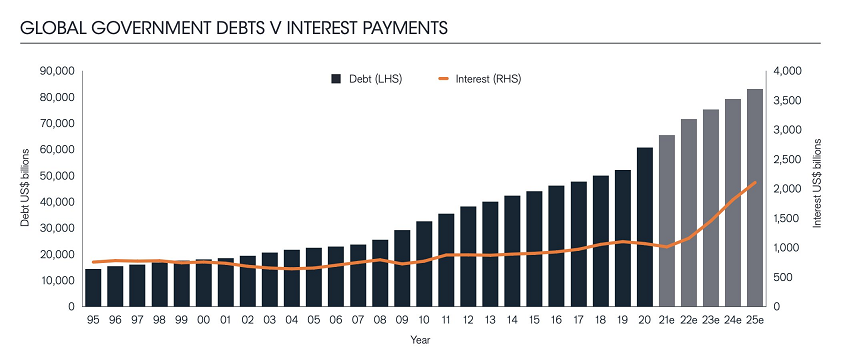
I’ve done a lot of work on debt sensitivity of different countries. … The economies that look the most sensitive to rates going up are the ones that didn’t have a problem in 2008, because they’ve just continued to leverage up. Those will probably blow up well before we start to see real problems in the U.S.

In Canada, for example, when interest rates start to go up even a little bit, we start to worry about debt servicing costs, because they’ve accumulated so much debt over the last decade… there’s a huge amount of household debt, a huge amount of corporate debt, the debt that’s been taken on is all variable rate, and then they just had this massive housing boom… there’s this real vulnerability from all this borrowing that’s been happening in Canada.

But the U.S. has done a lot of deleveraging, so I’m not sure that the real economy is sensitive to interest rates going up. Central bankers can just about pull off a soft landing. But if inflation stays too high, then the chances of them pulling it off are pretty much zero at that point.

Another one of your tips for bank economists is to avoid making market predictions. But I have to ask: Do you have any views on global markets right now? If rates are going up and central bankers pull off tightening without a recession, where should people be investing?

The really important thing is that fiscal policy globally is going to have to play a much bigger role than it did over the last decade. … That will give you a different type of stock market. The [recent] rotation from growth to value, that’s a secure theme. I think that’s going to be the theme of the 2020s, actually.

We’re not going to have zero interest rates forever. Defense and industrial spending, infrastructure, climate change investment, housing—these are all real-economy [growth] impulses. These are the Tangible ’20s. It’s the return of value, the return of tangible investment, the return of real things.

That’s a better dynamic for real people, and it doesn’t make me bearish on the stock market. It’s not bullish for [big tech stocks], but it’s bullish for the stock market in general. And it’s bullish for society, because all of the problems that we’ve had over the last decade—inequality, stagnant wages, polarization, you know—these were things that we couldn’t address with monetary policy. If you’re going to start to use fiscal levers more, you can actually start to challenge those problems.

Mercati oggiValter Buffo
Contro? Contro chi? Contro che cosa?
 

Qui sotto, potete leggere ciò che ha scritto il giorno 8 aprile 2022 Bank of America, già Merrill Lynch, una delle banche di investimento più grandi al Mondo, una delle più influenti, una delle più ascoltate e rispettate. Una di quelle banche per le quali lavorano “quelli che sanno le cose dall’interno”.

Come leggete qui sopra, Bank of America scrive “Amazing!”. Significa “Stupefacente!”.

Che cosa c’è, di stupefacente, sorprendente, non previsto?

Recce’d scrive queste cose, proprio queste cose, queste stesse cose ai Clienti ed ai lettori … da quanto? Anni, molti anni.

Le medesime cose, espresse anche con le medesime parole.

I portafogli, per la fortuna dei nostri Clienti, ne hanno SEMPRE tenuto conto, di quello che oggi scrive Bank of America. Non da qualche settimana nel 2022: da anni.

In questi anni, abbiamo ascoltato (per fortuna) molte voci critiche e molte voci contrarie: sintetizzando, ci è stato fatto osservare che “loro (“le Banche Centrali) fanno quello che vogliono”; oppure “non è detto, che le cose vadano come dite voi … perché essere così negativi?”. E soprattutto: “perché posizionarsi sempre contro?”.

Noi ringraziamo ogni giorno tutte queste voci critiche. Ci hanno spinto a fare di più, a fare meglio, ad approfondire, a ragionare ancora.

Una sola cosa, non abbiamo mai capito: contro chi o che cosa noi di Recce’d ci saremmo posizionati? Non lo abbiamo mai capito, sinceramente. Contro chi? Contro che cosa?

E’ impossibile essere “contro” qualcosa che non esiste, o che esiste unicamente nella fantasia delle persone. Non si può andare contro un nemico immaginario, perché … non esiste.

Anche per i mercati finanziari, esiste una sola realtà: non esistono due realtà tra loro alternative, come in certi (brutti) film di fantascienza. La realtà è una sola.

Si può, per un periodo, camuffarla e metterle il trucco, con le parole: parole del tipo “va tutto alla grande”, “abbiamo previsto tutti i rischi”, “l’inflazione è transitoria”. Ma dopo le parole, sempre e comunque, arriva la realtà, e uno solo ha ragione.

Rileggendo le parole di Bank of America, abbiamo avuto una (ulteriore ed ennesima) conferma del fatto che MAI Recce’d è stata “contro”. Mai siamo stati “contro il trend di mercato”, semplicemente perché il trend di mercato è quello che si vedrà domani, e non ieri. Il trend è una bellissima cosa, ma si vede poi, sempre dopo.

Però questo “dopo”, per noi investitori, è totalmente inutile: è inutile scrivere quello che scrive Bank of America oggi, e che leggete in alto. Tutti i loro Clienti, che si sono affidati a loro, sono già fregati. Anche se forse oggi se ne rendono conto solo in parte,

Bank of America ci dice, qui sopra, una cosa chiarissima: il “contro” nel mondo degli investimenti non esiste, come non esiste il “a favore”. Non c’è nessun “contro”: c’è solo chi arriva prima, e chi arriva dopo.

Tutti arrivano alla realtà dei fatti.

Panico a Francoforte (dopo avere letto Recce'd)
 

Ci leggono anche a Francoforte: ed ai piani alti.

Hanno letto, nella nostra nuova pagina che abbiamo dedicata ai “tweet” durante la giornata un nostro commento dal titolo “Caos”, che Recce’d ha pubblicato venerdì 8 aprile 2022 alle ore 16:45.

E si sono allarmati, agitati e preoccupati.

(Immaginiamo che, in parallelo a questo, siano stati chiamati al telefono anche da un preoccupatissimo Macron, a cui oggi dedichiamo un altro Post nel Blog).

Ed ecco la mossa: la BCE esce allo scoperto, alle ore 17 del venerdì 8 aprile 2022, a distanza di una sola mezz’ora (notatelo bene) dalla chiusura dei mercati finanziari (e 15 minuti dopo il nostro “tweet”)..

La BCE esce allo scoperto: e dopo due anni nei quali ci ha ripetuto, praticamente ogni giorno che “tutto va bene, come meglio non potrebbe”, dice ai mercati: “Houston, abbiamo un problema”.

Ma non basta, la BCE non si ferma a questo. la BCE dice ai mercati (ripetiamolo: a mezz’ora dalla chiusura del venerdì): “Attenti che noi siamo brutti, sporchi e cattivi, e siamo grossi, volenti e armati: e quindi non non ci fermiamo al constatare che abbiamo un problema. Noi veniamo lì e spacchiamo le ossa a tutti quelli che da mesi vendono i Titoli di Stato”.

Patetico.

Non siamo capaci di ricordare una mossa così mal calcolata, così evidentemente improvvisata (leggete bene: “non sappiamo dirvi per il momento esattamente come faremo”), con tempi altrettanto sbagliati ed inopportuni. E così controproducente.

Con chiunque ci è capitato di parlarne, c’è stato un solo commento: “Sono andati nel panico”.

Non lo possono fare, quello che hanno scritto venerdì sera. Neppure volendo: la ragione, ve la spiega il grafico qui sopra, che non necessita di commento.

E vogliamo aggiungere anche il grafico che segue? Giusto per ricordare alle donne ed agli uomini della BCE che fuori dal loro grattacielo c’è … la realtà?

Per tutti gli investitori, il 2022 sarà un anno da ricordare, per la ragione che sarà un anno che fornirà a tutti noi investitori una serie di lezioni, magari dure ma molto preziose, tra le quali possiamo anticipare che:

  1. non è vero che le Banche Centrali fanno tutto ciò che vogliono

  2. non è vero che le Banche Centrali fanno tutto ciò che dicono

  3. non è vero che un atteggiamento ultra-accomodante delle Banche Centrali sostiene i mercati finanziari e previene il rallentamento delle economie

In estrema sintesi: non è vero che le Banche Centrali, nel nuovo Millennio, RISOLVONO i problemi.

Le Banche Centrali hanno CREATO una serie di problemi, e non soltanto per noi investitori sui mercati finanziari. Come vi scrivevamo (ricordate?) già nell’agosto e poi nell’ottobre 2020.

Davvero lo possono fare? Davvero pensano di poterlo fare?
 

Su questo specifico argomento, l’argomento trattato in questo Post, noi di Recce’d ne abbiamo sbagliate poche.

E negli ultimi anni, nessuna

Permetteteci quindi di azzardare una affermazione: “not a chance in hell”, non esiste la minima possibilità.

Se la Federal Reserve riuscisse a fare ciò che leggete scritto nell’immagine qui sopra, e che era scritto nei Verbali pubblicati la sera del mercoledì 5 aprile del 2022, allora la Fed potrebbe affermare di avere vinto.

La Federal Reserve potrebbe affermare che ha fatto ciò che credeva andasse fatto, e che poi è riuscita nell’impresa di rientrare attraverso una “normalizzazione” dalle sue “politiche non convenzionali”.

Non succederà: almeno: nell’orizzonte temporale che per noi, e che per i nostri lettori, è rilevante.

Non succederà, non ci riusciranno mai. Non ci riusciranno perché non è possibile.

Non ci riusciranno perché non hanno vinto: hanno perso.

Le “politiche non convenzionali” hanno imposto al sistema economico e finanziario per un decennio una fortissima crescita della “leva finanziaria” complessiva, ovvero il “leverage”.

Oggi, per vari sviluppi sui quali oggi non ritorniamo, è necessario rispondere ad una domanda, che più o meno fa così: il sistema economico, ma soprattutto quello finanziario, può reggersi oggi, per come oggi è costruito e strutturato, senza che la Banca Centrale immetta ogni mese, nel sistema, una mostruosa quantità di nuovo denaro, denaro di nuova creazione?

La nostra risposta di oggi, 9 aprile 2022: non può. E sta proprio qui, la Grande Sfida che i mercati finanziari devono affrontare in questo 2022, e poi nel 2023 e poi nel 2024.

La sfida sta in questo: l’attuale sistema, fatto così come è fatto oggi, non può reggersi in piedi senza che la Banca Centrale immetta nel sistema denaro di nuova creazione.

La domanda che avete letto poco più sopra porta ad una seconda domanda, una domanda che si è aggiunta nel 2021 e che è diventata di tutta evidenza nel 2022.

E’ in un certo senso l’OPPOSTO della domanda precedente: il sistema può ancora reggersi, da qui in avanti, se la Banca Centrale CONTINUA ogni mese ad immettere nel sistema nuovo denaro?

I dati che trovate nel Post (insieme ad altri dati) vi aiuteranno a formare una vostra risposta. Siamo come sempre interessati a discuterne con voi, e potete contattarci attraverso il sito, con la modalità che preferite utilizzare.