
Investire per il 2022: come si fa gestione nella volatilità
 

In questo Blog, alcuni mesi fa, abbiamo già introdotto la figura di Paul Singer, il gestore a capo del gruppo Elliot Management.

Vi abbiamo segnalato questa figura, di grande competenza ed esperienza, e vi abbiamo suggerito di seguirne il pensiero, le analisi e le pubblicazioni.

Se a qualche nostro lettore fosse sfuggito, noi riportiamo qui sotto il contributo di Paul Singer al Financial Times di questa settimana, contributo che più in basso noi riprendiamo e colleghiamo ad altre considerazioni.
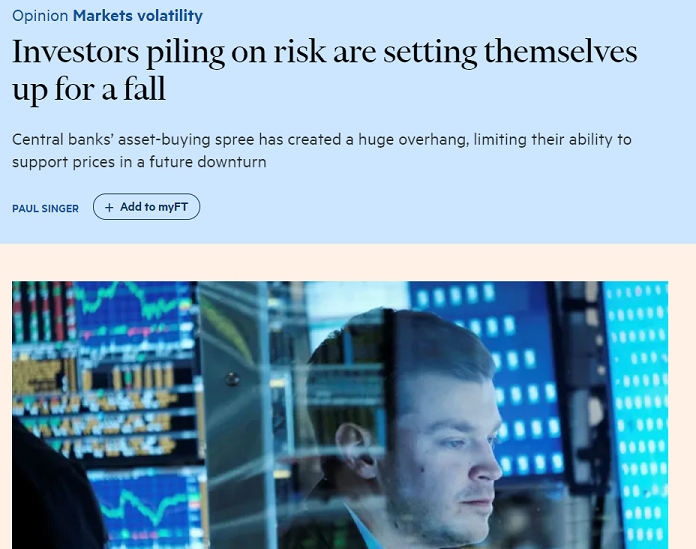

The writer is the founder and co-CEO of Elliott Management

Despite recent jitters over the Omicron variant, global stock market prices remain at or near their highest valuations in history. Bond prices reflect the lowest interest rates in history. And is it any surprise that inflation has broken out of the boundaries of the last 20 years, given the stated goal of policymakers to create more of it?

Across the market landscape, risks are building, many of them hidden from view. Yet, in a surprising twist, a growing number of the largest investors in the world — including socially important institutions such as pension funds, university endowments, charitable foundations and the like — are currently lining up to take on more risk, which could have catastrophic implications for these investors, their clients’ capital and the stability of broader public markets.

What is driving this behaviour? In the main, it is driven by the radically expansionary monetary and fiscal policies undertaken by developed-world governments since the end of the global financial crisis, which were accelerated after the Covid-19 pandemic rattled markets and depressed economic activity last year. And in part it is driven by benchmarking — the practice of institutional investors measuring their performance against a benchmark such as the S&P 500.

As monetary and fiscal policies have pushed securities valuations to new heights, institutional investors have been tempted to overweight their portfolios to stocks, even at record-high prices, for fear of missing out on extraordinary gains. The buying pressure created by these strategies is only driving prices higher and herding capital into risk assets.

At present, risks are at, or close to, the highest levels in market history. For instance, the market capitalisation of all domestic US public and private equities is now at 280 per cent of gross domestic product, much higher than the previous peak of 190 per cent just before the collapse of the dotcom bubble. And household equity allocations are at an all-time high of 50 per cent.

Eventually, rising inflation, rising interest rates or some unforeseen turn of events could cause a substantial stock and bond market decline, perhaps in an unpredictable sequence. What then for the institutional managers when the rush for the exits begins? One answer might be that the authorities will never allow a sustained downturn in asset prices to happen again. This points to one of the key problems with the current set of monetary and fiscal policies in the developed world: they mask and minimise risks while preventing stock and bond prices from performing their indispensable signalling roles.

Currently, policies across the developed world are designed to encourage people to believe that risks are limited and that asset prices, not just the overall functioning of the economy, will always and forever be protected by the government. Due to this extraordinary support for asset prices, almost all investment “strategies” of recent years have made money, are making money and are expected to keep making money. The most successful “strategy,” of course, has been to buy almost any risk asset, leaning hard on the latest fads, using maximum leverage to enhance buying power and buying more on the “dips”. So it is no wonder that under these manufactured conditions, investors would “move out on the risk curve” — investor-speak for taking on more risk unconnected to expected returns.

Most investors who say that they are willing to bear more risk do not actually mean that. What they really mean is that they fear missing out on the higher returns experienced by other investors — in other words, missing their benchmarks. However, the ability of governments to protect asset prices from another downturn has never been more constrained. The global $30tn pile of stocks and bonds that have been purchased by central banks in order to drive up their prices has created a gigantic overhang. With inflation rising, policymakers are reaching the limits of their ability to support asset prices in a future downturn without further exacerbating inflationary pressures.

With all this in mind, it is puzzling that a growing number of otherwise sober money managers are in the process of boosting their allocations to riskier assets, rather than trying to figure out ways to make some kind of rate of return without giving back years of capital accretion in the next crash or crisis. Investors who have upgraded their risk levels, relying on policymakers to protect the prices of their holdings, may suffer significant and perhaps long-lasting damage when the government-orchestrated music finally stops.

Recce’d giudica questo articolo eccellente, e da più di un punto di vista: è una sintesi equilibrata ed insieme efficacissima dello stato degli affari, sui mercati finanziari, ed è chiarissimo anche quando fa riferimento agli atteggiamenti delle diverse categorie di investitori.

Se leggete con attenzione questo articolo di Paul Singer (uomo che certamente NON ha alcun interesse personale a deprimere i mercati finanziari) avrete un quadro preciso di dove si trovano, oggi i soldi che avete investito sui mercati finanziari. Non c’è molto altro da aggiungere.

C’è però da rispondere alla domanda: e quindi? Cosa facciamo? Come operiamo? Come modifichiamo il portafoglio titoli?

Recce’d ha una propria risposta, che concretamente si traduce nel portafoglio modello che successivamente si traduce nei portafogli dei nostri Clienti.

Questo è il servizio che Recce’d propone ai propri Clienti: una gestione di portafoglio in remoto, che non impone a nessuno di trasferire i propri soldi, e che risolve ogni eventuale complessità operativa nel modo più semplice e gestibile, consentendo al Cliente di beneficiare dei numerosi vantaggi dei propri portafogli modello, ed al tempo stesso mantenendo sempre il proprio Cliente perfettamente informato ed anche consapevole di ciò che sta facendo, in totale ed assoluta trasparenza.

Noi non facciamo parte della schiera di imbonitori iscritti all’Albo che sono costretti a raccontare sempre che “tutto va bene come meglio non potrebbe”. Non ci tocca di fare “marchette”, come si dice in gergo.

I nostri Clienti sono tra i pochi ad essere consapevoli dei rischi che stanno correndo, e non solo questo: noi siamo capaci di farli guadagnare, mantenendo i rischi sempre sotto stretto controllo.

Un lavoro importante, e risultati che pochissimi sono in grado di garantire. Non parliamo tanto del rendimento, quanto della consapevolezza e l’equilibrio.

Torniamo alle parole di Paul Singer che avete letto più in alto: tra le moltissime cose che meritano una sottolineatura, noi scegliamo oggi di sottolineare l’accenno ai Fondi Pensione ed ai loro problemi, un tema urgente sul quale ritorneremo poi in un Post successivo.

Poi riprendiamo anche nello specifico una frase di Singer: At present, risks are at, or close to, the highest levels in market history.

Quando i prezzi, sui mercati finanziari, risultano scollegati dalla realtà sottostante, nel brevissimo termine questo a molti sembra essere “un successone”, ovvero “una bellissima cosa”, e questo perché “è facile guadagnare”.

Recce’d vi ripete che i VERI guadagni, nella gestione del portafoglio in titoli, NON si fanno così.

I VERI guadagni sono quelli che restano ALLA FINE di una fase di mercato. I conti si fanno alla fine: sempre, ed anche questa volta.

E quindi, come si gestisce il portafoglio in titoli in una fase come quella che Singer più sopra ha descritto alla perfezione?

Noi al Cliente lo abbiamo illustrato, e per diverse settimane, nel nostro The Morning Brief: quando i prezzi sui mercati finanziari sono del tutto scollegati dalla realtà, chi vince lo fa se è capace di gestire la volatilità e le sue improvvise esplosioni.

L’articolo che segue, sempre della settimana scorsa e sempre dal Financial Times, vi sarà utile a comprendere il natura, origini e ruolo della volatilità in una fase nella quale le Banche Centrali mantengono elevata la liquidità per i mercati finanziari: cosa che a molti risulta difficile da comprendere. Perché non rimane sempre tutto tranquillo?

In aggiunta, vi segnaliamo che, come già fatto da Paul Singer, anche in questo articolo si mette in evidenza l’importanza, negli anni 2020 e 2021, dell’atteggiamento di alcune categorie di investitori verso il rischio: in particolare laddove si dice che: More and more people got sucked into similar positioning. In the process, the risk of systemic financial instability shifted from banks subject to stronger regulatory oversight to under-supervised and poorly regulated non-bank participants in the market.

E questa, amici lettori, per tuti voi è già una indicazione operativa.


The writer is president of Queens’ College, Cambridge, and an adviser to Allianz and Gramercy

As bouts of market volatility have become more common in recent weeks, it is clear that investor appetite to buy on dips, while still strong, will be tested when the US Federal Reserve withdraws support for asset prices.

For now, overall liquidity in markets remains high. While starting to taper, central bank asset buying programmes are still huge. But the sharp swings in markets experienced in recent weeks illustrate a phenomenon that we are likely to see more of: “illiquidity in the midst of liquidity” — a phrase I first heard from Gramercy’s founder Robert Koenigsberger.

The seemingly counter-intuitive notion is that liquidity dislocations can occur within the context of ample overall liquidity. Having experienced sudden bouts of volatility in recent years, investors seem generally well equipped to navigate their way through it, including by using market drops as a basis for further future gains. Yet the emergence this time round of two factors that were not foreseen just a few months ago complicates matters: inflation and the investability of China and Russia. Investors now need to assess more carefully the possibility not just of pockets of illiquidity in the midst of generalised liquidity, but also of a retreat of overall liquidity.

Global bond and equity investors have been taken on quite a rollercoaster ride in recent days. Last week’s unsettling fall in stocks was followed by this week’s impressive two-day rally and yet more outsized moves in bond yields. The immediate causes of this volatility were concern — on health, economic and financial grounds — about Omicron, the new and more infectious coronavirus variant, and the manner in which Fed chair Jay Powell chose finally to retire the gross mis-characterisation of inflation as “transitory”. The volatility caused by disorderly closing of “pain trades” was amplified by a longstanding structural imbalance: the lack of sufficient risk-absorbing capital in the face of a sudden shift in conventional market wisdom.

This is not just about the multi-year reduction in the willingness and ability of intermediaries (broker-dealers) to act counter-cyclically. It also reflects the greater uniformity of portfolio positioning in the context of protracted Fed-induced market distortions. Until now, episodes of sudden illiquidity in the midst of liquidity have proved to be temporary and reversible, and for good reason: The Fed’s constant flooding of financial markets with liquidity reinforced the markets’ conditioning to buying the dip, for “fear of missing out”.

Markets are more fragile than investors think With such high market confidence in the “Fed put”, every bout of localised illiquidity encouraged the private sector to extend its leverage to take advantage of a reversible market drop. More and more people got sucked into similar positioning. In the process, the risk of systemic financial instability shifted from banks subject to stronger regulatory oversight to under-supervised and poorly regulated non-bank participants in the market.

This is where the two new global themes come in — inflation and the investability of major emerging economies. Higher and more persistent inflation limits the Fed’s ability to inject liquidity in a substantial and predictable fashion. It also forces other central banks to become less dovish, resulting in a generalised tightening of global monetary policy. The more this reality sinks in, the greater the risk to the markets’ own factories of leverage and debt, threatening an additional endogenous tightening of global financial conditions. Omicron amplifies this risk given stagflationary tendencies accentuated by the unintended effects of well-intentioned pre-emptive health measures.

This week’s understandable imposition of a vaccine mandate on the private sector by New York mayor Bill de Blasio is just one example. The question of China and Russia is more complex. The greater the uncertainties about the scale and scope of direct Chinese government intervention in markets, the higher the risks to global capital, especially so-called tourist flows that ended up far from their natural habitat, “pushed” there by highly repressed yields at home. This can also tighten global financial conditions.

Meanwhile, the more the west is concerned about threats to Ukraine, the greater the possibility of a destabilising round of sanctions and counter-sanctions. The hope is that recent market volatility is a simple repeat of past episodes of reversible illiquidity amid conditions of general liquidity. But the risk, which would grow in response to the persistence of high inflation and emerging market uncertainties, is one of a generalised and more permanent receding of overall liquidity.

Mercati oggiValter Buffo
Investire per il 2022: la nuova narrativa e l'inflazione
 

Non c’è nulla come la prima pagina del quotidiano Wall Street Journal che aiuta a comprendere che cosa ha importanza, ad oggi, nel mondo dell’economia e della finanza.

E quindi, dei nostri investimenti e del nostro portafoglio.

Pensate che il fatto è di tale clamorosa rilevanza, da avere risvegliato l’attenzione, alla fine e dopo molti mesi, persino della stampa italiana: ad esempio, prendiamo anche oggi il Corriere della Sera.

Recce’d ne ha scritto, in numerose occasioni, anche qui nel Blog, e lungo tutto l’arco degli ultimi 12 mesi: avevamo ben chiaro già un anno fa, che era questo, quello che tutti vedete, l’unico esito possibile di scelte di politica economica spregiudicate, mal calcolate ed azzardate.

Molti ci chiedono: come se ne esce?

Recce’d da molti mesi (dall’agosto 2020) vi scrive di Anni Settanta e di stagflazione: la situazione a noi risulta chiarissima, ragione per la quale, se il “come se ne esce” riguarda gli investimenti ed il portafoglio … noi siamo già pronti oggi.

Come facemmo un anno fa sul tema dell’inflazione, anche sul tema dei mercati finanziari e degli investimenti ci sentiamo di affermare oggi che l’esito possibile è uno solo, e non è certo difficile da immaginare.

Se invece il come se ne esce riguardasse le Banche Centrali ed i politici, allora noi non abbiamo oggi una risposta: è più che evidente il loro grandissimo imbarazzo, la loro confusione. Ascolteremo questa settimana Federal Reserve e BCE, e potete essere certi che tutti i mercati finanziari andranno in tensione.

Chi avesse interesse ad approfondire è invitato da noi a leggere le migliaia di analisi che vengono pubblicate sul Web e sui quotidiani, e farsi una propria opinione. Oppure, in alternativa, contattare noi di Recce’d e confrontarsi con noi su questi temi, anche in considerazione del fatto che Recce’d ha dimostrato una solida capacità di anticipare gli eventi di mercato nel corso degli anni.

Tra le cose che noi vi suggeriamo di leggere, c’è sicuramente quello che ha detto e scritto un autorevolissimo commentatore come El Erian, a cui è riferita l’immagine qui sotto.

L’immagine vi spiega che se si ritarda a reagire, dopo che l’inflazione è ritornata, dopo qualche mese accade che i fattori che sono alla base dell’inflazione stessa cambiano: non sono più i medesimi che l’hanno fatta partire.

El Erian ha le idee molto chiare e da molti mesi: le avranno, adesso, altrettanto chiare alla Federal Reserve, pressati come sono da pressioni di tipo politico da tutte le parti?

Noi da molti mesi NON scriviamo di Federal Reserve: tutto ciò che c’era da dire, lo trovate scritto anche le Blog nell’agosto dello scorso anno, ben 16 mesi fa. Oggi il gioco è scappato di mano, e loro possono solo rincorrere. Oppure inventare qualche cosa di mai visto e sentito: ma quello è un gioco a rischio estremo.

Ci affidiamo, qui di seguito, alle analisi di Bill Dudley, un ex-Governatore della Federal Reserve, che vi introduce ai tempi principali della riunione di martedì e mercoledì prossimi.

Quanto alla BCE, lo sapete già tutti: la BCE per i mercati finanziari oggi conta poco o nulla.

Buona lettura.

Bill Dudley 9.12

The U.S. Federal Reserve has bitten the bullet: At their policy-making meeting next week, in recognition of persistent high inflation, officials will announce a speedier tapering of asset purchases that have been supporting economic growth. The aim is now to complete the program in time to be able to start raising short-term interest rates as soon as March should that prove necessary.

But the taper isn’t all that will be on the agenda at next week’s meeting. Fed officials are also likely to signal a faster and larger tightening of monetary policy over the next three years — to an extent that markets haven’t yet anticipated.

The last time the Fed published officials’ economic projections, in September, the outlook was remarkably benign. They expected inflation to fall back close to the Fed’s 2% target, even as employment pushed past the level consistent with price stability. And they thought this pleasant outcome would require very little Fed intervention: Their median projection for the central bank’s short-term target rate at the end of 2024 was 1.8%, well below the 2.5% level most judged as neutral.     

This time around, the broad contours of the economic outlook will probably be similar. The median forecast for next year will show above-trend growth pushing unemployment below the 4% level considered sustainable in the long run. Inflation will fall from current high levels, though not as much as previously projected, resulting in a larger and more persistent miss over the Fed’s 2% objective.

The biggest change will be in the interest-rate policy officials deem necessary to achieve that economic outcome. Last time, the median projection for the Fed’s short-term interest rate target at year end was 0.3% for 2022, 1.0% for 2023 and 1.8% for 2024. This time, the upward path will start sooner, be steeper, and rise higher.

For 2022, I expect a median forecast of 0.8%. This would signal three 0.25-percentage-point increases next year – not so many as to require a rate hike in March, but enough to be consistent with the faster taper and the unemployment and inflation outlook.

For 2023, I expect officials to project four more rate hikes, taking the median target rate to 1.8% a year earlier than in the September projections. Such gradual, consistent tightening makes sense once the Fed gets started. But policymakers aren’t likely to anticipate moving more quickly as long as they project inflation to remain below 2.5%.

For 2024, I expect the projected target rate to reach the 2.5% level judged as neutral. Anything less seems hard to justify, given that the economy will have been running beyond full employment and above the Fed’s 2% inflation target for several years.

One could make the case that the 2024 interest-rate projections should go beyond neutral, signaling greater resolve to keep inflation in check. But I doubt officials will have the stomach for that, given the uncertainties surrounding any long-term economic forecast, made even more complicated by the constantly evolving pandemic.

The shift in the Fed’s interest-rate projections might come as a shock to markets. Futures prices suggest that investors are expecting two or three 0.25-percentage-point rate hikes in 2022. But the total magnitude of tightening has not increased: Eurodollar futures imply a peak in the federal funds rate of around 1.5%. That’s well below the levels projected by every member of the Federal Open Market Committee, and well below what common sense would dictate. The Fed’s operating framework, actions and projections all suggest that monetary policy will remain accommodative long after employment and inflation have exceeded the central bank’s objectives. It follows that interest rates will eventually have to go higher to compensate.

A faster taper should be welcome news: It gives the Fed more room for maneuver, opening up the possibility of earlier rate hikes if they’re needed. But it may entail a difficult adjustment for markets. At some point, investors will have to revise their interest-rate expectations significantly, potentially triggering a market tantrum. And the longer this adjustment is delayed, the greater the tantrum is likely to be.

Mercati oggiValter Buffo
Investire per il 2022: target di Borsa e target di performance
 

Ne abbiamo già scritto molto di recente, e oggi ci ritorniamo: la scadenza della fine dell’anno viene presa a spunto, dalle Reti commerciali di wealth managers e promotori finanziari, ma pure dalle banche globali di investimento, allo scopo di convincere il Cliente finale a “muovere il portafoglio”, sulla base delle “previsioni” e dei “target” per l’anno successivo.

Ogni anno è così: è un rituale commerciale, come le pubblicità in TV per i panettoni, i pandori ed i profumi.

In questo Blog, così come in altre sedi, abbiamo già illustrato, e dimostrato, che

  1. per il Cliente finale è totalmente inutile fermarsi oggi a ragionare su “dove sarà la Borsa a fine 2022”; ed in aggiunta che

  2. prendere questo spunto come uno spunto per movimentare i portafogli da sempre è risultato dannoso ed ha prodotto delle perdite, a volte rilevati, per il Cliente finale.

E tuttavia, ritorniamo dopo poche settimane a scrivere dei “target” perché professionalmente giudichiamo corretto informare, con dettaglio, i nostri amici lettori di quello che dicono “gli altri”.

Precisiamo: in questo Post, vi forniremo solo una serie di informazioni, senza commentarle. Un nostro commento lo troverete successivamente, in una delle prossime settimane, sempre nel Blog.

Potete leggere qui sopra l’elenco dei famosi “target” per l’indice della Borsa USA nel 2022, con a fianco il nome della banca globale di investimento che li ha pubblicati. Lasciamo al lettore di scorrere la tabella, senza commenti per ora.

Aggiungiamo poi un dato: nel grafico che segue potete vedere quanto, in passato, queste banche di investimento pubblicando i loro “target” sono riuscite ad anticipare l’effettivo andamento dell’indice.

Valutate con attenzione questi dati, tenendo bene a mente che fanno riferimento ad anni molto facili, molto positivi per la Borsa USA, che proprio in questi anni ha ricevuto aiuti dall’esterno in una misura che mai si era vista nell’intera storia della Borsa.

Un secondo dato, che può essere utile al nostro lettore, è quello del grafico che segue: come tutti sapete, pe banche globali di investimento calcolano, oppure dicono di calcolare, i loro “target” sulla base delle loro previsioni per gli utili delle Società quotate.

Ebbene, il grafico qui sotto vi ricorda una cosa importantissima, per ogni investitore che voglia decidere sugli investimenti di Borsa: vi ricorda che, nel corso dell’anno, e quindi dopo che questi target sono stati pubblicati, quelle previsioni per gli utili sulle quali i “target” vengono calcolati cambiano.

Il grafico qui sotto vi racconta in che modo sono cambiati in passato.

Il lettore che intendesse comprendere meglio questo aspetto dei “target” potrà esaminare con dettaglio i due grafici che trova qui sotto, due grafici che ripropongono i medesimi dati con un diverso formato.

Detto quindi che i “target” sono privi di significato, dal punto di vista operativo, e sono semplicemente supporti commerciali per “creare interesse”, ritorniamo però al 2022.

Abbiamo pubblicato, più sopra, l’elenco completo dei “target 2022” per la Borsa USA: le Borse europee come tutti sapete vanno sempre in scia, sia al rialzo sia al ribasso. Non hanno più una loro dinamica autonoma dalla Borsa di New York: almeno, per ora.

Noi, come già scritto, oggi NON commenteremo i “target” e neppure più in generale le prospettive dei mercati nel 2022.

Vogliamo comunque accompagnare i dati offerti al lettore fino a qui nel Post con un commento qualificato, selezionato per voi, che potete leggere qui sotto.

Ripetiamo che vi suggeriamo di leggere questo commento NON perché Recce’d ritiene che questo commento aiuti a comprendere che cosa farà la Borsa USA nel 2022: però, riteniamo che sia importante avere piena conoscenza di “quello di cui si parla sui mercati oggi”. In poche righe troverete raccolti tutti i temi che oggi vanno “di moda” tra gli operatori.

Quello che poi succederà davvero, noi lo affronteremo in un Post successivo. Perché tra i “target” di Borsa e gli obbiettivi di performance c’è una grandissima differenza, da sempre.

Vi facciamo infine notare che il commento che segue si apre con un accenno al tema della volatilità. Tema oggi a nostro parere centrale, tanto che proprio oggi dedichiamo a questo argomento un intero Post, dopo averne scritto per settimane in modo esclusivo per i nostri Clienti in The Morning Brief.

The recent spike in market volatility may herald a bumpier U.S. stock market in 2022, as investors come to grips with an inflection point in monetary policy in the pandemic.

“There probably will be some elevated volatility around the potential tightening of Fed policy,” said Shawn Snyder, head of investment strategy at Citigroup’s U.S. consumer wealth management division, in a phone interview. “Omicron throws in a bit of a wrench” to the 2022 outlook, he said of the new variant of the coronavirus, though investors have appeared encouraged by some early signs that it may be less dangerous than initially feared.

The CBOE Volatility Index or VIX, jumped in late November and remains above its 200-day moving average even after subsiding since last week, according to FactSet data. The VIX broke above 30 last week for the first time since the first quarter of 2021, the data show, amid market jitters over the emergence of omicron and the potential move by the Federal Reserve to remove some accommodation from the market faster than investors had anticipated.

“That’s a big transition that creates tension for investors,” said Lauren Goodwin, economist and director of portfolio strategy at New York Life Investment, in a phone interview. The Fed looks to be positioning for more flexibility for potential interest rate hikes next year, with increased inflationary pressure likely to mean more rate rises in 2022 than currently expected, creating more market risk, she said.

Some investors worry that interest rate-sensitive growth and technology stocks would be particularly vulnerable should the Fed aggressively tighten its monetary policy through rate hikes. The S&P 500 index, which has a large exposure to tech, is on track for a third straight year of strong gains after rising almost 25% in 2021 through Tuesday, according to FactSet.

The U.S. stock market will probably deliver more modest gains “accompanied by higher volatility” next year, Jeffrey Kleintop, chief global investment strategist at Charles Schwab, told MarketWatch by phone.

Goodwin said she also expects increased volatility, amid transitions that include the fading of the fiscal stimulus that provided direct support to consumers during the COVID-19 crisis and the Fed taking its “foot off the gas” in the economic recovery. She expects “much lower” stock-market returns next year compared to gains so far in 2021.

“Most of the equity upside should be realized between now” and the first half of 2022, “when monetary and fiscal policy tailwinds will be strongest,” JPMorgan Chase & Co. strategists said in a 2022 outlook report Wednesday.

Wall Street banks have been rolling out their 2022 forecasts for the S&P 500, with Goldman Sachs Group and JPMorgan being among the most bullish on U.S. stocks. 

Goldman expects the S&P 500 will end 2022 at 5,100, according to a portfolio strategy research report from the bank dated Dec. 3. Meanwhile, JPMorgan analysts predicted in a research report at the end of November that the U.S. stock benchmark will rise next year to 5,050, partly on “robust earnings growth” and easing supply chain woes. RBC Capital Markets has forecast the same price target as JPMorgan, while Deutsche Bank predicts the S&P 500 will end next year at 5,000, according to a slide presentation from its chief investment office. 

Meanwhile, Citigroup set an S&P 500 target of 4,900 for the end of 2022, a research report from the bank in late October shows. Coming in below that level, Barclays predicted in a U.S. equity strategy report this month that the index will finish next year at 4,800.

“Proceed with caution,” the Barclays analysts wrote in their 2022 outlook report dated Dec. 2. “We see limited upside for equities next year,” they said. In their view, “household and corporate cash hoards should support modest earnings growth but persistent supply chain woes, reversal of goods consumption to trend and China hard-landing are key tail risks.” 

Bank of America’s analysts have a lower price target than Barclays for the S&P 500 next year, with a BofA Global Research report last month showing the benchmark will end 2022 at 4,600. 

“Unfortunately we see a lot of similarities between today and 2000 — the tech bubble peak,” said Savita Subramanian, head of equity and quant strategy at BofA, during a late November media briefing on their U.S. stock market outlook.

Morgan Stanley has a more bearish outlook for next year that puts the S&P 500 below the index’s close Tuesday at 4,686.75. A report Monday from the bank’s wealth management division shows a base-case forecast of 4,400 for the S&P 500 at the end of 2022 even with an expected gain in earnings.

“We expect the S&P 500 to be range-bound and volatile, and bond returns to be negative net of inflation,” said Lisa Shalett, chief investment officer at Morgan Stanley Wealth Management, in the note. “Fixed income should be reduced to fund greater exposure to real assets and to absolute return funds.”

The core of Morgan Stanley’s “cautious” view on the S&P 500 is based on price-to-earnings ratios typically compressing during “a midcycle transition,” Shalett said. She pointed to a chart in her note showing that “median stock has traversed the midcycle transition.” The chart shows “the median S&P 500 stock has corrected 15% from its 52-week high,” but the index has been kept aloft by the 15 largest companies now accounting for 40% of its market capitalization, according to her note. 

“While they may be great companies, we are less convinced they will all be great stocks in 2022 as financial conditions tighten, interest rates rise, employment costs increase and inflation remains challenging,” Shalett said. “We think profit margins for the top 15 have peaked.”

In Morgan Stanley’s view, “this suggests investors should move toward stock picking and away from passive index funds,” her note shows. 

JPMorgan expects that “international equities, emerging markets and cyclical market segments will significantly outperform,” according to its report Wednesday.

“The reason for this is our expectation for increasing interest rates and marginally tighter monetary policy that should be a headwind for high-multiple markets such as the Nasdaq,” the JPMorgan strategists wrote, citing the tech-laden Nasdaq Composite Index.

Citi’s Snyder told MarketWatch that during “midcycle” he likes high-quality stocks, “dividend-growers” and global healthcare  equities. Consistent earnings growth and “reasonable valuations” make healthcare attractive, he said, and stock bets in the area can serve as “a volatility dampener” in portfolios.

Immunology is one of three megatrends poised to accelerate next year as “a range of next-gen oncological therapeutics come up for approval and enable more targeted cancer treatment,” according to Jeff Spiegel, head of U.S. iShares megatrend and international ETFs. Shares of the iShares Genomics Immunology and Healthcare ETF were up about 0.2% this year based on midday trading Wednesday, FactSet data show, at last check.

Two other megatrends to watch in 2022 are “digital transformation” intensifying through the cloud, 5G and cybersecurity, and “automation technologies” such as robotics and artificial intelligence, Spiegel wrote in a report this month. Automation technologies should grow “in response to ongoing supply chain bottlenecks and wage inflation” in the pandemic, he wrote.

“I think we’ll actually be dealing with gluts next year rather than shortages,” said Charles Schwab’s Kleintop. “That will help drive down inflation, particularly in the second half of next year, making an aggressive path of rate hikes unlikely.”

The market is expecting three rate hikes by the U.S. central bank in 2022 after Fed Chair Jerome Powell signaled last week that it may speed up the tapering of its monthly asset purchases, said Deepak Puri, Deutsche Bank’s CIO for the America, during a media briefing Monday on his outlook for next year.

While the Fed may become more aggressive in tapering its bond purchases, potentially completing the process in March instead of June, said Puri, he expects the Fed will still be “dovish” on rates next year. Puri forecasts that the Fed will raise rates just once next year, which is below consensus, he said.

“We expect two rate hikes next year,” said New York Life Investment’s Goodwin.

Morgan Stanley’s Shalett wrote in her 2022 outlook note that “we see a classic reflationary rebalancing in which higher nominal and real rates reflect higher average growth and inflation rates.” She also expects yield curves will steepen, profit margins to be squeezed by rising costs, and price-to-earnings ratios to compress in “rate-sensitive sectors.” 

“Within the U.S., we like reopening and reflationary themes and beneficiaries of higher bond yields,” JPMorgan said in its report Wednesday. The bank’s strategists expect the yield on the 10-year Treasury note will rise to 2.25% by the end of next year, the report shows.

“Our view is that 2022 will be the year of a full global recovery, an end of the global pandemic, and a return to normal conditions we had prior to the COVID-19 outbreak,” Marko Kolanovic, chief global markets strategist at JPMorgan, and the bank’s global co-head of research Hussein Malik wrote in the report Wednesday.

According to Shalett, “on most counts, 2022 will be a critical year when the imbalances wrought by the global pandemic begin to resolve and the business cycle normalizes from extremes.”

Mercati oggiValter Buffo
Perché il COVID non c'entra (parte 2)
 

La settimana scorsa, nel nostro Blog, abbiamo chiarito che a giudizio di Recce’d l’instabilità dei mercati finanziari vista nelle ultime settimane è spiegata soltanto per una parte decisamente minoritaria dalla diffusione della variante sudafricana del COVID.

COVID a nostro giudizio è un tema che va ben al di là delle “varianti”, per chi si occupa di investimenti e di gestione del portafoglio.

Lo spiegammo chiaramente già nel gennaio del 2020, ben prima della forte discesa dei mercati finanziari. Qui sotto, nell’immagine, vi ricordiamo il titolo di quella serie di Post del gennaio del 2020.

Nel caso specifico della variante sudafricana, poi, già la settimana scorsa abbiamo messo all’attenzione di chi segue il Blog il fatto che, sulla stampa italiana ed internazionale, il nuovo “allarme COVID” era finito in prima pagina settimane prima che si parlasse della “variante sudafricana”: qui sotto, vi riportiamo la prima pagina del Corriere della Sera del 6 novembre scorso.

L’indice S&P 500 stava sopra 4700 punti.

Anche un semplice esame dei dati, come quello che vi proponiamo qui sotto con il grafico del Financial Times, conferma che per un investitore razionale e consapevole il tema “rischio COVID” è sempre rimasto tra i temi di cui tenere conto, anzi meglio da tenere in grande evidenza.

Dall’industria, ed in particolare dalle banche di investimento, arrivano come sempre, come anche nel gennaio e nel febbraio 2020 ad esempio, messaggi rassicuranti: tutti i promotori finanziari, tutti i private bankers, tutti i wealth managers, e tutte le banche di investimento internazionali da due anni sono impegnatissimi a convincere gli investitori finali (cioè voi) ad investire “come se il COVID non esistesse”.

Proprio la settimana scorsa, la banca di investimento più conosciuta, che è Goldman Sachs, si è spinta a scrivere che “il COVID diventerà una cosa abituale, come il vaccino contro l’influenza”. Lo leggete qui sopra, nella parte bassa dell’immagine.

Vi invitiamo a associare questi messaggi rassicuranti con i fatti (grafico più in alto) e con i dati (ciò che accadde nel 2020). In aggiunta, vi invitiamo a tenere conto che nel biennio 2020-2021 sono stati varati interventi “di stimolo” di una tale grandezza che mai fu registrata in precedenza.

Interventi “di stimolo” che dovrebbero mettere i mercati finanziari e le economie al riparo da qualsiasi “variante”. La variante sudafricana dovrebbe fare … solo il solletico.

Sulla base di ciò che abbiamo appena detto, dovrebbe essere evidente a tutti, quindi, che “c’è qualche cosa che non va” nelle spiegazioni che fanno riferimento unicamente alla variante Omicron.

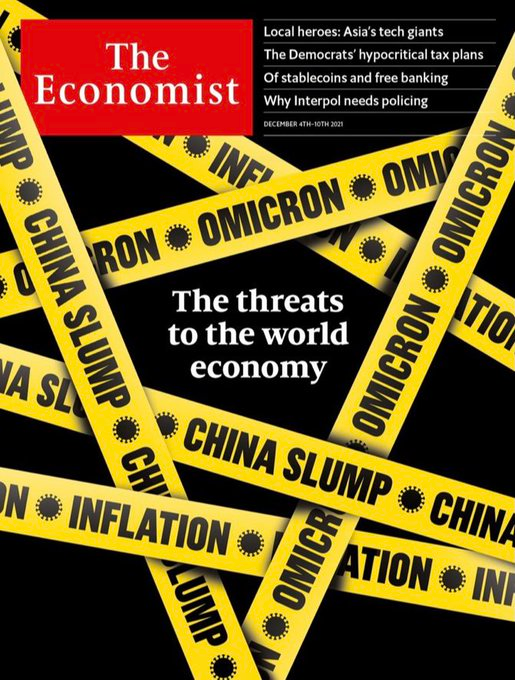
La copertina del settimana The Economist di questa settimana, che vi riproduciamo qui sotto, è un riconoscimento ufficiale del fatto che c’è una sovrapposizione di temi e di problemi che spiega il nervosismo dei mercati finanziari oggi.

Ecco perché noi di Recce’d suggeriamo al lettore di riflettere sul perché, proprio nella seduta successiva alla Festa del Ringraziamento negli Stati Uniti sono arrivati sui mercati di tutto il Globo quegli ordini di vendita massicci.

E poi, nella settimana successiva (quella appena conclusa) in ogni seduta si sono viste variazioni degli indici superiori allo 1%.

Il nostro suggerimento non è soltanto quello di “ragionarci sopra”: a nostro parere è proprio questo il momento di agire, di operare, di proteggere il proprio patrimonio e di cogliere le opportunità (alcune davvero enormi) che i mercati finanziari ci offrono ai prezzi di chiusura del venerdì 3 novembre.

Aspettiamo un vostro segnale per contattarvi e confrontare le nostre opinioni con le vostre.

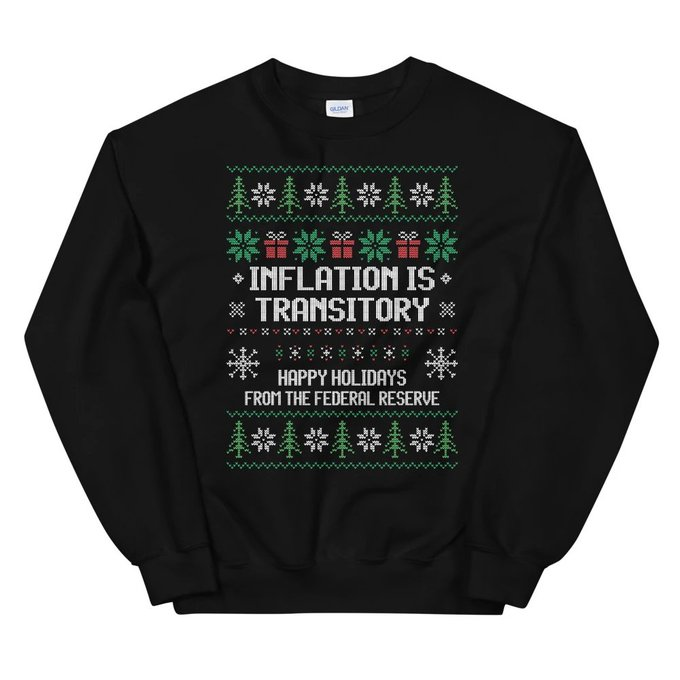
Per quelli che invece preferiscono occuparsi dei regali per il Natale, qui sotto c’è la nostra proposta per un regalo che è insieme divertente, pratico e di buon prezzo, ma soprattutto utile.

Mercati oggiValter Buffo
Chi pagherà il prezzo di questa nuova "svolta ad U"?
 

Questa parte finale del 2021 ci ha riservato, e ci riserverà ancora, un grande numero di sorprese.

Fino ad oggi, la sorpresa che ha colpito noi di Recce’d è l’atteggiamento degli investitori. Di tutti gli investitori, in Italia e nel Mondo. Lungo l’intero arco del 2021, ma in modo particolare nella parte finale, ovvero nelle ultime settimane.

Settimane nelle quali, i fatti lo dimostrato, quasi tutti (e probabilmente numerosi lettori del nostro Blog) con i loro atti hanno dimostrato di avere dimenticato, o sarebbe meglio dire rimosso, i fatti di tre anni fa.

Era il 23 dicembre 2018, una domenica, a due giorni dal Natale, quando il Wall Street Journal pubblicava il titolo che leggete qui sotto.

Il titolo dice: “Il Ministro del Tesoro Mnuchin ha chiamato tutti gli Amministratori Delegati di tutte le maggiori banche per discutere della turbolenza sui mercati finanziari.

Trump allora era il Presidente, ed al posto di Mnuchin come tutti sapete oggi c’è Janet Yellen.

Ora: è vero da un lato che mai la storia si ripete in modo esattamente identico al passato. E tuttavia: la storia offre lezioni ed insegnamenti che non possono, e non devono, essere dimenticati. O meglio, rimossi.

Non è certamente questa la sede per ripercorrere i fatti di tre anni fa: a chi tra i nostri lettori fosse interessato ad approfondire, suggeriamo di partire rileggendo un Post di questo Blog datato gennaio 2019.

Informandosi, ed eventualmente se lo ritiene parlando anche con noi di Recce’d, il nostro lettore vedrà facilmente quante sono le analogie tra quella situazione del dicembre 2018 e la situazione attuale.

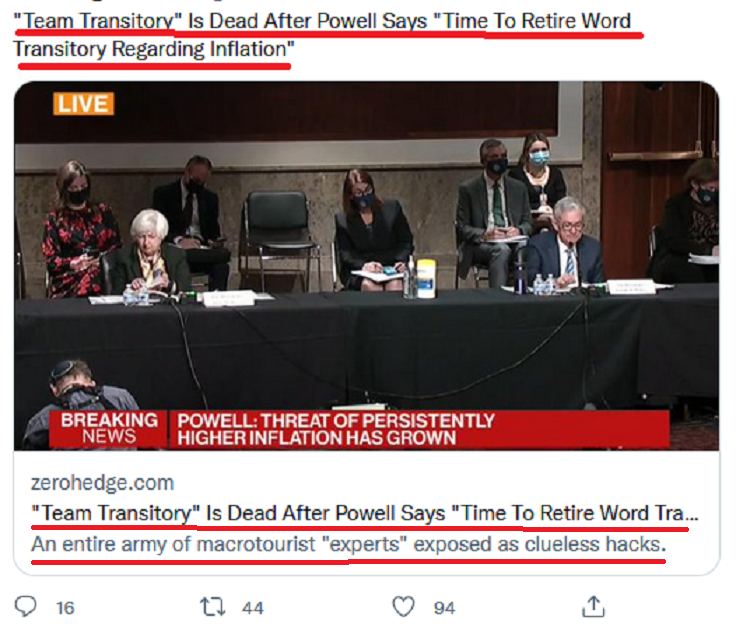
La situazione attuale a cui facciamo riferimento in questo Post è perfettamente sintetizzata dall’immagine qui sopra: martedì scorso, ultimo giorno di novembre 2021, il Grande Capo della Banca Centrale USA ha annunciato al Mondo che “si può eliminare il termine TRANSITORIA quando si parla di inflazione”.

In più occasioni, noi di Recce’d abbiamo definito la narrativa della “inflazione transitoria” come meritava di essere definita: una sciocchezza grossolana, una baggianata, e persino una stupidaggine.

Ma ciò che oggi conta, per noi investitori, non è tanto osservare chi aveva ragione, e chi invece aveva torto, nove mesi fa, e poi sei mesi fa, e poi tre mesi fa.

Ciò che conta per tutti noi investitori è quanto segue: che implicazioni avrà, per i mercati finanziari, per i prezzi degli asset, e per i nostri portafogli di investimento, il fatto che ancora una volta (dopo quel dicembre 2018) la più grande Banca Centrale del Mondo è stata costretta a rimangiarsi le parole, le garanzie, le promesse?

Chi segue il nostro Blog con attenzione, non è stato colto di sorpresa: già nel marzo 2021, ovvero otto mesi fa, noi di Recce’d ci siamo chiesti proprio nel Blog quando sarebbe arrivata la “svolta ad U” della Federal Reserve.

Adesso però che è sugli schermi di tutto il Mondo, tutti gli investitori sono obbligati a rifare i conti, a cambiare le decisioni, a modificare le aspettative. In particolare, tutti quelli che scioccamente si sono affidati alla narrativa della “inflazione transitoria”, al wealth manager, al private banker, a Goldman Sachs e a Morgan Stanley ed a UBS..

Il brano di Bloomberg qui sopra spiega chiaramente perché ognuno di noi è toccato in modo diretto nei propri interessi da questa nuova “svolta ad U”: dice l’articolo di Bloomberg che Powell

“ha acceso un faro sull’inflazione come grande rischio per l’economia ed i mercati finanziari - non tanto perché i futuri rialzi dei prezzi siano di per sé problematici (non lo sono) ma a causa del fatto che il processo di comunicazione della Banca Centrale, e l’assenza di reazioni della politica monetaria, sono in ritardo sulla realtà. Il processo di rincorsa per riallinearsi alla realtà (ed è richiesto un processo molto rapido) potrebbe destabilizzare sia i mercati finanziari sia le economie”.

Il caos sui mercati finanziari di cui parla l’immagine qui sopra è esploso il giorno dopo il Thanksgiving, e tutti i media, in tutto il Mondo, hanno associato quella seduta drammatica alla comparsa della “variante sudafricana”.

Poche ore dopo, sia con i nostri Clienti sia qui nel Blog, abbiamo detto con chiarezza: la variante sudafricana NON è la causa delle instabilità che a cui state assistendo. Ne scriviamo anche oggi, in un altro Post.

Con il passare dei giorni dell’ultima settimana, i fatti poi hanno dimostrato che Recce’d ha interpretato in modo corretto quella situazione sui mercati finanziari.

L’immagine qui sopra vi racconta a che cosa noi ci riferiamo, quando utilizziamo il termine “narrativa”: ormai tutti hanno capito come vanno utilizzati i media, per formare la pubblica opinione: se si riesce a fare scrivere sui social media che una certa cosa è vera, almeno per qualche tempo ci si garantisce che quella cosa sia ritenuta vera da una grande quantità di persone.

Come vedete qui sopra, il termine “transitoria” è stato “trending topic”, ovvero argomento tra i più discussi sui social media, per buona parte del 2021. Il grafico però, al tempo stesso, ci ricorda quanto rapidamente si modificano gli umori del pubblico che fa riferimento ai social media.

Perché, come dicevamo più sopra, la realtà alla fine ha sempre il sopravvento.

E’ stato così per la Federal Reserve, ed anche il Presidente degli Stati Uniti, l’uomo che viene definito “il più potente del Mondo, oggi vede il suo potere di scelta limitato dall’evoluzione della realtà, come ci conferma il titolo qui sotto del Wall Street Journal.

La realtà prevale sempre, persino sull’uomo politico più potente al Mondo: nel caso dell’inflazione, si tratta di un fenomeno che da sempre ha un costo politico molto elevato, come ci confermano i dati del grafico qui sotto.

Torniamo quindi alle scelte di investimento, alla gestione del portafoglio titoli, e quindi a noi investitori.

Come abbiamo già detto, la Federal Reserve con la sua “svolta ad U” ci ha detto che le cose NON stavano come la stessa Fed ci aveva raccontato fino a poche settimane fa.

Quindi, le prospettive sono diverse, da quelle che la maggior parte degli investitori si era sentito raccontare fino a poche settimane fa.

Quindi, vanno rifatti i conti, va modificata la strategia di investimento, vanno ridefiniti i rischi.

Recce’d è qui per aiutarvi in questo processo, sempre mettendo avanti a tutto la realtà, e non le chiacchiere dei promotori finanziari, dei family bankers e delle banche di investimento.

A proposito di banche di investimento e di wealth managers, parliamo adesso di cose concrete.

Qui si seguito vi riproponiamo, mese per mese, le previsioni pubblicate da Goldman Sachs per l’inflazione negli Stati Uniti: nel Blog ve ne avevamo già scritto, ma non siamo del tutto sicuri che il nostro lettore abbiamo riflettuto su questi dati e sulla loro evoluzione nell’arco di pochi mesi.

C’è una lezione utilissima, nell’immagine che trovate qui sotto: come dice il Governatore Zaia, anche noi ripetiamo il nostro “ragionateci sopra”. Fatelo: è nel vostro esclusivo interesse.

Ora mettiamo da parte i ciarlatani, e chiudiamo il Post entrando nel clima natalizio e delle Festività.

Se siete tra quelli che fanno i regali per il Natale, abbiamo per voi un suggerimento che dovreste apprezzare.

Un regalo semplice e sportivo, che potrebbe essere gradito sia dalle signore sia dai signori, sia dai giovani sia dai meno giovani, ma che noi riteniamo che potrebbe essere utile come regalo … da fare a voi stessi. Lo vedete qui sotto, nell’immagine.

Mercati oggiValter Buffo