Top risk (parte 2)
 

Chi ha investito con successo nella prima parte del 2021, a maggior ragione vorrà fare bene anche nella seconda parte dell’anno.

Cosa che risulta piuttosto facile da fare: è sufficiente avere capito bene la situazione attuale, la situazione che ci si presenta a metà 2021.

Prendiamo i fatti dell’ultima settimana, che secondo numerosi osservatori sono anche i fatti di maggiore importanza di tutto il 2021.

La reazione dei mercati finanziari al risultato della riunione della Federal Reserve di mercoledì 16 giugno è stata ampia, più ampia del solito.

Voi avete letto, nelle vostre chat e sui vostri siti, che la reazione dei mercati finanziari è spiegata dal fatto che la Fed ha cambiato atteggiamento: ed ha assunto un atteggiamento meno accomodante, più restrittivo, meno colomba, più falco.

E’ proprio vero? Le cose stanno proprio così?

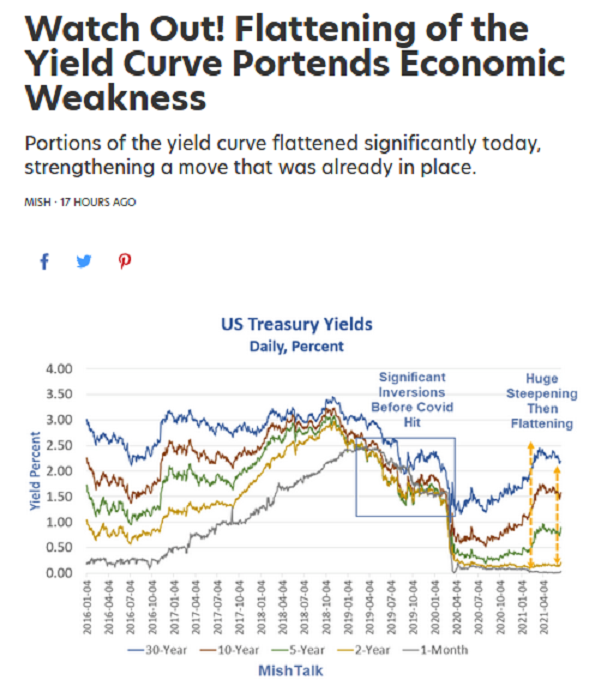
Ma allora … come vi spiegate che i rendimenti dei Titoli di Stato USA tra giovedì 17 giugno e venerdì 18 invece di salire sono scesi?

2021_Jan_898.png

Se un osservatore distratto guardasse unicamente a questo dato, potrebbe ricavarne l’impressione che la Banca Centrale USA abbia promesso ai mercati tassi di interesse più BASSI nel futuro, e non tasso di interesse più ALTI.

Il che, è in contraddizione con la lettura di ciò che la Fed ha detto, almeno secondo i quotidiani ed i TG economia.

Noi di Recce’d, ovviamente, non ci fermiamo ad un solo dato, e ad una superficiale impressione: noi svolgiamo, per i nostri Clienti, una quotidiana e minuziosa analisi, che è il solo lavoro che garantisce al Cliente di arrivare a passaggi come questi con una piena consapevolezza (ed un portafoglio titoli già ottimamente posizionato).

Osservando con attenzione, si coglie il fatto che i rendimenti a medio e lungo termine (10 e 30 anni) sono in affetti diminuiti, ma che contemporaneamente altri rendimenti, sulle scadenze più brevi, sono saliti.

2021_Jan_904.png

Da questi altri dati, cominciamo quindi a comprendere che il quadro è più complicato: non è sufficiente scrivere “La Fed diventa più falco”. Quella, è una affermazione vuota di senso, e di utilità, per chi deve fare scelte di investimento.

2021_Jan_906.png

Non c’è quindi alcun dubbio: ci si è fermato alle spiegazioni di TV e quotidiani, di ciò che è successo sui mercati finanziari ha capito poco o nulla. La Fed è diventata più falco, o più colomba? Per rispondere, non è possibile limitarsi alla reazione dei tassi e dei rendimenti, ed è invece necessario allargare lo sguardo. Ad esempio, al cambio del dollaro USA.

2021_Jan_903.png

Nell’immagine qui sopra, si arriva addirittura ad ipotizzare che il mercato dei Titoli di Stato non sia più un indicatore utile, per comprendere quale è la lettura delle decisioni Fed da parte dei mercati finanziari. In questa interpretazione, il mercato dei Titoli di Stato ormai non è più un mercato libero, è un mercato di tipo “amministrato”, ed i suoi segnali sono regolarmente distorti, e quindi addirittura dannosi per chi deve effettuare scelte di investimento per i propri denari.

Vediamo allora di allargare ancora il nostro giro di orizzonte, e di vedere ciò che ci hanno detto le Borse nelle ultime 48 ore.

2021_Jan_902.png

Il grafico qui sopra ci racconta che in Borsa i più colpiti dalle vendite sono stati i titoli azionari “sensibili all’inflazione”: prendiamo atto, ma … non siamo prprio sicuri di che cosa voglia dire quella definizione, e non siamo del tutto sicuri neppure che ciò che si dice nel grafico sia proprio la verità. Ovvero, non siamo sicuri che le vendite in Borsa siano derivate dal fatto che “non c’è più un rischio inflazione”. Vedremo la settimana prossima.

Per completezza, anche un accenno alle materie prime: noi vi riportiamo questa interpretazione, il che ovviamente non significa che noi la vediamo allo stesso modo. Comunque: qui si dice che il super-ciclo delle materie prime è già finito. Stranissimo: perché non era ancora iniziato …

2021_Jan_909.png

Completata la rassegna, noi offriamo anche al lettore alcuni accenni del nostro punti di vista, che come sempre viene poi tradotto in una quotidiana analisi che riserviamo ai nostri Clienti.

Il nostro punto di vista è che, sul comportamento dei mercati finanziari della settimana scorsa, la federal Reserve abbia esercitato una pressione importante, ma non esclusiva. Ci sono altri dati, della settimana scorsa, che non sono stati messi sulle prime pagine dai TG Economia e dai Supplementi Economia e neppure da MF, ma che hanno avuto un grande peso nelle decisioni degli investitori.

2021_Jan_905.png

Per questo, ma non solo per questo, noi ci sentiamo di suggerire ai nostri lettori di … utilizzare la propria testa per ragionare, meettendo da parte i ritornelli commerciali del promotore finanziario, del wealth manager, del private banker e del venditore di algoritmi e robot.

Potete cominciare a ragionare con la vostra testa partendo da quello che trovate scritto nel grafico qui sotto.

Potete chiudere il cerchio rispondendo poi alla seguente domanda: e adesso, quelli del grafico che sta qui sotto, che cosa fanno?

2021_Jan_814.png
Top risk (parte 3)
 
2021_Jan_896.png

Sul piano professionale, ci fa piacee di avere segnalato al nostro pubblico un anno fa i rischi, già allora evidenti, per tutti gli investitori derivanti dalla politica delle Banche Centrali, così come ci fa piacere di avere anticipato una nuova, e profonda, “svolta ad U” nella politica della Federal Reserve proprio a metà 2021 (come vedete sopra nell’immagine, il 17 giugno a mesi di distanza poi lo potete leggere anche su Bloomberg), e ci fa ancora più piacere di avere scelto un titolo come “Fight The Fed”!” già molti mesi fa.

Così lavora un gestore competente. Così deve lavorare un consulente onesto che conosce la materia di cui si parla: ovvero la gestione degli investimenti finanziari. Il resto, è contorno (se si mette davanti a tutto l’interesse del Cliente, e non quello di ingrassare il maiale, ovvero le commissioni retrocesse alla propria Rete di vendita di Fondi e Unit Linked)..

Quel titolo avrà certamente fatto alzare il sopracciglio a molti lettori, che avranno giudicato come minimo azzardato, se non arrogante, un atteggiamento di sfida alle “onnipotenti” Banche Centrali.

Rispettiamo ovviamente ogni parere: ma sottolineaiamo anche il fatto che la “lotta”, il “combattimento” non è tra Recce’d e la Fed (ovviamente) bensì è tra la Fed e la realtà del Mondo.

Da questo punto di vista, la Fed non solo non è “onnipotente”: è perdente. E’ destinata a perdere sempre, a perdere comunque, e a perdere male.

2021_Jan_910.png

Mercoledì 16 giugno 2021, la Fed ha comunicato al Mondo che l’inflazione del 2021 sarà al 2%. Tre mesi prima, l’inflazione 2021 stava al 2,2% (lo leggete nel circoletto giallo). Spiegazioni per questo errore di previsione sulla variabile cruciale? Zero. Per un errore di questa ampiezza, in tre mesi, un professionista verrebbe immediatamente sollevato dall’incarico.

La Fed poi ci ha detto che la crescita del PIL nel 2021 sarà del 7%, ma che nel 2023 saremo di nuovo al 2,4%. I dati li leggete nel circoletto arancione: ma che razza di boom economico sarebbe, questo? Per questo risultato, sono stati spesi più di 10 mila miliardi di dollari USA tra Governo e Banca Centrale?

Ed infine, la Fed ha detto al Mondo: poco o nulla cambierà, nella gestione dei tassi ufficiali di interesse da parte nostra (lo leggete nel circoletto blu): ma se nella riga sopra c’è scritto che sull’inflazione ti sei appena sbagliata e del 50%, spiegami su che cosa sarebbe basta questa tua previsione sui tassi di interesse?

Perché dovrei fidarmi? Perché dovrei tenerne conto, quando faccio scelte di investimento?

“Fight the Fed!”, allora. Non fidatevi, ragionate con la vostra testa. tra la realtà e la Federal Reserve, scegliete sempre la realtà, quando si tratta di investire.

Top risk (parte 4)
 

Abbiamo scelto di pubblicare, e quindi di portare alla vostra attenzione, un articolo del Financial Times pubblicato la settimana scorsa, prima della riunione della Federal Reserve, per una regione specifica: l’articolo è una descrizione efficace della fase di mercato che tutti voi avete osservato, probabilmente senza comprenderla, tra aprile e giugno.

L’articolo è eccellente (come tutti quelli che selezioniamo per i nostri lettori del Blog), ma va letto avendo ben chiaro in testa il fatto che parla del passato.

Il trimestre tra luglio e settembre, per noi investitori, risulterà del tutto diverso dal trimestre aprile-giugno.

Ed il secondo semstre 2021, nel suo insieme, sarà completamente diverso dal primo semestre 2021.

2021_Jan_894.png

After inflation fears shocked investors in the first few months of 2021, markets have switched into a different mode: a deep slumber. The Vix, a measure of expected volatility in Wall Street’s S&P 500 equity index, dwindled to a pandemic-era low of 15.7 points on Friday, having surged above 80 during the early stages of the pandemic.

A measure of volatility on foreign exchange markets produced by Deutsche Bank also dropped to its lowest point since February 2020 last week. Analysts say the quiet period partly reflects the wait-and-see tactics of the Federal Reserve, which is prepared to sit out a spell of unusually high inflation without removing monetary support, whose withdrawal would probably unsettle markets. But some investors are growing nervous that complacency is setting in.

“We feel increasingly alert” about the calm conditions on stock markets, said Gergely Majoros, a member of the investment committee at European fund manager Carmignac. “It means you need to have your eyes wide open about what is coming next.” In a research note, the investment committee of Swiss bank Credit Suisse also warned of “an elevated level of investor complacency” across asset markets, suggesting there was “higher downside risk to the news flow than usual”. Global stocks have ticked up to record highs as developed nations’ economies recover from the coronavirus emergency, boosting companies’ earnings prospects.

But the gains have been muted in recent weeks, with some investors saying that the good news has long been baked in. The FTSE All World gauge of developed and emerging market stocks has gained just over 1.4 per cent so far this month. Headline consumer price inflation in the US hit 5 per cent in the 12 months to May, following a 4.2 per cent increase in April as prices tied to the economy reopening and supply chain bottlenecks — such as used cars and commodities — soared. Central banks have traditionally tightened financial conditions to combat spiralling prices. But the Fed, which meets this week, has maintained the burst of inflation is temporary. It has succeeded in convincing many investors of that too.

“Markets are agreeing, at least for now, with [Fed chair Jay] Powell that the inflation we are seeing is ephemeral,” said Margaret Vitrano, portfolio manager at ClearBridge Investments. A Bank of America survey of 207 global fund managers responsible for $645bn of client assets this week showed more than seven in 10 believed post-pandemic inflation would be transitory. Many have also already trimmed bond holdings in expectations of lighter Fed support for this market in future, taking the share of bonds in portfolios to a three-year low.

A negative stance towards bonds was another factor that had convinced asset managers to hold on to equities, investors said. “Equities should still rise this year but not at the same rate as when activity was accelerating more quickly earlier in the year,” said Caroline Simmons, UK chief investment officer at UBS’s wealth management arm. Low volatility is not always a signal to sell equities, historic data suggest. Figures compiled by Schroders analyst Duncan Lamont showed that, since 1991, buying the S&P 500 on a day when the Vix was between 15 and 16 would have led to a total return of 14.6 per cent in the following 12 months.

But the sense of calm on markets pointed to a complacency that could shatter, analysts said, if inflation ripped ahead of the Fed’s expectations. “If persistent inflation means higher input costs that companies cannot pass along . . . because households food and energy costs are also higher that really affects profitability,” said ClearBridge’s Vitrano. Stock markets were “treading water,” she said, “because it is too soon to make a call on this”. Currency markets have also been paralysed by prospects of the Fed keeping financial conditions loose for longer than traders initially expected.

The dollar index, which measures the US greenback’s strength against trading partners’ currencies, has moved less than 1 per cent higher this year, after strengthening in the first quarter and then giving up most of its gains since. “The main narrative for the inertia in [currencies] is pretty straightforward, and emphasises the stand-off between the irresistible force of US reflation and the immovable object of an ultra-patient Fed,” said Paul Meggyesi, head of global FX strategy at JPMorgan.

The Conference Board forecasts that US economic output will increase at an annualised rate of 9 per cent in the second quarter of this year, moderating thereafter. Companies’ earnings are expected to follow a similar trajectory. Analysts predict that earnings of companies listed on the S&P 500 will rise by an aggregate 35 per cent this year, falling to a 12 per cent gain in 2022, according to FactSet. On the Stoxx Europe 600, profits are expected to increase 51 per cent this year and 14 per cent in 2022. “The only direction the Fed and other central banks could take now is to reduce accommodation, and that could cause correlation shocks,” driven by a rise in bond yields, said Olivier Marciot, cross-asset investment manager at Unigestion. “Markets are in a wait-and-see mode, it is not about what will happen next but about when . . . If you move too early in the game you will get beaten up.”

La fine della "fine dell'inflazione" (parte 1)
 
2021_Jan_886.png
 

E’ stata una costante, per tutti noi investitori, professionali e non, amatori e non, diretti dal promotore finanziario e non. E’ stata una costante di 25 anni, ed è rimasta costante fino a due mesi fa.

“L’inflazione non c’è più”, siamo arrivati all “fine dell’inflazione”.

Chi segue questo Blog sa perfettamente che Recce’d non ha mai dato credito a questa “teoria della fine dell’inflazione”, ed ha sempre messo in guardia i propri lettori dall’affidarsi a storielle semplificate come quella.

Se invece giuardiamo ai nostri Clienti, i loro portafogli sono già posizionati nel modo migliore, per affrontare questo che è un vero e proprio “cambiamento di scenario generazionale”.

Prendete la pandemia: sui quotidiani tutti scrivono che è già finita, sconfitta, messa alle spalle: sarà vero? Non lo sappiamo certamente noi di Recce’d ma sappiamo una cosa, ovvero che potrebbe. Potrebbe davvero essere finita e sconfitta.

2021_Jan_878.png

Tutto il contrario si deve dire se si guarda ai mercati finanziari: il “cambiamento di scenario generazionale” è appena ai primi mesi.

Recce’d lo aspettava, Recce’d lo aveva previsto. Per questo, ha predisposto i portafogli titoli: e noi sappiamo come si fa, a gestire il portafoglio durante un “cambiamento di scenario generazionale”.

Di questo parliamo e parleremo ancora con i nostri Clienti, quotidianamente, mentre ai lettori del nostro Blog regaliamo preziose infomazioni, per decidere che cosa fare, quando, con quali strumento finanziari, e per raggiungere quali obbiettivi.

La prima cosa da fare è non farsi imbambolare da una di quelle storielle semplificate a cui abbiamo accennato sopra. Se avete letto che “il 5% di inflazione negli Stati Uniti è un fatto transitorio, e quindi non dobbiamo occuparcene”, avete appunto letto una di queste storielle semplificate.

In settimana, nel nostro The Morning Brief, abbiamo dettagliato ai nostri Clienti i calcoli (certi, e semplici) sulla base dei quali è impossibile, già oggi dopo il dato di maggio, che negli Stati Uniti l’inflazione scenda sotto il 3%.

Se tutto (ma proprio tutto) va bene, potrebbe fermarsi al 4%, ma non devono esserci sorprese negative, che invece sono possibili.

Per la nostra Europa, Lagarde giovedì 9 giugno 2021 ha comunicato un obbiettivo di inflazione allo 1,9% nel 2021 (guarda un po’, esattamente un decimo SOTTO la soglia-obbiettivo); ma alla BCE fanno ormai solo più politica di piccolo e piccolissimo cabotaggio, ed il solo obbiettivo di quelle previsioni era quello di “tenere tranquilli i tedeschi”. Almeno per qualche settimana, almeno fino al prossimo dato: e dopo il dato, si farà finta di essere sorpresi.

La realtà è diversa: se le Aziende USA sopportano un’inflazione al 5%, una parte di questo rialzo ricadrà sicuramente (non esistono dubbi) sui concorrenti europei, che non hanno alcun modo di isolarsi, già che competono sui medesimi mercati.

Tornando ai mercati finanziari, il cambiamento in atto è di quelli profondi, duraturi, e pervasivi (toccheranno ogni settore del mercato finanziario internazionale) che eseriteranno conseguenze di breve ma pure di medio e di lungo termine.

Il lettore del Blog vorrebbe a questo punto che noi di Recce’d anticipassimo queste conseguenze: non lo faremo. Quello, è il lavoro che facciamo per il nostro Cliente.

Allo stesso tempo però, desideriamo ricompensare la costante attenzione dei lettori di questo Blog con alcune utili informazioni. In particolare, intendiamo aiutare gratuitamente il lettore di questo Blog a capire: la stragrande maggioranza dei commenti e delle analisi sul tema dell’inflazione lete ed ascoltate negli ultimi due giorni è infatti figlia dell’affanno e dell’emotività, e proprio per questa ragione totalmente inutile se si deve decidere come e dove e quando investire.

Sono invece utilissime le parole che leggete nel contributi che trovate più in basso: scritte da uno dei massimi studiosi di finanza e mercati, John H. Cochrane, già citato da noi altre volte in questo Blog, ed una nostra conoscenza diretta, una persona con la quale in più occasioni abbiamo avuto ampi confronti sui temi della Finanza e dei Mercati Finanziari.


2021_Jan_883.png

Il suo commento ai dati di due giorni fa è senza ombra di dubbio la cosa più utile che noi abbiamo trovato, e noi siamo andati a leggere ed ascoltare tutto, ma proprio tutto ciò che è stato detto sui mercati e intorno ai mercati.

Abbiamo deciso per questo di “prendere a prestito” per i Post di oggi anche il titolo della sua nota, che potete leggere di seguito.

John H. Cochrane è una delle poche persone, al Mondo, che vi può aiutare a comprendere ciò che vedete succedere intorno a voi, oggi, sui mercati e nell’economia reale. Come spiega ottimamente Cochrane nella sua conclusione, il punto oggi è questo: nessuno sa come andrà a finire, ma sicuramente da oggi in avanti se ne parlerà, e tutto verrà per conseguenza affrontato e valutato in modo diverso.

Nessuno, nelle prossime settimane e mesi, avrebbe più il coraggio di spiegare futuri rialzi dei rendimenti delle obbligazioni dicendo “i tassi salgono, ma per le buone ragioni”, come invece era di moda fare solo due mesi fa. Adesso, tutti hanno chiaro che il “boom economico non c’è più (non è mai esistito) mentre c’è l’inflazione, quella vera. E’ tornata.

This spring's spurt of inflation clearly already means one thing: The end of "the end of inflation." 

For 25 years inflation has seemed stuck on a downward trend. Those of us who worry about it seemed like end-of-the-world sign-holders that couldn't leave the 1970s behind. It's hard to buck the trend. A famous economist advised me to give up studying inflation -- inflation is 2%, he said, that's all you need to know. Apparently a new constant of nature. 

Well, apparently not. Inflation can happen, and there is an economics of inflation. Right now it's pretty obvious -- supply constraints both natural and artificial, coupled with rampant demand. 

Nobody is really sure where it will go. See the IGM survey for a good indication of how wide sensible consensus is on the issue. Maybe these are just temporary shocks, supply bottlenecks, a one-time price level rise from stimulus. Maybe it is the beginning of the 1970s, when exactly the same excuses were offered. 

I'll summarize my bottom line in thinking about this issue. 

1) The dynamics of inflation are roughly     

    inflation = expected inflation + inflation pressure   (*)

If people expect higher inflation next year, then sellers will be quicker to raise prices, and buyers quicker to pay higher prices.  The right measure of inflation pressure is more contentious. The unemployment rate or GDP gap (you will recognize a Phillips curve here) has been a pretty terrible measure. Take your pick of too-low interest rates set by the Fed, too much money, or too much debt and deficit. Whichever it is, if expected inflation remains "anchored," inflation comes back quickly once the pressure is off. If not, we're  in trouble as we have to bottle the expected inflation genie. 

The Fed seems to think that "anchoring" expectations comes from soothing speeches about how anchored expectations are. At worst they may say they have "the tools" to contain inflation should it break out, but they seldom say just what those tools are. I believe that expectations come from expected actions, not speeches, and better from robust institutional rules and commitments that force necessary but unpleasant actions when needed. At least, people must believe that the Fed is willing to repeat 1980 if it comes to that.  And raising interest rates will be much harder now, with a) 100% debt / GDP not 25%, so higher interest rates immediately hurt the budget b) huge reserves so the Fed will be seen to pay a windfall to big banks not to lend out money c) the too-big-to-fail banks will all lose a bundle if interest rates rise d) the current emphasis on inequality, as a recession will hurt the most vulnerable the most. 

2) In today's economy, in the end, inflation comes when people do not believe the government will repay debt. Beyond interest rates, the Fed changes the composition of government debt -- reserves vs. treasurys -- but not the amount of debt. Whether we hold treasurys via the world's largest money market fund (that's what the Fed is) or directly really does not matter. 

Inflation does not come from debt alone, but from debt relative to a credible plan and expectation that debt will be repaid. Expected inflation is anchored by the belief that  if inflation gets out of control our government will promptly put its fiscal as well as monetary house in order. Moreover, since our government has tragically borrowed short term, inflation comes when people believe that other people will lose this faith. Putting the fiscal house in order is not hard as a matter of economics -- a straightforward pro-growth reform of the tax code and entitlements. But our government has kicked that can down the road for nearly 40 years, and absolutely nobody wants to do it. It may have to come after the crisis, which will be much harder. 

None of this is very useful as a short-term forecast, which I do not offer. Both fiscal and monetary policy expectations, in this "regime-switching" moment, are volatile, not well anchored by decades of experience with a "regime," in the rational expectations tradition. I can offer then a summary of the forces at work, but those forces only emphasize how hard forecasting will be. If anyone could tell you for sure we would have inflation next year, we would already have inflation today. The logic of (*) is like the logic of a bank run or a stock market crash. That nobody can predict inflation well is proof of the theory. 

This spurt may pass, and expected inflation, reflecting faith in the ultimate sanity of US fiscal and monetary policy, remain anchored. This spurt may lead to a quick undermining of that faith. 

But at least the question is alive again, and a matter of useful economic analysis and debate. This for sure: The end of "the end of inflation" is at hand

La fine della "fine dell'inflazione" (parte 2)


Forse, tra i nostri lettori, c’è qualcuno che è stato sorpreso dalla assoluta mancanza di reazione dei mercati finanziari ai dati dalla Cina e dagli Stati Uniti per l’inflazione di quest’ultima settimana.

Non i nostri Clienti, che noi avevamo adeguatamente informato e preparato prima. Loro non sono stati colti di sorpresa (anche a questo serve il lavoro del vostro consulente)

I due dati sono dati importanti, ed anzi importantissimi, per ogni investitore e anche per i mercati finanziari, ovviamente. Ma non è alla reazione immediata che occorre guardare, in questo specifico caso.

I mercati hammo mostrato confusione e terrore. Confusione perché nessuno sapeva, esattamente, che cosa fare (e quindi, quei pochi, hanno deciso “facciamo come se non fosse successo nulla”). E soprattutto terrore: molti lavorano nel settore e sui mercati da meno di 25 anni e non hanno mai visto nulla di diverso da un contesto dominato dalla “fine dell’inflazione”. E adesso, hanno paura: sono stati buttati all’improvviso nell’acqua gelata, dopo che fino a solo due mesi fa tutti (dalla Banca Centrale Europea alla Fed, da Goldman Sachs a Morgan Stanley, da UBS a Paribas) giuravano sul fatto che “mai” si sarebbe ritornati ad una situazione come quella che oggi, solo due mesi dopo, tutti voi vedete.

Normale la mancanza di reazioni: prima, è necessario riordinare le idee, per poi affrontare un lunghissimo cammino, dal “Mondo di prima” al “Mondo di oggi”.

Una cosa che, sui mercati finanziari, richiederà anni di tempo per completarsi.

2021_Jan_889.png

I medesimi problemi che noi investitori viviamo oggi, messi di fronte ad uno scenarsio del tutto nuovo, li vivono ogni giorno, ed in modo altrettanto profondo, i Banchieri Centrali.

I quali non sanno che cosa pensare, ed in aggiunta a questo neppure possono dire al pubblico ciò che davvero pensano, perché sono obbligati ad attenersi alla linea ufficiale, anche oggi che chiaramente tutti vediamo che quella linea era sbagliata.

Su questo punto, abbiamo scritto in modo approfondito, anche in questo Blog e proprio la settimana scorsa, spiegando il perché a giudizio nostro e di molti altri qualificati osservatori “loro adesso sono nell’angolo”.

Ci sono ovviamente alcune eccezioni, e diventa molto utile coglierle: un esempio è il Capo Economista della Banca di Inghilterra, che è arrivato molto vicino alla scadenza del suo mandato, e proprio per questa ragione può esprimersi adesso in modo molto molto più diretto, molto più chiaro e molto più utile per noi investitori.

Per questo, tra cento e cento interventi sull’inflazione, noi abbiamo selezionato per voi questo articolo, che qui sotto vi riproponiamo.

The beast of inflation is stalking the land again

This is a dangerous moment, not just for central bankers but for the wider economy.

By Andy Haldan

Internet searches for the term ­“inflation” have picked up sharply this year. But it is not just social media platforms where inflation is trending. In financial markets and among businesses, ­inflation has emerged as the new narrative and, for some, a key source of concern. After half a century during which it has slept quietly, inflation has re-emerged blinking into the post-pandemic light.

The stakes are high when it comes to keeping inflation low and stable. High for central banks with a mandate to keep inflation in check. High for financial markets where assets are priced for a prolonged period of inflationary somnolence. High for companies and consumers, who would bear the brunt of a rising cost of doing business or living. And high for governments that have borrowed big to cushion the Covid crisis and whose borrowing costs would then ­assuredly rise.

In the midst of a global pandemic, uncertainty around future inflation paths is, of course, unusually great. For example, no one could reasonably predict with any accuracy what course the virus might take next and its implications for the pace of opening up, in the UK and internationally. And there remains a risk a mutant, vaccine-resistant strain could scupper the best-laid plans of governments, businesses and households, suppressing spending and inflation.

But, in my opinion, these risks are no longer squarely skewed to the downside. Indeed, I believe the balance of risks has shifted decisively over the past few months. A rapid resurgence in both spending and ­inflation is now a plausible central scenario for a growing number of businesses and economists. This case needs to be understood, monitored and potentially acted on by central banks if the inflation genie is not to escape after a half-century of captivity.

Most people agree that, as vaccine ­programmes are rolled out and restrictions are loosened, the economy will bounce back relatively rapidly towards its pre-Covid base. An atypically sharp fall in the economy, as restrictions were put in place last year, ought to be mirrored in an atypically sharp recovery as restrictions are lifted. For that reason, and virus and vaccine developments notwithstanding, a third “V” – for the shape of the economic recovery – was always on the cards.

Recent economic indicators in the UK, with very few exceptions, suggest the recovery is happening at least as fast as any mainstream forecaster was expecting. We can see that in increased traffic on the roads, footfall in the shops and bookings in the pubs and restaurants. Retail sales spending, housing transactions, private car sales, surveys of consumers and companies, restaurant bookings, job vacancies – all have already recovered to at or above their pre-Covid levels.

This resurgent demand is bumping up against a supply side of the economy slowly re-emerging after more than a year of forced inactivity, businesses paused, workers furloughed. Faced with an imbalance between surging demand and slow-moving supply, the laws of economic gravity suggest prices should rise. And so they have, across almost all commodities and assets and at real pace. Since the start of the year, the price of oil has risen by over 30 per cent, gas 10 per cent, copper 26 per cent, US lumber 50 per cent, food 17 per cent and houses by more than 5 per cent.

If you speak to businesses, the list of items whose prices are now rising has lengthened, and the price rises themselves have steepened, as the year has progressed: from concrete to bricks to chips to plasterboard. This is clear in the data too, with the cost of business inputs in the UK currently running at its highest level since 2008. These pipeline price pressures are now working their way through business supply-chains, with companies’ output prices rising at their fastest rate since at least the mid-1990s.

***

Rises in the cost of business inputs, caused by a one-off bounce-back in demand and temporary bottlenecks in supply, are not by themselves a cause of acute inflationary concern. Rises in input costs may be absorbed in companies’ margins rather than being passed through to end consumers, or offset by squeezes in workers’ wages. In either case, the rise in inflation would be temporary and the challenge for central banks, governments, business and households much reduced.

But there are plenty of reasons why that benign inflation scenario may not materialise. The momentum in demand may prove persistent rather than one-off. Bottlenecks in supply may prove sustained rather than fleeting. Pricing power among companies, and bargaining power among workers, may be bolstered by resurgent demand rather than remaining low. While nothing is assured, I believe the evidence on each is mounting in one direction.

Let’s start with the recovery in spending. The recovery after the global financial crisis was a faltering one as three significant headwinds combined: psychological scarring of people’s risk appetites and animal spirits; financial scarring due to the holes blown in banks’, companies’ and households’ balance sheets; and fiscal scarring as the UK government sought to repair its own balance sheet. This triple scarring made for an anaemic recovery.

Today, none of these headwinds is present. Indeed, each is now potentially a tailwind. Although it is early days, sentiment among businesses and consumers has already shifted decisively, with company and household confidence climbing to above pre-Covid levels. Psychologically, although obviously not true for all, most people seem keen to make up for the lives they have not been living for the past 15 months, with huge pent-up demand for holidays, hospitality and other types of social spending.

By comparison with most recessions, aggregate financial balance sheets are also strong. Forced saving during the pandemic means that, unlike in 2008-09, large cash-piles have been accumulated, totalling around £200bn among households (15 per cent of annual consumption spending) and over £100bn among companies (half of annual investment spending). These ­accidental savings provide the financial fuel to fire people’s spending desires.

As for fiscal policy, what a difference a decade makes. Fiscal deficits across advanced economies currently stand at 15-30 per cent of GDP, with the UK towards the bottom of that range and the US towards the top, as governments serve as emergency-responders to the Covid crisis. A new fiscal orthodoxy has emerged with debts and deficits now seen as a force for good in wartime and, potentially, peacetime too. This orthodoxy is being led by the Biden administration in the US, which has a further $6trn in the fiscal pipeline for peacetime, to accompany the $6trn of rescue response that it has so far spent to fight the Covid war.

All of this provides good grounds for ­believing the surge in demand currently under way will persist, not fade, with time. My best guess is that the UK economy will move from bounce-back to boom without passing “go”, as cash is splashed and the holy trinity of animal spirits, buoyant balance sheets and fiscal pump-priming combine. Although we have no historical case law to guide us, the collective psychology of the nation will, I suspect, switch from low-­level anxiety to exuberance.

If so, what will be the response from the economy’s supply side? Can it flex in response to resurgent demand in a way that limits price rises? Initial ­indications are not encouraging. Bottlenecks have very quickly emerged, not just in commodity markets but in the jobs market too, despite millions of workers remaining on furlough. Reports of skills shortages are rising and broadening across the economy, ranging widely across the skills spectrum from technology to distribution to hospitality. Where skills shortages lead, wage rises tend to follow: lorry-driver pay is reportedly up 20 per cent on the year.

It could be argued that these are the inevitable teething problems associated with opening up after lockdown, as businesses and workers adapt, gingerly, to a rapidly growing economy. But that, I think, underestimates the scale and duration of the challenge ahead. The economy will emerge from this crisis in a different, perhaps very different, ­sectoral shape than it entered. Air stewards and shop assistants cannot instantly retrain as bricklayers or IT experts. Skills shortages will persist.

These Covid-related frictions are being amplified by longer-term forces pushing in the same direction. For several decades the UK and other countries were a beneficiary of globalisation and demographic trends. Free flows of international goods and people increased the supply capacity of the UK economy, reducing the price and increasing the quantity of both goods and workers. Indeed, these forces were key drivers of the global disinflationary down-draught of the past half-century.

***

Those trends, in the UK and elsewhere, have now stalled or even reversed. The forces supporting globalisation have been subject to a challenge given impetus by the Covid crisis and, in the UK, Brexit. The latter is already having a marked impact on the supply of EU labour, adding to staff shortages across sectors from agriculture to health to IT. At the same time, longevity trends have gone from tailwind to headwind as more of the UK workforce retires – the nation’s workforce has been falling for a decade.

If resurgent demand meets shrinking or static supply, the laws of economic gravity mean persistent price pressures will be hard to escape. Booming consumer demand gives companies pricing power to pass on cost increases to consumers. And tightness in the jobs market gives workers ­bargaining power to increase wages over and above rates of inflation. If wages and prices begin a game of leapfrog, we will get the sort of wage-price spiral familiar from the 1970s and 1980s.

Any rise in inflation will not be on the scale of the 1970s or even the 1980s. Since then, we have dug much deeper institutional foundations, with inflation targets and central bank independence set in statute. But even muted wage-price spirals could leave inflation well above target for a protracted period. And the longer that above-target period lasts, the greater the risk inflation expectations are de-anchored, adding to inflationary persistence. In ­financial markets, inflation expectations have already nudged up above their average levels in the inflation-targeting era.

***

Of course, nothing about this ­upside scenario is certain, any more than there can be confidence the rise in inflation will be temporary. But policy is about balancing risks and these have shifted swiftly, significantly and decisively in an upward direction since the start of the year. This makes it a dangerous moment, not just for central bankers but for the wider economy.

Indeed, in my view this is the most ­dangerous moment for monetary policy since inflation-targeting was first introduced into the UK in 1992 after the European Exchange Rate Mechanism debacle. During the Covid crisis, central banks have ­followed the same playbook as after the global financial crisis: a large and rapid crisis was met with a large and rapid monetary policy response. But after the global ­financial crisis, the economy recovered slowly so monetary policy was normalised slowly.

This time is very different. The economy is rebounding rapidly. Yet the guidance issued by central banks implies a path for ­policy normalisation every bit as sedate as after the global financial crisis. Having ­followed the global financial crisis playbook on the way in – rightly – there is a risk central banks also follow it on the way out. This would be a bad mistake. If realised, this risk would show up in monetary policy acting too late.

Friedrich Hayek once referred to inflation as the tiger whose tail central banks hold, usually with trepidation and ideally from a safe distance. If central bankers wait to see the whites of this tiger’s eyes before acting, they risk having to run like the wind to avoid being eaten. Waiting too long risks interest rate rises that are larger and faster than anyone would expect or want. It runs the risk of the brakes needing to be slammed on to an overheating economic engine.

No one wins in that situation. Not central banks, whose mandates will have been breached and which would need to ­perform an economic handbrake turn for which they would not be thanked. Not businesses, for whom a higher cost of borrowing and a slowing economy would, with debts high, be an unwelcome surprise. Not households facing the twin threat of a rising cost of living and a rising cost of borrowing. And not governments, whose debt servicing costs would rise, potentially casting doubt on their capacity to run big debts and ­deficits. Ouch.

The policy lesson is a clear one, and an old one. The inflation tiger is never dead. While nothing is assured, acting early as inflation risks grow is the best way of heading off future threat. This is monetary policy 101. As experience in the 1970s and 1980s taught us, an ounce of inflation prevention is worth a pound of cure.

Latterly, the Covid crisis has taught us the same lessons about the severe costs of imposing restrictions too late in the day to suppress an imminent threat. These lessons, old and new, are ones economic ­policymakers the world over now need to act on. 

Andy Haldane is the chief economist at the Bank of England