Posts in Mercati oggi
Coronavirus ed altri virus (parte 4)
2020_week_02_Feb_75f.png

Una potente macchina di persuasione di massa si è immediatamente messa in moto, prima ancora che le notizie uscissero sui mezzi di comuncazione, per convincere il Mondo che il coronavirus è un problema serio ma gestibile, che non sfuggirà dalle potenti mani dei Governi investiti dalla questione.

Normale: normale che si vogliano evitare momenti di panico ed episodi di isteria collettiva.

Molto meno normale che per evitare queste forme di isteria collettiva si sia alimentata un’altra isteria collettiva.

Ad un occhio lucido ed esperto risulta del tutto inspiegabile il perché anche in questa occasione sui mercati finanziari si sia registrata una situazione del tutto schizofrenica.

Da una parte, i mercati delle obbligazioni, delle materie prime, e dei cambi tutti sbilanciati verso la prudenza, per non dire la negatività. Dall’altra le Borse, soggette a episodi di euforia come se fossero in preda agli allucinogeni.

Ovvio che l’euforia viene alimentata, in Borsa, da chi ha interesse ad alimentarla: difficile invece capire perché molti, moltissimi investitori VOGLIONO, desiderano essere illusi, desiderano “continuare a sognare”, e voglio credere in una Borsa che “non può più scendere, mai più”.

Forse, la massa degli investitori crede davvero ai supereroi: forse crede che esista un supereroe come quello dell’immagine in altro, che digitando una serie di Tweet sul suo smartphone può risolvere i problemi del mondo reale.

Essendo questo Blog un servizio rivolto al pubblico, che deve quindi occuparsi del pubblico, come ad esempio la salute (mentale) pubblica, riteniamo appropriato sottoporre all’attenzione dei lettori una parte di un articolo pubblicato in settimana, a firma di uno dei più autorevoli commentatori del Pianeta. Articolo che spiega che è inutile stare con gli occhi al cielo sperando di vedere passare Superman.

Meglio guardare alle cose reali del Pianeta Terra.

2020_week_02_Feb_54.png

Il tema riguarda molto da vicino i vostri investimenti, i vostri soldi, la vostra performance: vi aiuterà a capirlo il commento che segue al grafico del Wall Street Journal.

2020_week_02_Feb_72.png

Chi è interessato ad approfondire, potrà ascoltare anche le parole pronunciate in questo video di Barron’s. Noi di Recce’d abbiamo chiarito, ci auguriamo a sufficienza, la nostra opinione sul tema coronavirus fin dall’inizio, ed anche in modo pubblico, nei tre precedenti Post che hanno questa serie con il titolo che leggete in alto.

Mercati oggiValter Buffo
Quando Jay va al congresso (parte 2)
2020_week_02_Feb_75a.png

La settimana scorsa, nel primo Post con questo titolo, vi abbiamo aggiornato sul tema della crisi che si prolunga da ormai un semestre senza soluzione di continuità, che investe il mercato USA della liquidità interbancaria, che coinvolge direttamente la Federal Reserve, e che sarà uno dei fattori più importanti nel determinare il futuro (anche prossimo) dei mercati finanziari globali.

In quel Post della settimana scorsa, vi abbiamo chiesto di leggere un articolo del Financial Times del quale, poi, la settimana scorsa si è parlato ogni giorno tra gli operatori di mercato.

Tra i tanti commenti all’articolo, noi abbiamo selezionato per voi lettori quello che a nostro parere è il più significativo.

Noi continueremo ad informare in modo analitico i Clienti su questa vicenda, che va aumentando di importanza sui mercati finanziari anche se vine fatto ogni possibile sforzo per tenerla nascosta.

Esattamente comi si fa, in altri contesti, quando scoppia un’epidemia virale.

Se per caso qualcuno vi ha detto che questo argomento non è importante. Che è soltanto una tecnicalità. Che non inciderà sui prezzi delle azioni e delle obbligazioni. Allora fatevi una vostra idea: guardando i dati del grafico che segue.

Ve la sentite, di dire che “non sta succedendo nulla di strano”?

Vi lasciamo alla lettura dell’articolo che trovate più in basso.

2020_week_02_Feb_55.png

On February 5th, 2020, Dominic White, an economist with a research firm in London, wrote an article published by the FT entitled The Fed is not doing QE. Here’s why that matters.

The article presents three factors that must be present for an action to qualify as QE, and then it rationalizes why recent Fed operations are something else. Here are the requirements, per the article:

  1. “increasing the volume of reserves in the banking system”

  2. “altering the mix of assets held by investors”

  3. “influence investors’ expectations about monetary policy”

Simply:

  1.  providing banks the ability to make more money

  2.  forcing investors to take more risk and thereby push asset prices higher

  3.  steer expectations about future Fed policy. 

Point 1

In the article, White argues “that the US banking system has not multiplied up the Fed’s injection of reserves.”

That is an objectively false statement. Since September 2019, when repo and Treasury bill purchase operations started, the assets on the Fed’s balance sheet have increased by approximately $397 billion. Since they didn’t pay for those assets with cash, wampum, bitcoin, or physical currency, we know that $397 billion in additional reserves have been created. We also know that excess reserves, those reserves held above the minimum and therefore not required to backstop specified deposit liabilities, have increased by only $124 billion since September 2019. That means $273 billion (397-124) in reserves were employed (“multiplied up”) by banks to support loan growth.

Regardless of whether these reserves were used to back loans to individuals, corporations, hedge funds, or the U.S. government, banks increased the amount of debt outstanding and therefore the supply of money. In the first half of 2019, the M2 money supply rose at a 4.0% to 4.5% annualized rate. Since September, M2 has grown at a 7% annualized rate. 

Point 2

White’s second argument against the recent Fed action’s qualifying as QE is that, because the Fed is buying Treasury Bills and offering short term repo for this round of operations, they are not removing riskier assets like longer term Treasury notes and mortgage-backed securities from the market. As such, they are not causing investors to replace safe investments with riskier ones.  Ergo, not QE.

This too is false. Although by purchasing T-bills and offering repo the Fed has focused on the part of the bond market with little to no price risk, the Fed has removed a vast amount of assets in a short period. Out of necessity, investors need to replace those assets with other assets. There are now fewer non-risky assets available due to the Fed’s actions, thus replacement assets in aggregate must be riskier than those they replace.

Additionally, the Fed is offering repo funding to the market.  Repo is largely used by banks, hedge funds, and other investors to deploy leverage when buying financial assets. By cheapening the cost of this funding source and making it more readily available, institutional investors are incented to expand their use of leverage. As we know, this alters the pricing of all assets, be they stocks, bonds, or commodities.

By way of example, we know that two large mortgage REITs, AGNC and NLY, have dramatically increased the leverage they utilize to acquire mortgage related assets over the last few months. They fund and lever their portfolios in part with repo.

Point 3

White’s third point states, “the Fed is not using its balance sheet to guide expectations for interest rates.”

Again, patently false. One would have to be dangerously naïve to subscribe to White’s logic. As described below, recent measures by the Fed are gargantuan relative to steps they had taken over the prior 50 years. Are we to believe that more money, more leverage, and fewer assets in the fixed income universe is anything other than a signal that the Fed wants lower interest rates? Is the Fed taking these steps for more altruistic reasons?

Bad Advice

After pulling the wool over his reader’s eyes, the author of the FT article ends with a little advice to investors: “Rather than obsessing about fluctuations in the size of the Fed’s balance sheet, then, investors might be better off focusing on those things that have changed more fundamentally in recent months.”

After a riddled and generally incoherent explanation about why QE is not QE, White has the chutzpah to follow up with advice to disregard the actions of the world’s largest central bank and the crisis-type operations they are conducting. QE 4 and repo operations were a sudden and major reversal of policy. On a relative basis using a 6-month rate of change, it was the third largest liquidity injection to the U.S. financial system, exceeded only by actions taken following the 9/11 terror attacks and the 2008 financial crisis. As shown below, using a 12-month rate of change, recent Fed actions constitute the single biggest liquidity injection in 50 years of data.

2020_week_02_Feb_014.png
Mercati oggiValter Buffo
Perché abbiamo già vinto
2020_week_02_Feb_75c.png

Ovviamente, il titolo di questo nostro Post è ironico: “non dire gatto finché non è nel sacco”, ripeteva un grande uomo di sport italiano. E al momento il sacco non si è ancora chiuso.

(Tutti i gatti ci corrono dentro, però.)

Tuttavia: c’è almeno un punto di vista, rispetto al quale noi di Recce’d abbiamo già vinto. le cose, sono andate proprio come noi avevamo previsto, per voi e per i Clienti, più di un anno fa.

Come successe già nel 2018, e lo ricorderete sicuramente, il mercato da mesi è partito all’inseguimento di un “miraggio”. I dati dell’ultima settimana, per l’Europa e per gli Stati Uniti, ce lo hanno confermato, e per i lettori che se li sono persi ecco qui due resoconti da Reuters. Non vi serve un economista, per comprendere il significato di dati come questi per i vostri portafogli e i vostri soldi.

U.S. January core retail sales unchanged; December revised down

Lucia Mutikani·          ·          

WASHINGTON (Reuters) - U.S. consumer spending appears to have slowed further in January, with sales at clothing stores declining by the most since 2009, which could raise concerns about the economy’s ability to continue expanding at a moderate pace.

The mixed retail sales report from the Commerce Department on Friday also showed purchases by households were not as strong as initially reported in December.

Retail sales excluding automobiles, gasoline, building materials and food services were unchanged last month. Data for December was revised down to show the so-called core retail sales rising 0.2% instead of jumping 0.5% as previously reported. Core retail sales correspond most closely with the consumer spending component of gross domestic product.

Consumer spending accounts for more than two-thirds of U.S. economic activity. Economists polled by Reuters had forecast core retail sales rising 0.3% last month. The unchanged reading in core retail sales suggested consumer spending lost further momentum early in the first quarter after losing considerable speed in the October to December quarter.

The economy grew 2.3% in 2019, slowing from 2.9% in 2018.

With business investment continuing to falter and manufacturing depressed, consumer spending had helped to keep the longest economic expansion on record, now in its 11th year, on track.

Despite signs of continued slowdown, consumer spending remains supported by a strong labor market, which is steadily lifting wages.

U.S. stocks index future pared gains after the data. The dollar was little changed and U.S. Treasury prices were steady.

In January, overall retail sales rose 0.3%, but data for December was revised down to show sales gaining 0.2% instead of climbing 0.3% as previously reported.

Sales were lifted by a auto purchases, which rebounded 0.2% after slumping 1.7% in December. Receipts at service stations fell 0.5%. Sales at electronics and appliance stores decreased 0.5%. Sales at building material stores jumped 2.1%, the most since last August, after rising 1.3% in December. Sales were likely boosted by unseasonably mild weather, which has boosted activity in the construction sector.

Receipts at clothing stores dropped 3.1% last month, the most since March 2009. Clothing retailers have been struggling with plummeting mall traffic as consumers opt for online shopping. Macy’s announced this month plans to close 125 of its least productive stores over the next three years and cut more than 2,000 corporate jobs.

Online and mail-order retail sales rose 0.3%. That followed a 0.1% dip in December. Receipts at furniture stores rose 0.6%. Sales at restaurants and bars increased 1.2%. Spending at hobby, musical instrument and book stores edged up 0.1%.

Europe on the brink of recession

  • Reporting by Lucia Mutikani; Editing by Andrea Ricci

BRUSSELS (Reuters) - Euro zone economic growth slowed as expected in the last three months of 2019 as gross domestic product shrank in France and Italy against the previous quarter, but employment growth picked up more than expected, official estimates showed on Friday.

The European Union’s statistics office Eurostat said GDP in the 19 countries sharing the euro expanded 0.1% quarter-on-quarter in the October-December period, as announced on Jan 31, for a 0.9% year-on-year gain - a downward revision from the previously estimated 1.0% growth.

The quarterly growth rate slowed compared to the 0.3% expansion in the third quarter because of a 0.1% contraction in the second biggest economy France and a 0.3% contraction in the third biggest Italy.

Growth Germany, the biggest euro zone economy, stagnated.

Eurostat also said that euro zone employment rose 0.3% quarter-on-quarter in the last three months of 2019 for a 1.0% year-on-year gain. Economists polled by Reuters had expected a 0.1% quarterly rise and a 0.8% annual increase.

Separately, Eurostat said the euro zone’s trade surplus with the rest of the world was 23.1 billion euros in December, up from 16.3 billion a year earlier, bringing the total for the whole of 2019 to 225.7 billion, up from 194.6 billion in 2018.

Adjusted for seasonal factors, the trade surplus was 22.2 billion in December, up from 19.1 billion in November as exports rose 0.9% on the month and imports fell 0.7%.

Allora, nel gennaio 2018, il miraggio si chiamava “crescita globale sincronizzata”. Qualche cosa a cui la maggior parte di voi ai tempi credeva. Peccato che non è mai esistita. Mai, non ci siamo andati neppure vicino. Un miraggio, hanno detto poi a fine anno gli strategisti e i commentatori. Un abbaglio collettivo. Un abbaglio collettivo non casuale e manovrato

Oggi, la situazione è la medesima del gennaio 2018. La reflazione, la stabilizzazione, la ripresa: quante volte ve la hanno venduta, nel 2019, e quante volte avete dato fiducia a quei soggetti che ve la vendevano, come se fosse un divano venduto alla tv che ha un “valore commerciale di 500 euro” ma che voi potreste acquistare per 100 euro?

Nel pubblico dei risparmiatori sono in molti a cui piace andare avanti così. A molti piace essere imboniti: che poi vuol dire farsi portare a spasso da un imbonitore, un sorridente soggetto vestito in modo eccessivamente formale che vi vuole sempre, e comunque “tranquillizzare, anestetizzare, isolare dal Mondo”, il Mondo quello vero. A lui, voi pagate senza saperlo il 3,5% ogni anno, sia che le vostre cose vadano bene sia che invece vadano male.

Miracolati, questi imbonitori: il 2019 ha salvato a loro il lavoro, e la carriera. L’anno era iniziato con la Borsa di New York in un bear market (-20%) che avrebbe tranquillamente potuto continuare. Invece, alla fine del 2019 il medesimo indice aveva messo insieme il più ampio rialzo degli ultimi 10 anni.

E tutti voi lettori di Recce’d sapete benissimo che cosa c’è dietro al rialzo.

In particolare, da settembre in avanti, c’è questa favola della “stabilizzazione, reflazione, ripresa graduale”: che appunto non esiste.

Visto che non siamo più nell’età (dorata) dell’adolescenza, noi non crediamo più alle favole, e neppure ai supereroi invincibili: ma la massa, loro, si sono fatti convincere che gli errori invincibili esistono, che non spaglieranno mai, che si andrà avanti così per sempre, e che per sempre le Borse resteranno sui massimi.

(Anche perché, ovviamente, nel 2008 la Federal Reserve non esisteva ancora, no?).

A tutti questi investitori, che amano credere ai supereroi (perché rassicurano chi è insicuro di ciò che pensa) oggi Recce’d vuole ricordare che ogni film con i supereroi dopo due ore finisce, e quando si esce dal cinema, poi per strada non trovate Superman, ma al massimo l’automezzo che porta via la spazzatura.

Salvo che poi non lo si voglia vedere anche se non esiste, Superman.

2020_week_02_Feb_75e.png
Mercati oggiValter Buffo
Il momento peggiore per molti investitori
2020_week_02_Feb_75b.png

La maggior parte degli investitori oggi è compiaciuta: “Quanti soldi ho fatto, nel 2019!”

Non saprebbero dire il perché, né saprebbero dire ciò che potrebbe succedere da domani, ai loro soldi: e (notate bene) mica hanno ancora venduto.

Aspettano: convinti, anche loro, come milioni e milioni di altri, che “quando vedrò che le cose si mettono male, avrò tutto il tempo per vendere, e venderò tutto”. (ma non hanno ancora venduto, oggi).

Ogni volta, è sempre così: sempre il medesimo meccanismo. Spinto dalle reti di vendita nel vortice dell’euforia, si fanno convincere che “questa volta è diverso, questa volta non è come le altre volte”. Finiranno a piangere poi sul latte versato, come tutte le altre volte.

A voi lettori potrebbe essere utile leggere anche qualche opinione qualificata, e diversa dal “mainstream”.

Ne abbiamo selezionata qui una, di pochi giorni fa, che a nostro giudizio spiega con grande efficacia perché questo è il momento peggiore per la grande maggioranza degli investitori nel Mondo.

(Non per i Clienti di Recce’d.)

What do you do when the bond market is basically uninvestable and the stock market keeps hitting all-time highs and you know in your gut that none of this will end well? What do investors—big and small—do in such unfortunate circumstances, like the ones we collectively find ourselves in now?

I’ve been racking my brain for years to figure that out. Increasingly desperate and with the end getting near, I called Mark Spitznagel, the founder of Universa Investments, a hedge fund that exists to help investors grapple with the inevitable market crash.Spitznagel, 48, and a former trader in the Chicago pits and at Morgan Stanley, understands what’s been happening and how for the last decade central banks around the world have been warping our financial markets by keeping interest rates artificially low. “These monetary distortions lead to this reckless reach for yields that we are all seeing,” he tells me. He sees risk being mispriced everywhere. “Randomly go look at a screen and it’s pretty crazy,” he says. “Big caps, small caps, credit markets, volatility; it’s crazy. Reach for yield is everywhere.”

He thinks we are in one of those periods where people have lost their collective minds when it comes to the financial markets. “When the stock market is no longer tethered to fundamentals—that’s the distorted environment we live in, that’s just where we are—when that happens, any price can print,” he says. “Any price can print. We shouldn’t be surprised by anything on the upside at this point because what’s tethering the markets? People need yield and when they pursue yield because of the momentum that we have in the markets today, anything is possible.”He thinks the yield hunger games, as I like to call what’s been happening for the last decade, “makes people take crazy risks” because “interest rates and prices are wrong” and “otherwise wouldn’t even clear the market. They are just absolutely wrong. But of course, central bankers think they know what the natural rate is and that it will all be fine. They think they’ve got it all figured out.”

He disagrees. First, he thinks the massive program of quantitative easing—where after the 2008 financial crisis, the Federal Reserve intervened in the debt markets, buying up nearly everything in sight in an effort to raise the price of long-term bonds, driving down their yields—was a mistake. In the process, the Fed’s balance sheet ballooned to $4.5 trillion in assets, from around $900 billion. (These days, the Fed’s balance sheet is around $4.2 trillion.) “I’m a free market guy,” he says. “Whenever the government gets involved in things—and this is pretty much across the board—they make things worse. I can probably prove that. But it doesn’t really matter. We take what we have and this is the world we live in. And we’ve got to deal with it. I don’t want to complain too much about it. But we’d all be better off today had we not done that. There would’ve been more painful at the time but you rip the Band-Aid off, I think we’d all be better off.”

He also thinks central bankers don’t know how to stop the monster they have created. “I do not think that central bankers will ever be able to pull away from this,” he explains. “They will never be able to ‘normalize’ rates. In our lifetime, recessions and stock market crashes really have been instigated or started by central banks sort of pulling away the punch bowl. They raise rates and that has led to a slow down and ultimately has led to these crashes that we see. Every single one, that’s how it’s happened. But we’ve gone so far down the rabbit hole this time, I am absolutely convinced that that is not even on the table this time.” He thinks central bankers are just testing the market when they suggest—as Jerome Powell, the chairman of the Federal Reserve, did throughout 2018 when he raised short-term interest rates four times—that they wanted to try to return to letting supply and demand set the price of money, a position that he reversed in 2019 when he pivoted and then lowered interest rates. “They’re not stupid,” he says of central bankers.

“They are reckless. But they are not stupid. And they realize that global economies are in a situation now where central banks can’t pull away. And they’re bluffing if they say they can.

Mercati oggiValter Buffo
Coronavirus ed altri virus (parte 3)
 
2020_week_02_Feb_017b.png

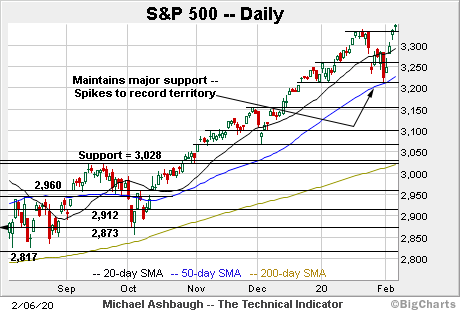
Mai come nell’ultima settimana, è arrivata forte la conferma che il mercato finanziario globale, specie per la parte che riguarda i titoli azionari, è entrato nella fase “matura” del suo rialzo.

La reazione al ribasso della settimana precedente è stata isterica, oltre che immotivata.

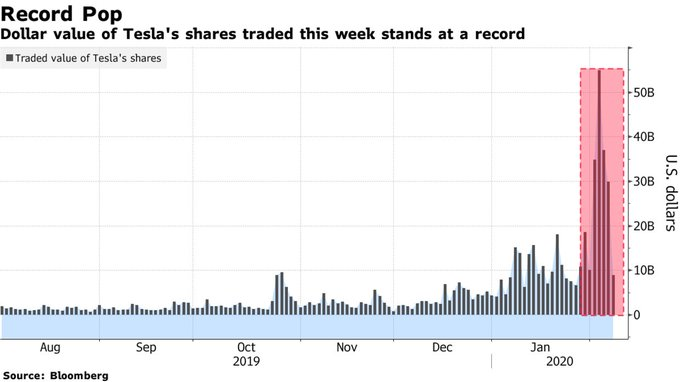
Numerosi segnali contribuiscono a supportare la nostra lettura di un mercato di Borsa che è ormai “maturo”: a titolo di esempio (ma ne potremmo fare molti) la vicenda del titolo Tesla negli Stati Uniti, commentata da noi per i Clienti nel nostro The Morning Brief.

2020_week_02_Feb_035.png

Fin dal primissimo momento, la nostra posizione verso i Clienti è stata chiara: il coronavirus in sé non è un fattore abbastanza forte da indirizzare (da sé solo) i mercati finanziari, ma sarà importante vedere nelle prossime settimane se queste notizie avranno inciso sugli umori, sulla psicologia delle Borse.

Come abbiamo scritto più in alto, i segnali non mancano, e sono numerosi.

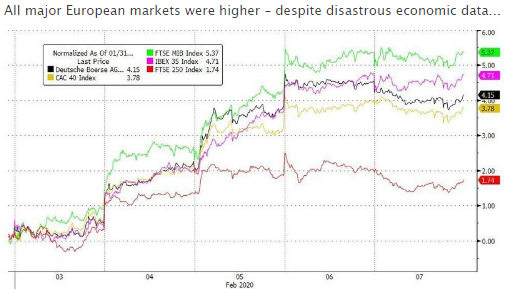
Parliamo soprattutto della Borsa di New York per ragioni già illustrate nei mesi scorsi: in questa specifica fase di mercato, le altre Borse contano ZERO; e salgono solo se sale New York, e poi scendono quando New York scende.

Pensate: ormai gli indici di Borsa salgono persino … perché si attende nel pomeriggio il discorso di Trump. Un vero e proprio teatrino.

2020_week_02_Feb_024d.png

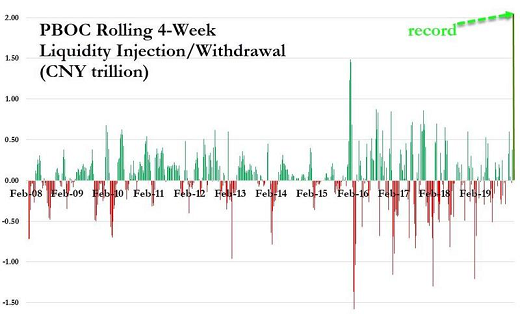
Sui movimenti di Borsa dell’ultima settimana, va detto con chiarezza, hanno avuto un peso decisivo due elementi:

  1. l’immissione di liquidità da parte della Banca Centrale cinese e

  2. il discorso sullo Stato dell’Unione di Trump, che ovviamente … andava accompagnato da un bel rialzo di Borsa, allo scopo di compiacere chi è stato così generoso verso gli operatori di Borsa negli ultimi tre anni

2020_week_02_Feb_024b.png

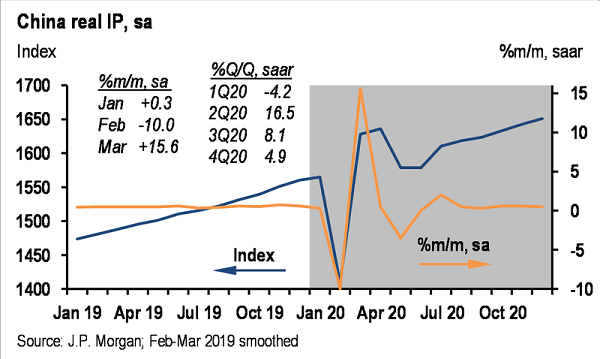
Commentare questi dati potrebbe risultare superfluo, da parte di noi di Recce’d: si tratta di dati che si inquadrano, alla perfezione, nello scenario che vi abbiamo già prospettato, e commentato, più di una volta negli ultimi mesi.

E che porterà i mercati finanziari, ed i nostri portafogli titoli, esattamente dove noi vi abbiamo anticipato.

A voi lettori suggeriamo di rivedere con attenzione le vostre scelte, il vostro posizionamento sui mercati finanziari, e la vostra gestione dei rischi che oggi sono presenti nei vostri portafogli: prendendo in considerazione i dati che abbiamo esposto oggi nei nostri Post, ed in particolare quello che leggete sotto nel grafico che chiude questo Post. Più che mai oggi, è necessario NON affidarsi alle chiacchiere dei venditori, che decantano in TV quanto sono morbidi … i loro materassi.

2020_week_02_Feb_025.png
Mercati oggiValter Buffo