Distorsioni da ambiente inquinato: come si risponde
week_03_Nov_2019_028e.png

Non esprimiamo giudizi sulle campagne militanti della giovanissimi Greta, che vedete qui sopra nell’immagine.

Non è la sede. Non ne abbiamo le competenze. Anche se da qualche mese tutti i Banchieri Centrali (Lagarde per prima) annunciano le Banche Centrali dovranno al più presto includere il cambiamento climatico tra i propri obbiettivi.

Noi però, almeno per oggi (ed ancora per qualche tempo) lasceremo ad altri il dibattito sui cambiamenti climatici. Non è questo, oggi, il tema dei nostri Post.

Ci sembra, tra l’altro, che le Banche Centrali abbiamo già abbastanza problemi davanti a loro: problemi gravi (ce lo dicono loro stessi). Problemi non risolti (ce lo ribadiscono loro stessi) e problemi urgenti (come ci dimostrano le loro scelte concrete di politica monetaria).

Il mare che noi investitori dobbiamo navigare, oggi, è un mare turbolento: non è calmo e soleggiato come quello delle fotografia più in alto. L’ambiente, nel caso dei mercati finanziari, è fortemente inquinato.

Come abbiamo detto più volte, sarebbe una follia tentare di ignorare questa situazione. Molti però vorrebbero proprio questo: che il pubblico degli investitori ragionasse e si comportasse come se la situazione attuale fosse una situazione normale, uguale a sempre.

L’investitore finale deve evitare questa trappola. Deve evitare di farsi catturare dalla rete a strascico, deve evitare di fare la fine dei tonni (la scatoletta), e deve mettere mano sia alle proprie conoscenze, sia alle proprie strategie di investimento. Insomma, deve aprire gli occhi e cambiare il proprio modo di ragionare, e poi di investire.

Ci fermiamo qui: di questo tema, abbiamo detto e scritto molto, anche in questo Blog. Ma il tema resta della massima attualità: ce lo dice anche un un articolo, pubblicato questa settimana dal Financial Times, e firmato dal notissimo commentatore Mohamed El Erian, ex AD di PIMCO.

L’articolo dice, nel novembre 2019, alcune cose sulle quali, dieci anni fa, noi di Recce’d decidemmo di portare sul mercato italiano questo nuovo modo di investire, ed un portafoglio di servizi del tutto nuovi, che restano anche oggi, dopo dieci anni, servizi che ci garantiscono un grandissimo vantaggio sulla concorrenza nell’industria del risparmio.

Per questo, vi invitiamo a leggere l’articolo con attenzione: il testo, ed anche il sottotesto

Investors will have to grapple with once-unthinkable economic and market trends as they set about fine-tuning their portfolios next year. Where they end up will depend on five factors that are growing less stable by the day. Market sentiment has improved in recent weeks as trade tensions between China and the US have de-escalated, while the US labour market has again outperformed expectations — and there are short-term signs of some bottoming out of Europe’s economic cycle. With that, US stock indices have reached new highs while both bonds and currency markets have been relatively calm. Whether this performance will hold beyond the short term requires the revival of five assumptions that underpin most longstanding investment approaches.

  1. First, that globalisation carries on expanding markets and delivering efficiency gains.

  2. Second, that emerging economies will continue to catch up with their more developed counterparts, led by those pursuing reforms.

  3. Third, that robust liquidity will anchor well-functioning markets.

  4. Fourth, that policy effectiveness in developed markets will limit the global economy’s “downside”.

  5. And finally, that politics and governance will support market-based systems and the global rule of law.

Each tenet is subject to considerable uncertainty, adding to the need to review medium-term investment approaches on account of accelerating technological innovations, climate change and demographic trends. Notwithstanding the easing in trade tensions, it is far from clear that the process of economic and financial globalisation will continue. The possibility of years of deglobalisation — where barriers reduce the free flow of trade and investment — remains substantial. National politics are becoming more inward-looking by the day, growth continues to disappoint, and the inequalities of income, wealth and opportunities fuel popular backlashes. This process of deglobalisation limits the scope for emerging countries to use the international economy to turbocharge their development efforts. It also increases the risk of dislocations for a financial system that is built for deeper cross-border connectivity.

At a time when the “circuit breaker” effectiveness of central banks is waning after too many years of excessive reliance on unconventional monetary measures, this increases the likelihood of poor economics swaying politics and, in return, messier politics contaminating economics. This phenomenon has already been amply illustrated not only in advanced countries (eg Brexit), but also via spillovers to some emerging economies. Away from traditional savings, the implied distortions to finance have so far favoured investors.

Witness what has happened to three factors that drive most asset allocation models: returns, correlations and volatility. The traditional-inverse relationship between the prices of German and US government bonds (“risk-free” assets) and those of stocks (riskier assets) has been turned on its head for much of this year. The result is not only actual or near-record highs for key equity indices but also, with bond prices still relatively high, some $12tn of debt trading at negative yields. It has also played out in the volatility space, where unusually subdued levels have tended to be the norm, encouraging even more risk-taking. And when we have had “illiquidity in the midst of liquidity” — to use the words of Robert Koenigsberger, the CIO of hedge fund Gramercy — it has tended to be contained.

The one major exception to this was the market disruption a year ago that caused the Federal Reserve policy U-turn at the beginning of 2019. Given valuations and volatility levels, investors face increasingly asymmetrical risks, where there is a wide gap between their potential gains and losses. They would be well advised to test their longer-term investment approaches for adverse and unstable asset class correlations, volatility spikes, liquidity dislocations and greater political risks.

Conditions now call for a bigger longer-term move to investing based on “factors”, which are disaggregated drivers of asset prices, and some tail hedging (protecting your portfolio against big adverse market moves), with more input for behavioural science and political analysis. Investors could consider a gradual move to asset allocations that involve a further shift away from public stocks and bonds to bespoke credit structures and other ways of gaining more direct access to real economic activity. With that, cash may play a larger structural role in mitigating risks.

Most investment approaches are not wired for a world of deglobalisation, non-convergence of emerging economies, rising illiquidity, ineffective monetary policy and less respect for the global rule of law. Yet the possibility of each has increased.

It would be unwise to just throw out longstanding investment approaches that have served investors well. But it would be equally unwise to avoid difficult discussions on how to evolve them, given that so many economic, financial and political “unthinkables” have already become facts.

The writer is Allianz’s chief economic adviser and president-elect of Queens’ College, University of Cambridge

Mercati oggiValter Buffo
Patrimonio da preservare: rendere minimo il rimpianto
week_03_Nov_2019_028a.png

Come vedete nella foto qui sopra, la combattiva e giovanissima Greta si preoccupa e si arrabbia per il futuro del Pianeta.

Non prenderemo parte: ognuno dei nostri lettori è libero di pensarla come meglio crede. Esiste un problema di equilibrio nel clima del nostro Pianeta. Oppure non esiste? L’argomento viene forse enfatizzato con finalità politiche?

Ognuno dei lettori può pensarla come crede, dicevamo.

Ciò che a noi di Recce’d fa riflettere, però (molto, molto riflettere) è leggere sui quotidiani, e poi ascoltare al TG, le solite, solitissime frasi che si ascoltano ogni volta che un disastro naturale produce gravi danni.

Non vogliamo sfruttare qui la tragedia dei veneziani e di Venezia. Ma è impossibile non vedere: sarebbe assurdo non riflettere sul fatto che tutti, ma proprio tutti, a disastro avvenuto sono pronti a dire che “qualcosa va fatto per proteggere un Patrimonio dell’Umanità”: lo dicono soprattutto quelli che fino a ieri davano a questo problema nessuna rilevanza. Eppure, Venezia è Patrimonio dell’Umanità già da parecchio tempo.

I danni, poi, restano: a Venezia, ed ai veneziani.

Noi ci occupiamo di patrimonio: non quello dell’Umanità, bensì quello dei nostri Clienti.

E sicuramente, nei confronti dei nostri Clienti, sentiamo preciso e forte il dovere di PREVENIRE l’alta marea, specie quando viene segnalata da una serie di indicatori, e da molti mesi.

Vi proponiamo di vedere insieme, a questo proposito, tre video.

Nel primo video, vi viene offerta una puntuale, completa e qualificata analisi dei segnali di alta marea.

Nel secondo video, vi viene spiegato come si fa, ad anticipare l’alta marea, come si deve agire PRIMA che arrivi l’alta marea, per non ritrovarsi DOPO a piangere … sul latte versato. Minimizzare il rimpianto: è questo il principio che ci deve guidare.

Nel terzo video, trovate le conclusioni

Siamo consapevoli del fatto che i tre video sono in lingua inglese e quindi sono meno accessibili dei video in lingua italiana.

Ci siamo decisi ad offrirli comunque in ragione della loro importanza.

Vi chiediamo un po’ di pazienza: anche se la lingua inglese vi è ostica, siamo più che certi che troverete vicino a voi qualcuno in grafo di aiutarvi.

Magari, per esempio, una giovane intraprendente dell’età di Greta.

Mercati oggiValter Buffo
Buttare via le scorie: raccolta rifiuti differenziata
week_03_Nov_2019_028b.png

Come vedete qui sopra, la giovanissima Greta a volte perde la pazienza.

Non è la sola. Questo spunto ci serve per parlare, oggi, degli investitori che si sono arrabbiati. Molto, molto arrabbiati.

E noi vi spieghiamo il perché.

Questi investitori sono arrabbiati con l’industria dei Fondi Comuni di Investimento. Non in Italia: in Italia, MAI. Anche perché in Italia, agli investitori certe notizie non arrivano. Le nascondono, le camuffano, le diluiscono.

Ecco perché in Italia c’è un grandissimo numero di investitori che hanno in portafoglio quote di Fondi Comuni con l’etichetta INVESCO, che nessuno informa di ciò che invece si leggeva pochi giorni fa sui quotidiani del Mondo intero e che il grafico che vedete qui sotto sintetizza. Alla base di questo problema c’è il tema della liquidità dei Fondi Comuni, un tema sul quale Recce’d ha richiamato la vostra attenzione in più occasioni, negli ultimi mesi.

week_02_Nov_2019_036.png

Invesco’s core range of investment funds have bled more than $1bn a week over the past 12 months, placing the Atlanta-based group at the top of the 2019 rankings of the worst-selling global asset managers. Outflows are expected to continue in the wake of Morningstar’s decision to downgrade two of Invesco’s best-known UK funds, as retail investors respond to such moves by withdrawing their cash.

“Outflows have been terrible,” said Brennan Hawken, a senior analyst at UBS, the Swiss bank. “It’s a combination of a few factors that have led to profound pressure on the business — there is no getting around that.” Invesco, which manages $1.2tn, has been simultaneously hit by moves away from active managers in the US and a lack of confidence among UK investors due to Brexit uncertainty. The group’s $5.7bn acquisition of OppenheimerFunds, which concluded in May, has also prompted client desertions. The group’s share price, which peaked at $50.60 in 2000, has dropped more than half since the start of 2018 to $17.75.

Martin Flanagan is one of the longest serving chief executives in the industry having taken the top job at Invesco in 2005. Invesco suffered $54bn of net outflows from its mutual funds in the 12 months ended September, excluding its low-fee exchange traded fund business, according to Morningstar. The next worst-selling managers, Natixis of France and Franklin Templeton of the US, bled $40bn and $32bn, respectively. Even after including Invesco’s ETF range — which has grown as the group has bought specialist providers — the company still had the biggest global net outflows of $40.6bn.

Invesco pointed to ETF inflows of $15bn so far this year, and said the group outflows resulted from clients reacting to market news such as Brexit uncertainty and the US-China trade wars. “Given Invesco’s global footprint, we’ve been impacted by this de-risking to an outsized degree relative to certain peers, offset somewhat by positive flows in key parts of our business,” the group said. Morningstar last week downgraded Invesco’s $7.8bn High Income and £3.5bn Income funds to “neutral”, with certain share classes cut to “negative”.

Both funds were hugely popular with British investors under Neil Woodford and were taken over by his protégé Mark Barnett when Mr Woodford left Invesco six years ago. The funds were downgraded due to concerns over their exposure to smaller and illiquid companies, as well as problems with their other holdings. When Morningstar downgraded Mr Woodford’s Equity Income fund in May it led to a spike in outflows, which ultimately led to the fund’s suspension two weeks later.

On Friday afternoon, Mr Barnett offered a mea culpa to his investors following the downgrades, and sought to allay concerns over the liquidity of his portfolios. “The strategy of these funds has not changed,” Invesco said in a statement to FTfm. “More than 80 per cent of the Invesco UK Equity Income funds is invested in companies with a market cap of more than £500m and over two-thirds is invested in companies with a market cap of over £1bn. Liquidity in the portfolios remains strong and has to date proven to be very manageable.” The headwinds should moderate — that’s the good news. Right now it’s pretty much as bad as it can be. Brennan Hawken, UBS FTfm last month reported that Invesco’s UK business experienced its biggest monthly outflows since Mr Woodford announced he was leaving the company to set up on his own six years ago.

Invesco is absorbing OppenheimerFunds following its acquisition from MassMutual this year. The purchase was the biggest asset management deal in the US for half a decade. Invesco has cut 1,300 jobs as part of the integration so far, representing 12 per cent of the combined group’s headcount. The company has an annual cost-saving target of £475m. The OppenheimerFunds deal was the most recent in a series of acquisitions overseen by Mr Flanagan. These include the $1.2bn capture of Guggenheim’s exchange traded funds business last year and the $500m purchase of Source, the specialist ETF provider, in 2017.

“There is a possibility that flows will improve,” said Evgeny Konovalov, an analyst at Fitch Ratings. “I’m not talking about a move to inflows, but being a little bit less negative. “If they successfully integrate Oppenheimer and ramp up sales, they will possibly see a less challenging environment than they are in now — but it depends on where the market is going.” Invesco’s total assets under management hit $1.2tn at the end of the third quarter, up from $963bn a year earlier, thanks to the $246bn of assets Oppenheimer brought with it. “The headwinds should moderate — that’s the good news,” said Mr Hawken. “Right now it’s pretty much as bad as it can be.”

Mercati oggiValter Buffo
Come rispondere al surriscaldamento globale
week_03_Nov_2019_028f.png

Stiamo attraversando un’epoca che non ha precedenti e che resterà nella storia.

Se analizziamo i dati che si riferiscono al clima sul Pianeta terra, si osservano cose strane, dati che non hanno precedenti, eccessi che non si erano mai registrati prima.

Dati ed eccessi che preoccupano molti, tra i quali anche la giovanissima Greta che vedete sopra nell’immagine.

Noi lasciamo questo (delicatissimo e importantissimo) argomento al giudizio del lettore, e ci spostiamo sul terreno che per noi è più convenzionale.

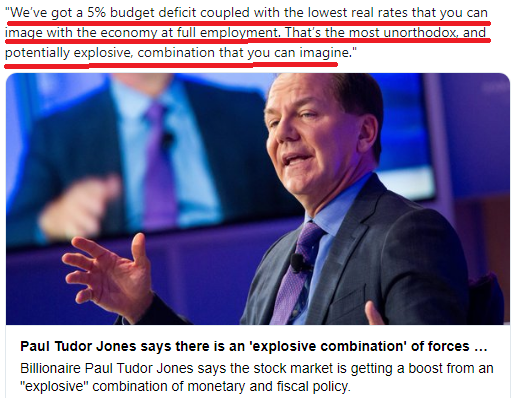
Spostandoci verso i mercati finanziari, ci accorgiamo subito che anche in questo ambiente si osservano cose strane, dati che non hanno precedenti, eccessi che non si erano mai registrati prima.

Lo diceva anche, qualche giorno fa, uno dei più esperti e dei più noti gestori di portafoglio del Pianeta e lo lette sotto nell’immagine.

week_03_Nov_2019_003.png

Questi sono i fatti: poi ci sono le emozioni, la psicologia, l’atteggiamento degli operatori di mercato: anche in questo caso, gli eccessi sono evidenti.

week_03_Nov_2019_014.png

Come vedete chiaramente nell’immagine in alto, anche qui siamo in una fase di surriscaldamento: e fa talmente caldo che tra gli operatori cresce la confusione. E qualcuno comincia anche a vedere immagini false: ritornano i miraggi, dei quali tante volte abbiamo parlato e scritto nel 2018.

week_03_Nov_2019_016.png

Suscita una grande sorpresa, ed anzi ci lascia attoniti, leggere il titolo qui sopra, e poi leggere i numeri della tabella qui sotto. Anche questi sono numeri clamorosi, e persino senza precedenti: una caduta del genere, in un solo mese, noi non la ricordiamo.

week_03_Nov_2019_026.png

La tabella qui sopra, e il grafico che segue, ci raccontano qualche cosa che, per tutti noi investitori, è della massima importanza. Noi ne torneremo a parlare, con una analisi di dettaglio, durante la settimana in The Morning Brief.

week_03_Nov_2019_029.png

Ma ritorniamo al tema del nostro Post: che è il surriscaldamento.

Non sappiamo dire come finirà la cosa per l’ecosistema e per il nostro Pianeta. Ma sappiamo bene come finiscono le fasi di surriscaldamento sui mercati finanziari.

Anche perché … è appena successo. E’ successo pochi giorni fa, per i titoli quotati alla Borsa di New York, di Società che producono prodotti di “marijuana legale”.

E la fine è quella solita: leggete nell’immagine qui sotto frasi che già avete letto in passato. E che nel prossimo futuro leggerete nuovamente, e con riferimento a categorie di asset molto più grandi.

  • “la bolla è scoppiata”

  • “i mercati in pochi giorni sono passati dall’essere surriscaldati all’essere completamente chiusi”

  • “Wall Street in pochissimo tempo è passata dall’esuberanza alla realtà”

  • “la fiamma si è spenta in pochi mesi”

  • “molti titoli hanno perso due terzi del proprio valore”

week_03_Nov_2019_030.png
Mercati oggiValter Buffo
Preservare l'ambiente: è interesse di tutti?
week_03_Nov_2019_028d.png

Come vedete nell’immagine sopra, la giovane Greta si è un po’ annoiata e si è fatta anche le trecce.

I problemi dell’ambiente si trascinano e non si risolvono. La politica sceglie, giorno dopo giorno, di non affrontare questioni che sono sotto gli occhi di tutti, di spostare la cosa più in là, di rinviare.

Il tutto in attesa che una grave devastazione, come quella di Venezia a cui tutti assistiamo in questi giorni con orrore , riporti in modo improvviso l’attenzione del Mondo intero sugli squilibri del clima.

Questa vicenda a noi ricorda un’altra vicenda.

Meno drammatica di quella di Venezia, per ora: ma chi, tra i nostri lettori, si sente di affermare che questa vicenda NON si trasformerà in qualche cosa di più grave? Tra gli operatori più esperti sui mercati finanziari, ci sono numerosi accenni alla possibilità di una vera e propria guerra.

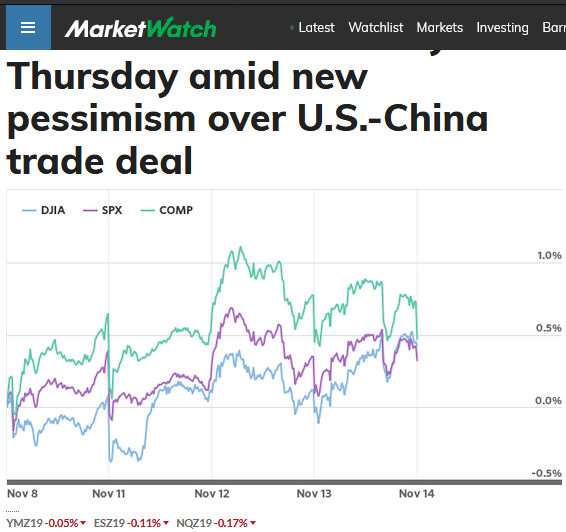
week_03_Nov_2019_001.png

Il grafico qui sopra ci ricorda che la Borsa più importante del Mondo, la settimana scorsa, è rimasta di fatto ferma per quattro sedute. Lunedì, martedì, mercoledì, e giovedì. Senza idee, senza direzione, e soprattutto senza un senso.

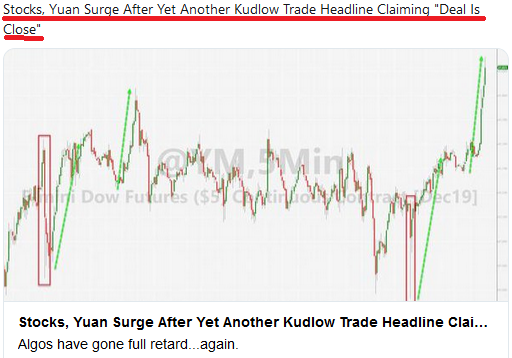
Proprio per questo nella notte americana di giovedì è arrivata, dalla Casa Bianca, una dichiarazione sulle trattative sulla Cina. “Siamo vicini alla chiusura” ci ha detto Larry Kudlow.

Per la cinquecentesima volta (più o meno) negli ultimi 24 mesi.

week_03_Nov_2019_002.png

Sono forse tutti stupidi, quelli che vanno dietro a queste dichiarazioni? Siamo solo noi, gli scemi che non ci facciamo guidare da queste dichiarazioni nelle scelte del portafoglio titoli?

No: non sono tutti stupidi, e allo stesso tempo noi non siamo scemi.

Lo abbiamo spiegato, nell’ultima settimana ed anche nella settimana precedente all’ultima, in The Morning Brief. Ci sono interessi diversi, che si confrontano e contrastano sui mercati finanziari: non tutti operano con i medesimi obbiettivi.

Se siete convinti che Larry Kudlow, con le sue dichiarazioni, abbia a cuore gli interessi di voi investitori finali, siete del tutto fuori strada. Se pensate che le banche di investimento agiscano, e producano analisi, nel vostro interesse, vi sbagliate del tutto. Se credete che l’industria dei Fondi Comuni di investimento operi per rendere massimo il risultato dei loro Clienti, siete completamente fuori strada.

Mercati oggiValter Buffo