Posts in Mercati oggi
Il momento peggiore per molti investitori
2020_week_02_Feb_75b.png

La maggior parte degli investitori oggi è compiaciuta: “Quanti soldi ho fatto, nel 2019!”

Non saprebbero dire il perché, né saprebbero dire ciò che potrebbe succedere da domani, ai loro soldi: e (notate bene) mica hanno ancora venduto.

Aspettano: convinti, anche loro, come milioni e milioni di altri, che “quando vedrò che le cose si mettono male, avrò tutto il tempo per vendere, e venderò tutto”. (ma non hanno ancora venduto, oggi).

Ogni volta, è sempre così: sempre il medesimo meccanismo. Spinto dalle reti di vendita nel vortice dell’euforia, si fanno convincere che “questa volta è diverso, questa volta non è come le altre volte”. Finiranno a piangere poi sul latte versato, come tutte le altre volte.

A voi lettori potrebbe essere utile leggere anche qualche opinione qualificata, e diversa dal “mainstream”.

Ne abbiamo selezionata qui una, di pochi giorni fa, che a nostro giudizio spiega con grande efficacia perché questo è il momento peggiore per la grande maggioranza degli investitori nel Mondo.

(Non per i Clienti di Recce’d.)

What do you do when the bond market is basically uninvestable and the stock market keeps hitting all-time highs and you know in your gut that none of this will end well? What do investors—big and small—do in such unfortunate circumstances, like the ones we collectively find ourselves in now?

I’ve been racking my brain for years to figure that out. Increasingly desperate and with the end getting near, I called Mark Spitznagel, the founder of Universa Investments, a hedge fund that exists to help investors grapple with the inevitable market crash.Spitznagel, 48, and a former trader in the Chicago pits and at Morgan Stanley, understands what’s been happening and how for the last decade central banks around the world have been warping our financial markets by keeping interest rates artificially low. “These monetary distortions lead to this reckless reach for yields that we are all seeing,” he tells me. He sees risk being mispriced everywhere. “Randomly go look at a screen and it’s pretty crazy,” he says. “Big caps, small caps, credit markets, volatility; it’s crazy. Reach for yield is everywhere.”

He thinks we are in one of those periods where people have lost their collective minds when it comes to the financial markets. “When the stock market is no longer tethered to fundamentals—that’s the distorted environment we live in, that’s just where we are—when that happens, any price can print,” he says. “Any price can print. We shouldn’t be surprised by anything on the upside at this point because what’s tethering the markets? People need yield and when they pursue yield because of the momentum that we have in the markets today, anything is possible.”He thinks the yield hunger games, as I like to call what’s been happening for the last decade, “makes people take crazy risks” because “interest rates and prices are wrong” and “otherwise wouldn’t even clear the market. They are just absolutely wrong. But of course, central bankers think they know what the natural rate is and that it will all be fine. They think they’ve got it all figured out.”

He disagrees. First, he thinks the massive program of quantitative easing—where after the 2008 financial crisis, the Federal Reserve intervened in the debt markets, buying up nearly everything in sight in an effort to raise the price of long-term bonds, driving down their yields—was a mistake. In the process, the Fed’s balance sheet ballooned to $4.5 trillion in assets, from around $900 billion. (These days, the Fed’s balance sheet is around $4.2 trillion.) “I’m a free market guy,” he says. “Whenever the government gets involved in things—and this is pretty much across the board—they make things worse. I can probably prove that. But it doesn’t really matter. We take what we have and this is the world we live in. And we’ve got to deal with it. I don’t want to complain too much about it. But we’d all be better off today had we not done that. There would’ve been more painful at the time but you rip the Band-Aid off, I think we’d all be better off.”

He also thinks central bankers don’t know how to stop the monster they have created. “I do not think that central bankers will ever be able to pull away from this,” he explains. “They will never be able to ‘normalize’ rates. In our lifetime, recessions and stock market crashes really have been instigated or started by central banks sort of pulling away the punch bowl. They raise rates and that has led to a slow down and ultimately has led to these crashes that we see. Every single one, that’s how it’s happened. But we’ve gone so far down the rabbit hole this time, I am absolutely convinced that that is not even on the table this time.” He thinks central bankers are just testing the market when they suggest—as Jerome Powell, the chairman of the Federal Reserve, did throughout 2018 when he raised short-term interest rates four times—that they wanted to try to return to letting supply and demand set the price of money, a position that he reversed in 2019 when he pivoted and then lowered interest rates. “They’re not stupid,” he says of central bankers.

“They are reckless. But they are not stupid. And they realize that global economies are in a situation now where central banks can’t pull away. And they’re bluffing if they say they can.
Mercati oggiValter Buffo
Coronavirus ed altri virus (parte 3)
 
2020_week_02_Feb_017b.png

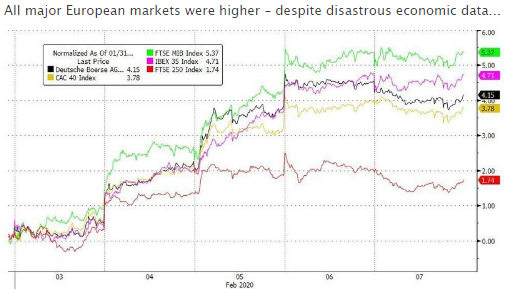
Mai come nell’ultima settimana, è arrivata forte la conferma che il mercato finanziario globale, specie per la parte che riguarda i titoli azionari, è entrato nella fase “matura” del suo rialzo.

La reazione al ribasso della settimana precedente è stata isterica, oltre che immotivata.

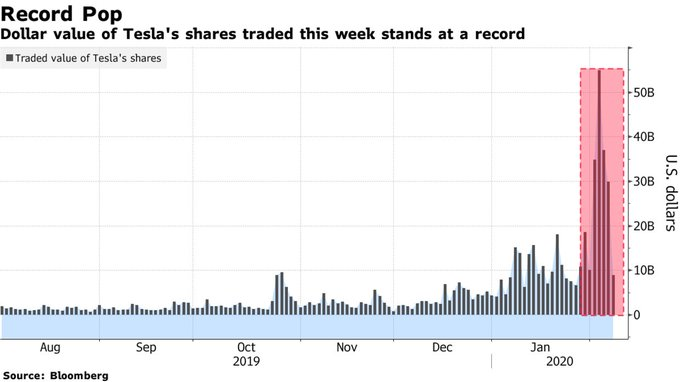
Numerosi segnali contribuiscono a supportare la nostra lettura di un mercato di Borsa che è ormai “maturo”: a titolo di esempio (ma ne potremmo fare molti) la vicenda del titolo Tesla negli Stati Uniti, commentata da noi per i Clienti nel nostro The Morning Brief.

2020_week_02_Feb_035.png

Fin dal primissimo momento, la nostra posizione verso i Clienti è stata chiara: il coronavirus in sé non è un fattore abbastanza forte da indirizzare (da sé solo) i mercati finanziari, ma sarà importante vedere nelle prossime settimane se queste notizie avranno inciso sugli umori, sulla psicologia delle Borse.

Come abbiamo scritto più in alto, i segnali non mancano, e sono numerosi.

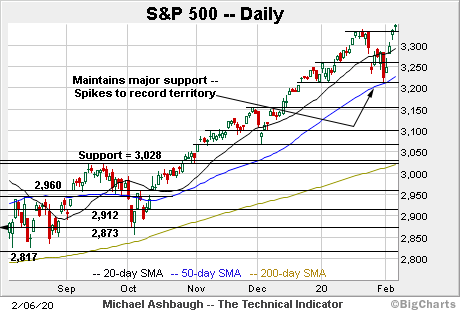
Parliamo soprattutto della Borsa di New York per ragioni già illustrate nei mesi scorsi: in questa specifica fase di mercato, le altre Borse contano ZERO; e salgono solo se sale New York, e poi scendono quando New York scende.

Pensate: ormai gli indici di Borsa salgono persino … perché si attende nel pomeriggio il discorso di Trump. Un vero e proprio teatrino.

2020_week_02_Feb_024d.png

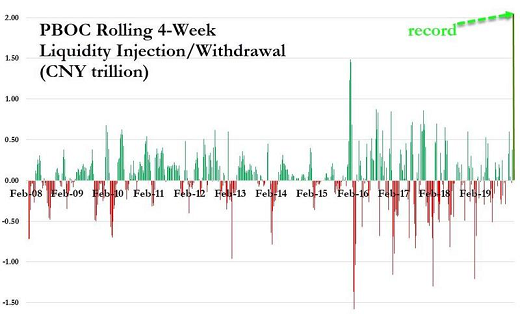
Sui movimenti di Borsa dell’ultima settimana, va detto con chiarezza, hanno avuto un peso decisivo due elementi:

  1. l’immissione di liquidità da parte della Banca Centrale cinese e

  2. il discorso sullo Stato dell’Unione di Trump, che ovviamente … andava accompagnato da un bel rialzo di Borsa, allo scopo di compiacere chi è stato così generoso verso gli operatori di Borsa negli ultimi tre anni

2020_week_02_Feb_024b.png

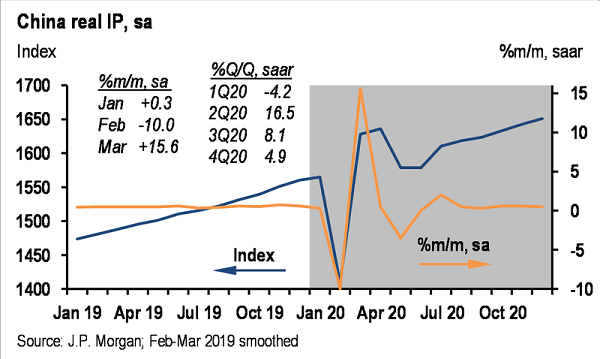
Commentare questi dati potrebbe risultare superfluo, da parte di noi di Recce’d: si tratta di dati che si inquadrano, alla perfezione, nello scenario che vi abbiamo già prospettato, e commentato, più di una volta negli ultimi mesi.

E che porterà i mercati finanziari, ed i nostri portafogli titoli, esattamente dove noi vi abbiamo anticipato.

A voi lettori suggeriamo di rivedere con attenzione le vostre scelte, il vostro posizionamento sui mercati finanziari, e la vostra gestione dei rischi che oggi sono presenti nei vostri portafogli: prendendo in considerazione i dati che abbiamo esposto oggi nei nostri Post, ed in particolare quello che leggete sotto nel grafico che chiude questo Post. Più che mai oggi, è necessario NON affidarsi alle chiacchiere dei venditori, che decantano in TV quanto sono morbidi … i loro materassi.

2020_week_02_Feb_025.png
Mercati oggiValter Buffo
Come si fanno i soldi nel 2020. E nel 2021, 2022, 2023
 
2020_week_02_Feb_034.png

Anche nella nostra pagina settimanale di aggiornamento, oggi, lo abbiamo scritto: la strategia di investimento non è forse mai stata così chiara come oggi, nel pieno del caos del coronavirus, dei nuovi record della Borsa di New York, dei nuovi minimi dei rendimenti delle obbligazioni, dei conflitti geopolitici in ogni parte del pianeta.

Lo abbiamo messo in evidenza sette giorni fa, ed oggi ci torniamo: perché le cose sono belle quando sono chiare.

Il grafico di questo Post lo conoscete, non necessita di commenti, è chiaro nelle sue implicazioni: insomma, non c’è nulla da discutere.

Il grafico racconta qualcosa che non è normale e che non può esistere: ed ecco la ragione per la quale a noi, in Recce’d, non mette paura leggere dei “nuovi record di Wall Street”. I nuovi record reggono soltanto se poi le cose vanno davvero bene. E quando le cose vanno davvero bene, la riga di colore BLU non sta lì. Se la linea di colore BLU sta lì, è perché ci sono altre cose in atto, in movimento, in evoluzione, che si sviluppano, delle quali la Borsa dovrà, necessariamente ed inevitabilmente, fare i conti.

Quindi, a noi fa nessuna paura, agitazione, emozione, dramma. Ci mancherebbe.

Ma … non succede mai? State a vedere: un pizzico di pazienza ancora, e tutti vedranno.

2020_week_02_Feb_024c.png
Mercati oggiValter Buffo
Quando un solo dato spiega (quasi) tutto: anche lo Stato dell'Unione
 
2020_week_02_Feb_002.png

Nel suo discorso sullo Stato dell’Unione, il Presidente americano Trump ha ripetuto il suo slogan sull’economia “migliore di ogni tempo”: ed in particolare, ha messo in evidenza i dati per l’occupazione, e poi per la fiducia dei consumatori, e poi per la Borsa. Più sotto, se volete, potete rileggere un estratto dal discorso di Trump al Congresso, e farvi voi stessi un’idea.

2020_week_02_Feb_004.png

Non ha parlato (come certamente avete notato tutti voi lettori) di una crescita dell’economia “più rapida di sempre”: non lo ha fatto, perché non esiste.

2020_week_02_Feb_009.png

Da qui, il contrasto: l’economia degli Stati Uniti cresce più o meno come prima, come prima dell’elezione di Trump, e persino come prima della Grande Crisi Finanziaria. Lo sapete bene tutti: l’economia USA cresce più o meno al 2% l’anno, e questo sempre che non ci sia (prima o poi ci sarà) una crisi. I profitti delle Società NON crescono, come risulta dalla contabilità nazionale: sono cresciuti nei conti delle grandi banche di investimento UNICAMENTE per i fatto che il Presidente Trump ha ridotto le aliquote di tassazione sui medesimi profitti. E NON crescono, per nulla, le spese delle Aziende per investimenti: anno su anno, risultano in calo. E (attenzione attenzione) crescono poco anche i consumi, la spesa per delle famiglie, ovvero le vendite al dettaglio, perché crescono poco anche i salari e le retribuzioni

Domandona: ma se ha ragione Trump, e la disoccupazione sta ai minimi di ogni epoca, allora perché non si registrano anche un aumento delle spese delle Aziende (per investimenti) e delle famiglie (per consumi)? Perché le retribuzioni crescono ad un ritmo moderato e vicino al 3%? Perché l’economia NON cresce se non al solito, anemico, tasso del 2%, che è il tasso .. di prima?

2020_week_02_Feb_031.png

La risposta è arrivata venerdì 7 febbraio, ma noi in Recce’d l’avevamo già intuita, e ve ne avevamo anche scritto.

L’ufficio di statistica del Governo ha corretto al ribasso il numero di posti di lavoro creati negli ultimi anni: lo vedete sopra nel grafico, molto chiaro ed efficace.

Ciò che a noi e voi importa è l’ampiezza della revisione: 510 mila unità. Ovvero 510 mila posti di lavoro creati IN MENO.

2020_week_02_Feb_027.png

Come vedete, non c’è necessità di complotti e misteri: basta semplicemente dire che i numeri erano sbagliati. Falsi? No, diciamo sbagliati, e non andiamo a leggere intenzioni dove probabilmente non ce ne erano.

Ma di certo, c’è stata una enorme sovra-stima del numero di posti di lavoro e questi vi spiega in modo semplice perché

  1. l’economia cresce ad un ritmo modesto

  2. la spesa per consumi non esplode verso l’alto

  3. i salari non esplodono verso l’alto

  4. la spesa per investimenti cala invece di aumentare

2020_week_02_Feb_003.png

Come dice il titolo, questo dato spiega quasi tutto. Quasi. Non spiega la Borsa ai “nuovi livelli record”: che non può essere spiegata dai dati, tutti modesti, dell’economia, dei profitti, dei salari, degli investimenti. Tutto chiaro, bello, trasparente, lineare e facilissimo da comprendere: ma la Borsa?

Per una spiegazione di questo eccesso, dobbiamo tutti attendere martedì, quando Jay Powell parlerà al Congresso USA.

Per chiudere il post, come già anticipato, riproduciamo qui un estratto del discorso sullo Stato dell’Unione 2020 di Donald J Trump.

From the instant I took office, I moved rapidly to revive the United States economy — slashing a record number of job-killing regulations, enacting historic and record-setting tax cuts, and fighting for fair and reciprocal trade agreements. Our agenda is relentlessly pro-worker, pro-family, pro-growth, and, most of all, pro-American. We are advancing with unbridled optimism and lifting high our citizens of every race, color, religion, and creed.

Since my election, we have created 7 million new jobs — 5 million more than Government experts projected during the previous administration.

The unemployment rate is the lowest in over half a century.

Incredibly, the average unemployment rate under my Administration is lower than any administration in the history of our country. If we had not reversed the failed economic policies of the previous administration, the world would not now be witness to America’s great economic success.

The unemployment rates for African-Americans, Hispanic-Americans, and Asian-Americans have reached the lowest levels in history. African-American youth unemployment has reached an all-time low.

African-American poverty has declined to the lowest rate ever recorded.

The unemployment rate for women reached the lowest level in almost 70 years — and last year, women filled 72 percent of all new jobs added.

The veterans’ unemployment rate dropped to a record low.

The unemployment rate for disabled Americans has reached an all-time low.

Workers without a high school diploma have achieved the lowest unemployment rate recorded in United States history.

A record number of young Americans are now employed.

Under the last administration, more than 10 million people were added to the food stamp rolls. Under my Administration, 7 million Americans have come off of food stamps, and 10 million people have been lifted off of welfare.

In 8 years under the last administration, over 300,000 working-age people dropped out of the workforce. In just 3 years of my Administration, 3.5 million working-age people have joined the workforce.

Since my election, the net worth of the bottom half of wage-earners has increased by 47 percent — 3 times faster than the increase for the top 1 percent. After decades of flat and falling incomes, wages are rising fast — and, wonderfully, they are rising fastest for low-income workers, who have seen a 16 percent pay-increase since my election. This is a blue collar boom.

Real median household income is now at the highest level ever recorded!

Since my election, United States stock markets have soared 70 percent, adding more than $12 trillion to our Nation’s wealth, transcending anything anyone believed was possible — this, as other countries are not doing well. Consumer confidence has reached amazing new heights.

All of those millions of people with 401(k)s and pensions are doing far better than they have ever done before with increases of 60, 70, 80, 90, and even 100 percent.

Jobs and investment are pouring into 9,000 previously-neglected neighborhoods thanks to Opportunity Zones, a plan spearheaded by Senator Tim Scott as part of our great Republican tax cuts. In other words, wealthy people and companies are pouring money into poor neighborhoods or areas that have not seen investment in many decades, creating jobs, energy, and excitement. This is the first time that these deserving communities have seen anything like this. It is all working!

Opportunity Zones are helping Americans like Army Veteran Tony Rankins from Cincinnati, Ohio. After struggling with drug addiction, Tony lost his job, his house, and his family — he was homeless. But then Tony found a construction company that invests in Opportunity Zones. He is now a top tradesman, drug-free, reunited with his family, and he is here tonight. Tony: Keep up the great work.

Our roaring economy has, for the first time ever, given many former prisoners the ability to get a great job and a fresh start. This second chance at life is made possible because we passed landmark Criminal Justice Reform into law. Everybody said that Criminal Justice Reform could not be done, but I got it done, and the people in this room got it done.

Thanks to our bold regulatory reduction campaign, the United States has become the number one producer of oil and natural gas in the world, by far. With the tremendous progress we have made over the past 3 years, America is now energy independent, and energy jobs, like so many elements of our country, are at a record high. We are doing numbers that no one would have thought possible just 3 years ago.

Likewise, we are restoring our Nation’s manufacturing might, even though predictions were that this could never be done. After losing 60,000 factories under the previous two administrations, America has now gained 12,000 new factories under my Administration with thousands upon thousands of plants and factories being planned or built. We have created over half a million new manufacturing jobs. Companies are not leaving; they are coming back. Everybody wants to be where the action is, and the United States of America is, indeed, where the action is.

One of the single biggest promises I made to the American people was to replace the disastrous NAFTA trade deal. In fact, unfair trade is perhaps the single biggest reason that I decided to run for President. Following NAFTA’s adoption, our Nation lost one in four manufacturing jobs. Many politicians came and went, pledging to change or replace NAFTA — only to do absolutely nothing. But unlike so many who came before me, I keep my promises. Six days ago, I replaced NAFTA and signed the brand new United States-Mexico-Canada Agreement (USMCA) into law.

The USMCA will create nearly 100,000 new high-paying American auto jobs, and massively boost exports for our farmers, ranchers, and factory workers. It will also bring trade with Mexico and Canada to a much higher degree, but also to a much greater level of fairness and reciprocity. This is the first major trade deal in many years to earn the strong backing of America’s labor unions.

I also promised our citizens that I would impose tariffs to confront China’s massive theft of American jobs. Our strategy worked. Days ago, we signed the groundbreaking new agreement with China that will defend our workers, protect our intellectual property, bring billions of dollars into our treasury, and open vast new markets for products made and grown right here in the United States of America. For decades, China has taken advantage of the United States, now we have changed that but, at the same time, we have perhaps the best relationship we have ever had with China, including with President Xi. They respect what we have done because, quite frankly, they could never believe what they were able to get away with year after year, decade after decade, without someone in our country stepping up and saying: Enough. Now, we want to rebuild our country, and that is what we are doing.

Mercati oggiValter Buffo
E adesso cosa facciamo, da qui a novembre?
 

Ogni uomo politico, di ogni parte politica, cercherà sempre un angolo a lui favorevole dal quale presentare le cose dell’economia all’elettorato.

Negli ultimi anni, però, per noi investitori questo dato di fatto ha acquisito una importanza che prima non aveva: abbiamo vissuto, noi e voi, una esperienza unica, una esperienza che ci ha costretti ad affrontare una situazione senza precedenti.

In economie cosiddette “di libero mercato” abbiamo assistito ad una manipolazione dei mercati finanziari a scopo politico che non ha alcun precedente storico. Questo è accaduto in ogni area economica del Pianeta, ma in una misura abnorme, e molto evidente, negli Stati Uniti.

Negli Stati Uniti sono stati distorti dati ed informazioni, al solo scopo di spingere vero l’alto l’indice della Borsa di New York, indice che (in misura molto ridotta) ha trascinato dietro di sé anche gli altri indici di Borsa del Pianeta.

Noi investitori siamo costretti quindi a misurarci con un fatto nuovo: l’utilizzo politico dell’indice di Borsa.

2020_week_02_Feb_013.png

Ognuno dei nostri lettori, ed ognuno dei nostri Clienti si fa la medesima domanda: ma quanto potrà durare ancora questo teatrino?

Siamo sereni nel rispondere a questa domanda: siamo sereni nel dire che il 2020 è l’anno nel quale molti di questi nodi si scioglieranno, nel quale si arriverà alla resa dei conti, nel quale si concluderà questa farsa.

Questo perché? Facile rispondere: ogni possibile leva (fiscale e monetaria) è già stata utilizzata. Ogni possibile manipolazione (diretta, attraverso le grandi banche di investimento, ed indiretta, attraverso CNBC, FOX News, e tutti gli organi di stampa e di informazione solidali) è già stata effettuata.

Quali leve restano possibili da agire, prima delle Elezioni Presidenziali? Se lo chiede, in modo efficace, l’articolo del New York Times che abbiamo selezionato per voi lettori, e che trovate qui sotto.

Leggetelo fino alla fine, perché ci troverete un fatto molto curiosi e singolare. Leggete l’ultima frase di questo articolo del NYT, e dopo guardate l’immagine che segue: è tratta dal sito del Wall Street Jornal, ed è datata proprio venerdì 7 febbraio 2020.

Quando si dice una combinazione!

Avete qui, tangibile, una (ennesima) dimostrazione del fatto che sarà pure “la migliore economia di ogni tempo”, ma c’è pure una (disperata) fretta nel trovare una via di uscita!

Governments up for reelection typically do what they can to nudge the economy into high gear just as voters are starting to pay attention. On that front, things already look pretty good for Donald Trump. One problem for the president ahead of the vote in November is that his most powerful tool is now in the hands of his enemies.

Fiscal stimulus is the main reason for faster growth on Trump’s watch. In 2018 tax cuts coupled with higher spending helped the U.S. economy match its best performance in the years since the financial crisis. But Republicans lost control of the budget machinery in Congress last year, when the House convened under its new Democratic majority.

Ever since then, with his own options for juicing the economy having narrowed, Trump has been on a crusade to lower interest rates—a lever that’s controlled by the Federal Reserve and its chairman, Jerome Powell. “The idea that a Democratic House is going to sign off on another Trump tax cut seems extremely far-fetched,” says Jared Bernstein, a senior fellow at the Center on Budget and Policy Priorities. “I don’t think there’s much stimulus there in any recognizable sense that doesn’t require legislation.”

Bernstein is personally familiar with Trump’s predicament: In 2011, as chief economist to Vice President Joe Biden, he was part of a team tasked with finding ways to boost the economy that could bypass the House. Republicans had just seized control there, led by members of the Tea Party movement who opposed new government spending. The list the group came up with was “uncomfortably short,” he recalls.

Barack Obama won a second term in 2012 anyway, and if the economy is a guide (it often but not always is), then Trump is well placed to follow suit. He gets good ratings on the economy, and he’s campaigning on unemployment being near all-time lows and stock prices at all-time highs. Still, economists reckon gross domestic product will expand at a 1.8% pace through the first three quarters of 2020. That would be slower than the same period in 2019—and not much different than 2016, when elections didn’t go well for the incumbent party.

The Trump administration’s use of deficit spending a decade into an expansion has been unorthodox. Some analysts have warned it could leave the government short of budget firepower in the event of a recession—and drive inflation and interest rates higher. Those threats haven’t materialized yet, and economists are coming around to the idea that the U.S. has room to spend.

Trump has also added tariffs to the toolkit. He’s shown that a president can run trade policy almost single-handedly, and since the escalation with China was largely of his doing, he can probably control timing when it comes to de-escalation.

U.S. business has put some investment on hold because of the trade war, so trade peace would likely boost the economy—but that may not happen before the election. Most analysts haven’t upped their forecasts for U.S. growth this year as a result of the “phase one” deal signed with China last month.

Even so, a follow-up before November could help Trump’s reelection campaign, says Brian Riedl, a senior fellow at the Manhattan Institute: “The more the president can show he’s moving toward a resolution on trade, that will help him in the battleground states and make the case for a second term.”

On fiscal policy, too, Trump may have reached the point where he can offer promises for a second term rather than action in his first. His administration has been dangling the prospect of more tax cuts—especially for the middle class—ever since pushing the last round, which favored the wealthy, through Congress late in 2017. Last month at Davos, Treasury Secretary Steven Mnuchin said a “Tax 2.0” proposal may be unveiled within months. Congressional Republicans hope to campaign on the plan to regain control of the legislature. The GOP would need to pick up about 20 seats in November to regain a majority. Most political analysts think it’s unlikely the party can win that many races, especially with several long-standing Republican lawmakers retiring.

Even just the release of tax plans could lift the stock market, and that in turn could boost consumer confidence, according to Kyle Pomerleau, a resident fellow at the American Enterprise Institute. That’s what happened after Trump’s election, he says, and “you could imagine it happening again.”

A $2 trillion overhaul of U.S. infrastructure is another fiscal stimulus that’s been touted since Trump’s first days in office. A cross-party deal in Congress proved elusive then and would be tougher in an election year—and even if it happened, only the most shovel-ready of projects could get under way before voting.

If there was a lever to move the dollar, Trump would surely pull it. The president often complains that the strong greenback is hurting manufacturers. He hasn’t come up with a mechanism for weakening it, beyond tweeting his displeasure at the Fed, though the Commerce Department is weighing tariffs on countries seen as unfairly manipulating their currencies.

There is one wild-card idea that Trump could potentially execute on his own—one borrowed from Democratic rivals. Senators Bernie Sanders (I-Vt.) and Elizabeth Warren (D-Mass.) propose to write off most or all of the $1.6 trillion in student debt. Trump has privately expressed concerns that he doesn’t have a plan to counter them and asked aides to come up with one that will lower costs for student loan borrowers, the Wall Street Journal reported.

Forgiving the debts would boost the economy like a tax cut, Moody’s Investors Service says. A Roosevelt Institute study released in December explained how it could be done without Congress. The idea has a populist flavor that might appeal to Trump. But there are plenty of obstacles, including likely legal challenges and hostility from some Republican voters.

Trump has other tools under his direct control, including executive orders and policy at the federal agencies run by his appointees. The Federal Housing Authority could loosen credit requirements for homebuyers, for example, or the U.S. Department of Labor could make more workers eligible for overtime pay. It’s just that those tools are small-bore compared with cuts in interest rates—or in taxes. “You hear Trump yelling at Jay Powell every waking hour because his ammunition is pretty much tapped,” Bernstein says. “He can’t go back to the fiscal well.”

2020_week_02_Feb_018.png
Mercati oggiValter Buffo