Longform'd. Arriva lo spike: i mercati finanziari dell'estate 2022
 

Ci sono segnali, in arrivo dai mercati finanziari, che ci portano a concludere che la fase di mercato estiva, nel 2022, si presenta come adatta, ed anzi adattissima, ad uno “spike”.

Con il termine “spike” gli operatori di mercato intendono un movimento di uno o più indice di mercato, di uno o più prezzi, di particolar rapidità e di particolare ampiezza.

Quello che vedete qui sopra è il movimento del rendimento del Titolo di Stato USA a 10 anni la settimana scorsa: vi confessiamo che noi non ricordiamo di avere mai visto una settimana come questa.

Abbiamo scritto, in decine di occasioni, che “in questo 2022 è inutile seguire le oscillazioni giorno-per-giorno dei prezzi di mercato”, perché tutti i mercati finanziari sono alla deriva ed anno perso ogni ancoraggio, ogni riferimento, ogni porto sicuro.

La sola chiave nella quale vi potrà essere utile di seguire il giorno-per-giorno è quella che noi vi proponiamo in questo Longform’d: ricavarne la percezione dello stato di tensione, di inquietudine, di nervosismo che predomina tra gli operatori di mercato.

Proseguiamo con una seconda immagine.

In settimana da Goldman Sachs abbiamo ricevuto questo grafico, con le (loro) previsioni per i tassi ufficiali di interesse degli Stati Uniti.

Venerdì pomeriggio, 5 agosto 2022, il grafico era già da rifare: è stato sufficiente un solo dato, il dato USA per l’occupazione.

Anche questo è un segno dei tempi: ed in particolare, dello stato nel quale si trovano oggi i mercati finanziari.

Dove tutto cambia, e tutto si trasforma, ad una velocità incredibile.

Potete ricavare il medesimo messaggio osservando un secondo grafico di Goldman Sachs, anche questo fatto circolare proprio questa settimana.

Vedete qui sopra che le previsioni per la crescita del PIL cambiano molto rapidamente: non soltanto quelle di Goldman Sachs, di JP Morgan oppure di Morgan Stanley: anche le previsioni della stessa Federal Reserve, che vedete rappresentate nel grafico che segue.

Questi rapidi cambiamenti, ovviamente, hanno delle implicazioni, a volte molto forti, per i prezzi sui mercati finanziari.

Un esempio ve lo offriamo nell’immagine che segue.

Lasciamo ai nostri lettori il divertimento, di legare fra di loro le notizie, i cambiamenti delle previsioni, ed i movimenti dei prezzi sui mercati finanziari.

Noi facciamo proprio questo lavoro, per arrivare poi a determinare la composizione, e le modifiche successive, dei nostri portafogli modello: documentando la quotidiana evoluzione delle stime per i rendimenti e per il rischio di ribasso o downside attraverso il The Morning Brief.

Ovvio che si tratta di saper leggere, di sapere scegliere le notizie, e poi anche di sapere analizzare: un esempio recentissimo è quello degli utili trimestrali delle Società quotate. Attraverso i media è stato fato passare un messaggio, a proposito degli utili trimestrali comunicati nelle ultime settimane, che molto semplicemente non corrisponde alla realtà dei fatti.

Per questo, dopo avere registrati i numerosissimi segnali di tensione, noi ci siamo decisi a scrivere di uno “spike” in arrivo: uno “spike” che i lettori che sono anche investitori farebbero bene ad anticipare con adeguati movimenti del portafoglio titoli. Su questo, siamo interessati a confrontarci con i lettori, che ci trovano disponibili ai consueti recapiti.

La situazione di tensione è destinata, a nostro avviso, a trovare sfogo in uno “spike” a causa del fatto che gli squilibri che hanno caratterizzato i mercati finanziari negli ultimi anni, NON si sono ridotti, nel corso del 2022, ma se possibile si sono ulteriormente ampliati.

Un esempio lo trovate nel grafico che segue.

Gli squilibri, invece che ridursi, sono aumentati nel 2022, e necessariamente arriveranno al punto di collasso, punto nel quale uno o più “spikes” interesseranno i prezzi sui mercati finanziari.

Molti investitori oggi pensano che tutti siamo ancora dentro il quadro dei colore azzurro del grafico che chiude il Longform’d.

Non hanno ancora capito: se ci avessero seguito con maggiore attenzione, oggi saprebbero che ci troviamo invece dentro il riquadro di colore viola dell’immagine conclusiva.

Mercati oggiValter Buffo
Longform'd. Arriva lo spike: la geopolitica
 

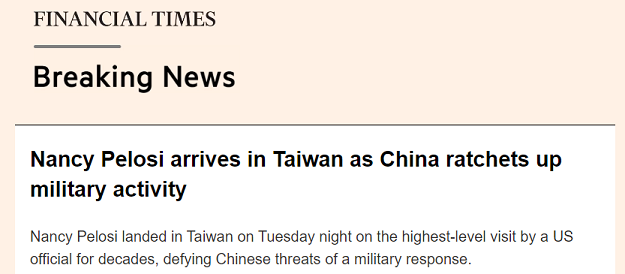
Abbiamo scelto di scrivere questo Longform’d a favore di tutti quei lettori che potrebbero essere stati ingannati dall’assenza (nell’immediato) di forti reazioni dei mercati finanziari alla vistita del Presidente della camera USA Nancy Pelosi a Taiwan.

Il fatto che dai mercati finanziari, nell’immediato, non siamo arrivate forti reazioni significa NULLA.

In quanto gestori dei nostri portafogli modello, noi durante la settimana abbiamo ricalcolato sia i rendimenti attesi, sia i rischi di ribasso (downside) per tutte le classi di attività e gli asset finanziari che fanno parte oggi, oppure potrebbero fare parte in futuro, in occasione dei prossimi ALERT.

Perché? Perché ci sono eventi che modificano, in modo radicale, le prospettive future di tutti gli investimenti, e questo evento fa parte di quella categoria.

Stimare i rendimenti attesi ed il rischio atteso soltanto DOPO (dopo che gli eventi sono già successi, e dopo che il caos è scoppiato) per un gestore di portafoglio è totalmente inutile. E’ oggi, che bisogna rifare bene i conti.

Se non ve lo hanno spiegato, e se non avete ancora modificato le vostre aspettative e le posizioni nei vostri portafogli titoli, ci dispiace per voi: perché questo è forse l’evento più rilevante del 2022, sicuramente ha maggiore rilievo della guerra in Ucraina, e senza dubbio NON è un evento di breve termine, bensì di medio e di lungo termine.

Determinerà, in futuro, non una revisione, ma una serie di revisioni e modifiche alla strategia di investimento per i nostri portafogli modello, e per tutti i portafogli titoli.

Voi non ci credete? Il private banker ed il wealth manager vi hanno detto “state tranquilli sulla sdraio, non è successo nulla”?

E allora, noi, generosi come sempre, vi facciamo leggere gratuitamente il parere di uno che sicuramente ne sa di più del vostro promotore finanziario.

"E' stato un errore che potrebbe portare a una recessione mondiale". Robert Shiller, economista di Yale, premio Nobel 2013, considerato uno dei padri della "finanza comportamentale", cerca di interpretare la mossa di Nancy Pelosi ma soprattutto le sue conseguenze a catena.

Taiwan è la capitale mondiale dei chip, senza di essi l'economia si ferma?

"Appunto. Dobbiamo convincerci che senza semiconduttori non può funzionare il sistema produttivo di tutto il pianeta. Gli Stati Uniti sono la prima vittima delle difficoltà che già derivano dall'embargo di Pechino alla 'sabbia' per costruire i chip di Taiwan, che poi è un mix di terre rare - dal cobalto al cadmio - che solo i cinesi posseggono. Ma l'America non è la sola a soffrirne: persino i russi si sono lamentati che senza chip non possono far marciare i carri armati, il che ovviamente può farci piacere ma indica la dipendenza da questi componenti elettronici di qualsiasi moderno meccanismo".

Ma è un corto circuito "voluto" o involontario?

"Il presidente Biden aveva sconsigliato pubblicamente la Pelosi poche ore prima che partisse, infatti sembrava che ci avesse rinunciato. Che ci sia sotto chissà quale gioco, non ho elementi per dirlo".

Adesso cosa succederà?

"La storia dei conflitti, dalla prima guerra mondiale alla guerra di Crimea, è piena di episodi del genere, i cosiddetti incidenti geostrategici, apparentemente vicende solo economiche che si trasformano in catastrofi. Non è detto che finisca così, ma di certo si è giocato due volte con il fuoco: si sono provocati i cinesi dimenticando il principio di "una Cina" sottoscritto anche dagli Stati Uniti nel 1972, ma soprattutto ci si è messi contro una potenza che in questo momento non possiamo assolutamente avere contrapposta, anzi in occasione della guerra in Ucraina stavamo facendo di tutto per tenere almeno neutrale".

Dal punto di vista strettamente economico, questa vicenda la sorprende?

"E' l'ennesimo momento di un'incomprensione secolare. L'America accusa la Cina di pratiche scorrette dimenticando che ha un deficit commerciale con un centinaio di Paesi, la Cina accusa altrettanto infondatamente gli Usa di non volere che la Cina si sviluppi e cresca. C'è un pericolo terrificante in questo: Putin ha attaccato l'Ucraina per la sua paranoia di sentirsi minacciato dalla Nato. E' meglio stare alla larga da equivoci e provocazioni in questo momento, non c'è bisogno di scienza comportamentale per capirlo".

Dice benissimo il Premio Nober Robert Shiller: è stato un errore, fare ciò che è stato fatto nel modo in cui è stato fatto.

E dice molto bene Shiller: capire quali giochi ci siano sotto, allo stato delle cose, oggi, è impossibile (per chi non sia direttamente coinvolto negli eventi). Ovviamente tutti sappiamo che è in corso una (asprissima) campagna elettorale.

In ogni caso, è stato un errore: noi di Recce’d ci aspettiamo che questo errore provochi uno “spike”, una improvvisa ed ampia impennata di tensione, sicuramente diplomatica, ma molto probabilmente militare, e sicuramente NON limitata all’area geografica nella quale si trova Taiwan.

Perché noi adesso ci aspettiamo uno “spike” improvviso, che necessariamente coinvolgerà anche i mercati finanziari?

La lettura dell’articolo che segue ve lo spiegherà nel modo migliore.

Oltre a noi di Recce’d, la vede così anche il quotidiano più autorevole del Mondo, che ha pubblicato nell’ultima settimana un articolo, che potete leggere di seguito grazie a noi di Recce’d ed al nostro sito.

Il titolo dell’articolo è esplicito: “La guerra in arrivo per Taiwan”.

A noi pare che, almeno per il momento, se ne potesse (abbondantemente) fare a meno. Anche soltanto di leggere un titolo come questo.

The U.S. is running out of time to prevent a cataclysmic war in the Western Pacific. While the world has been focused on Vladimir Putin’s aggression in Ukraine, Xi Jinping appears to be preparing for an even more consequential onslaught against Taiwan. Mr. Xi’s China is fueled by a dangerous mix of strength and weakness: Faced with profound economic, demographic and strategic problems, it will be tempted to use its burgeoning military power to transform the existing order while it still has the opportunity.

This peaking-power syndrome—the tendency for rising states to become more aggressive as they become more fearful of impending decline—has caused some of the bloodiest wars in history. Unless the U.S. and its allies act quickly, it could trigger a conflict that would make the war in Ukraine look minor by comparison.

From ancient times to the present, once-rising powers have taken up arms when their fortunes faded, their enemies multiplied, and they felt they had to lunge for glory or lose their chance forever.

No one can say we didn’t see it coming. Just this week, House Speaker Nancy Pelosi paid a high-profile visit to Taiwan, and Beijing responded by encircling the island with several days of live-fire military exercises. For the past decade, China’s factories have churned out ammunition and put warships to sea faster than any country since World War II. The People’s Liberation Army (PLA) regularly practices missile strikes on mock-ups of Taiwanese ports and U.S. aircraft carriers, and PLA vessels and aircraft menace Taiwan’s territorial waters and airspace several times a week. The regime has issued bloodcurdling threats toward the island and countries that might come to its aid. “Those who play with fire will perish by it,” Mr. Xi told President Joe Biden last week. Senior U.S. officials warn that China might attack Taiwan in the next half-decade, possibly even in the next 18 months.

Beijing’s belligerence might look like the mark of an ascendant superpower. But the reality is more complex. China isn’t so much a rising state as a peaking power, one that has acquired fearsome coercive capabilities—and soaring power ambitions—but now faces worsening challenges at home and abroad.

Such a combination of aspiration and anxiety can be explosive. From ancient times to the present, once-rising powers have taken up arms when their fortunes faded, their enemies multiplied, and they felt they had to lunge for glory or lose their chance forever. Fast-growing countries have responded to economic slumps with reckless expansion. Revisionist states that find themselves cornered by rivals often use force to break the ring. The ghastliest wars of the last century were started not by rising, optimistic powers but by countries—such as Germany in 1914 or Japan in 1941—that had crested and begun to decline. Now China is following this arc—an exhilarating rise followed by the prospect of a hard fall.

Thanks to decades of rapid growth, China boasts the world’s largest economy (measured by purchasing power parity), navy by number of ships and conventional missile force. Chinese investments span the globe, and Beijing is pushing for primacy in crucial technologies. Chinese leaders are dreaming some very big dreams: They want to absorb Taiwan, make the Western Pacific a Chinese lake and carve out a vast economic empire across the global south—all part of the “national rejuvenation” that will return China to its former place as the most powerful country on Earth. In the West, pundits breathlessly warn that Beijing will soon be number one.

Look closer, however, and China’s future doesn’t seem so bright. Once-torrid growth had already slowed dramatically before Covid-19 compelled the government to lock down major cities indefinitely. Water, farmland and energy resources are becoming scarce. Thanks to the legacy of its one-child policy, China is approaching demographic catastrophe: It will lose 70 million working-age individuals over the next decade while gaining 120 million senior citizens. And whereas the outside world once aided China’s rise, now advanced democracies are kicking Chinese firms out of their financial markets, strangling China’s tech giant Huawei, boosting military spending and creating multilateral coalitions to check Beijing’s expansion. Mr. Xi may tout the rise of the East and the decline of the West, but behind the scenes, Chinese government reports paint pessimistic pictures of slowing growth at home and surging anti-Chinese sentiment abroad.

In the long term, China’s woes will make it less competitive. It probably can’t outpace America in a superpower marathon, let alone America plus its allies. But in the near-term, we should expect a more dangerous China—one that gambles big to reshape the balance of power before its window closes.

Taiwan is the most likely target of this anxious expansion. Reclaiming Taiwan would eliminate a government whose very existence disproves the Chinese Communist Party’s claims that Chinese culture is incompatible with democracy. It would give Beijing a commanding position in the Western Pacific and terrify U.S. allies like the Philippines and Japan. Not least, it would cement Xi Jinping’s legacy as a leader on par with Mao Zedong.

For decades, a confident, rising China was content not to force the issue, seeking to gradually lure Taiwan back through peaceful means. Today, though, the prospects for peaceful unification are fading fast. Most Taiwanese don’t want to be ruled by a genocidal dictatorship. Popular support for unification has nearly disappeared while support for incremental moves toward independence has doubled since 2018.

But between now and the end of the decade, China has a tantalizing opportunity to secure unification by force. Mr. Xi’s reforms of the PLA—meant, among other things, to make it capable of taking Taiwan—are nearly complete. China is rapidly deploying missiles, aircraft, warships and rocket launchers that can pummel Taiwan; it is assiduously rehearsing large-scale amphibious assaults.

Meanwhile, U.S. military power is about to dip. The mid-2020s will witness the mass retirement of aging U.S. cruisers, guided-missile submarines and long-range bombers, leaving the U.S. military with hundreds fewer missile launchers—the key metric of modern naval firepower—floating and flying around East Asia. While Washington, Tokyo and Taipei are all undertaking much-needed defense programs focused on denying Chinese hegemony in Asia, those efforts won’t bear fruit until the early 2030s. Mr. Xi has repeatedly said that the task of “liberating” Taiwan cannot be passed down from generation to generation. In the mid- and late 2020s, he’ll have his best chance to accomplish that mission.

If war comes, it is likely to feature the massive application of force. Beijing could theoretically try to coerce Taiwan into unification with a more limited operation, such as an air-sea blockade or the seizure of Taiwan’s small offshore islands. Yet none of these options can guarantee Taiwanese capitulation, and all of them would give Taipei, Washington and other democracies time to mount a punishing response. To achieve its goals, China has to go big and brutal from the start.

Its war plan could well involve a surprise missile and air attack against Taiwan and U.S. military bases in the Pacific, strikes on the satellite communications that underpin the American way of war and a wave of sabotage and assassinations within Taiwan—all as prelude to a massive airborne and amphibious invasion.

Both U.S. and Taiwanese forces could be crippled as the PLA rushes toward its objectives. Even if America avoids rapid defeat, the nightmare scenario currently envisaged in Ukraine—direct clashes between the U.S. and a nuclear-armed great power—would be the reality at the outset. A Sino-American war could escalate rapidly because it will involve technologies that work best when used first, including cyberattacks, hypersonic missiles and electronic warfare. The side that is losing might decide to use low-yield nuclear weapons to turn the tide or force its opponent into submission.

The economic fallout would also be horrendous. Vital waterways would become shooting galleries; the world might find itself cut off from the more than 90% of cutting-edge semiconductors that are manufactured in Taiwan. According to the RAND Corporation, one year of fighting would reduce America’s gross domestic product by 5% to 10% and China’s by 25% to 35%. A global depression would be all but guaranteed.

American officials aren’t blind to the problem, but Washington—thanks to a mixture of inertia, distraction and simple denial—isn’t racing to address it. President Biden has pledged, albeit ambiguously, to defend Taiwan from Chinese attack. Speaker Pelosi has joined a growing list of lawmakers to visit Taiwan. The Pentagon calls China its “pacing challenge.” Yet such symbolic gestures will amount to cheap and provocative talk if not backed by a strong and resilient defense—something the U.S. and Taiwan currently lack.

American forces in the Pacific are still concentrated at large bases, principally on Guam and Okinawa, that are highly vulnerable to missile attacks. The U.S. defense budget has loads of money for future capabilities that might materialize in the 2030s but won’t help win a war over Taiwan in this decade. Washington has, rightly, committed tens of billions of dollars in aid to Ukraine yet struggles to find a fraction of that to fund the Pacific Deterrence Initiative, meant to make U.S. forces in the region more resilient and powerful. The fact that China faces an ugly long-term trajectory won’t be much consolation if Beijing nonetheless thrashes Washington and Taipei in the coming fight for dominance of the Western Pacific.

But the situation isn’t hopeless. Amphibious assaults are devilishly difficult, and a full-on invasion of Taiwan would be one of the largest amphibious assaults in history. It would require the PLA to surge hundreds of thousands of troops across the turbulent Taiwan Strait and to seize an island whose geography—mountains, dense jungles, crowded urban environments—is a defender’s dream. A smart, committed defender could turn this operation into a bloody nightmare for invading forces. And doing so doesn’t require defying the laws of physics; it just requires moving—now—to make an invasion look all-too-daunting for even a risk-prone peaking power.

First, the Pentagon can turn the Taiwan Strait into a deathtrap for attacking forces by stocking up on tools that are ready or nearly ready today. This means positioning hordes of missile launchers, armed drones, electronic jammers and sensors at sea and on allied territory near the strait. Instead of waiting for a Chinese assault to start and then surging missile-magnet aircraft carriers into the region, the Pentagon could use what is, in essence, a high-tech minefield to decimate China’s invasion forces and cut their communications links. These diffuse networks of munitions and jammers would be difficult for China to eliminate without starting a regionwide war. They could be installed on virtually anything that floats or flies, including cargo ships, barges and aircraft.

The U.S. also needs to ensure that its military doesn’t have a glass jaw. To prevent China from wrecking forward-stationed American forces at the start of a conflict, the U.S. must scatter those forces across dozens of small operating sites in East Asia. The few big bases that remain must be outfitted with hardened shelters, robust ballistic missile defenses and fake targets to absorb Chinese missiles. Hanging tough also requires dramatically ramping up production of key munitions, so that America has adequate stockpiles and active production lines when the shooting starts. In short, Washington must deprive Beijing of any hope of landing a knockout blow—and thereby confront it with the prospect of a long, grueling war that could threaten the CCP’s hold on power at home.

Another priority is for Washington to help Taiwan help itself. Taipei has smart plans to stock up on mobile missile launchers, mines and radars; harden its communications infrastructure; enlarge its army and ground-force reserves; and otherwise prepare to inflict sky-high costs on an aggressor. But Taipei isn’t implementing these plans fast enough. If Taiwan doesn’t pick up the pace, there is nothing the U.S. can do to save it. If Taiwan redoubles its efforts, however, then America should provide money, hardware and expertise to make the island a tougher target.

The U.S. can help by donating ammunition and sensors, subsidizing Taiwanese procurement of missile launchers and mine layers, matching Taiwanese investments in vital military infrastructure and expanding joint training on crucial defense missions. American special operations forces can help Taiwan prepare for a lethal insurgency against Chinese occupiers, the threat of which may help deter an invasion in the first place. Just as important, Washington can undertake more complex exercises with Taiwan’s military—and quietly station larger contingents of trainers and special operations forces on the island—to ensure that the two countries can act as a real alliance if a conflict ignites.

The U.S. also needs to exploit the enemy’s weaknesses. Because the PLA hasn’t fought a major war since invading Vietnam in 1979, it hasn’t tested its modern command-and-control processes under fire. By developing the ability—through cyberattacks and related means—to inject confusion into military communications networks, the Pentagon can make Chinese officials wonder how glitchy their forces will be in combat. And by rehearsing a distant blockade of Chinese energy imports, America can threaten to turn any protracted conflict into an economic disaster for Beijing.

Finally, the U.S. must make China realize that a Taiwan war could go big as well as long. The more friends America can bring into the fight, the less appetizing that fight will look to Beijing.

The PLA may talk big about crushing Japan if Tokyo helps Washington in a crisis, but it can’t relish the prospect of fighting a global superpower and its mightiest regional ally. The Indian and Australian navies could help Washington choke off Beijing’s oil imports as they transit the Malacca Strait. Key European powers—especially the United Kingdom and France—can contribute submarines or surface combatants; more important, they can impose painful technological and economic sanctions. Sanctioning China obviously would be more difficult than sanctioning Russia—which is why America and its allies need to plan these punishments now, before a crisis starts.

If Washington can credibly promise to turn a fight over Taiwan into a showdown between China and the world’s most advanced democracies, that is a strategic price even Xi Jinping might not want to pay. Indeed, the best way to avoid a looming war in Asia is to make clear that Beijing cannot win at anything like an acceptable cost.

The crisis over Speaker Pelosi’s visit is just the beginning. The U.S. is entering the most crucial phase of its rivalry with China, when the risk of war is highest and decisions made, or not made, will reverberate for decades. America can win a protracted competition against a formidable but faltering China, but only if it braces now for the very real possibility of a dramatic attack on Taiwan.

Mr. Brands is the Henry Kissinger Distinguished Professor at the Johns Hopkins School of Advanced International Studies and a senior fellow at the American Enterprise Institute. Mr. Beckley is associate professor of political science at Tufts University and a nonresident senior fellow at the American Enterprise Institute. This essay is adapted from their new book, “Danger Zone: The Coming Conflict with China,” which will be published by W.W. Norton on Aug. 16.


Mercati oggiValter Buffo
Longform’d. Arriva lo spike: la politica dei Governi e la politica delle Banche Centrali
 

Il disagio dei Governi Occidentali, e della politica in generale, lo leggete ogni mattina sui quotidiani: lo testimoniamo le dimissioni di Boris Johnson a Londra, il Governo senza maggioranza sotto Macron in Francia, le dimissioni di Mario Draghi in Italia, e i sondaggi di opinione negli Stati Uniti (che si possono qualificare solo come “disastrosi” per Joe Biden).

Ognuno dei nostri lettori avrà una sua spiegazione, per questo momento di difficltà, che associa tutte le grandi democrazie dell’Occidente.

Noi, probabilmente influenzati dalla professione che svolgiamo, attribuiamo una parte importante, ed anzi maggioritaria, delle cause di questo generale indebolimento dei Governi in carica allo stato delle economie, ed in modo particolare alle disastrose scelte di politica economica fatte negli USA ed in Europa a seguito della pandemia.

Politiche sbagliate, che come Recce’d aveva anticipato nel 2020 hanno provocato reazioni che gli stessi Governi non erano stati capaci di prevedere allora (oppure, forse, che avevano fatto finta di ignorare).

Come nel 2020 Recce’d vi aveva anticipato la situazione che oggi si legge sulle prime pagine dei quotidiani, oggi Recce’d è in grado di anticiparvi che siamo appena all’inizio di una fase di profonda disgregazione sociale: non occorre essere un genio, per capire dove si stanno dirigendo gli eventi.

L’immagine più sopra vi informa del fatto che nel Regno Unito è presente, ed in forte crescita, un movimento che dice di “smettere tutti quanti di pagare le bollette allo stesso tempo”, eventualità che molto rapidamente porterebbe al collasso dell’economia.

E siamo molto stupiti che, nel clima di campagna elettorale, al giorno 5 agosto 2022 nessuno in Italia abbia ancora fatto propria questa proposta di ribellione sociale.

Noi cogliamo questo spunto per ricordare al letto (ovviamente in chiave di gestione del proprio portafoglio titoli) che è un gravissimo errore guardare all’inflazione come ad un fenomeno che si sviluppa ed interessa soprattutto i mercati finanziari.

Oggi, ed a qui in avanti, dovete concentrare la vostra attenzione (in quanto investitori) su ciò che accade FUORI dai mercati finanziari.

Dopo 13 anni di assurda gestione della politica economica, oggi i mercati finanziari hanno perso ogni capacità di guidare le economie, ed invece devono adattarsi e semplicemente riflettere ciò che accade nella vita reale.

Come è normale che sia, e come sempre è stato, prima che qualche “mente brillante” inventasse il QE, quel QE che adesso tocca a noi di pagare.

Occupatevi quindi, ma in modo attento, analitico e critico, dei fatti che accadono nell’economia reale. Un esempio tra mille viene offerto qui sotto nell’immagine.

Forse è una deformazione professionale: ma noi di Recce’d siamo certi che questo tipo di difficoltà dell’economia reale, provocate dagli eccessi derivanti da scelte sbagliatissime nella politica economica, ha giocato e gioca tuttora un ruolo decisivo, nella instabilità sempre più evidente dei Governi di Occidente.

Anche in questo ambito, ovvero l’ambito della politica dei Governi e dei Parlamenti, è giustificato attendersi a breve uno “spike”: un movimento ampio ed improvviso, che provoca conseguenze oggi non calcolabili, proprio perché uno “spike” è per definizione non prevedibile.

Tra le cose prevedibili, invece, c’è la partenza della “caccia al colpevole”, caccia che è già iniziata.

In tutto il Mondo, le Autorità di Governo hanno già iniziato a chiamare in causa le Banche Centrali, attribuendo proprio alle Banche centrali la responsabilità di questo autentico disastro economico.

Ve lo ricordiamo con l’immagine che segue, che riporta le parole del prossimo (ci dicono gli esperti locali) Capo del Governo a Londra.

Lo “spike” del quale parla questo Longform’d dunque riguarderà la politica nel suo significato più ampio: la politica fatta dai Governi, ma pure la politica fatta dai banchieri centrali, i quali (come sempre noi vi ricordiamo) sono niente altro che uomini politici (soltanto: non eletti, da nessuno).

La pressione alla quale le Banche centrali oggi sono soggette provoca reazioni poco controllate, ma di grande evidenza, che sfociano poi in situazioni non desiderate, che stanno in bilico tra il ridicolo ed il tragico.

Ne è stato un esempio, clamoroso, il dibattito sul “pivot” delle ultime settimane, dibattito che noi di Recce’d abbiamo seguito ogni mattina attraverso il bollettino quotidiano The Morning Brief.

Il titolo ed anche l’immagine qui sopra, che abbiamo tratto dal Wall Street Journal, vi documentano che la cosa ha fatto ridere non soltanto noi di Recce’d. Non capita spesso di leggere articoli sulla Federal Reserve accompagnati dal simpaticissimo faccione di George Costanza.

Tutti poi sapete, che nei giorni successivi alla pubblicazione di quell’articolo del WSJ si è registrata una vera e propria corsa delle donne e degli uomini della Fed a spiegare che “quello che ha appena detto Jerome Powell non è vero per niente”. Lo potete leggere qui sotto.

Hawkish comments from several Fed presidents are countering a recent narrative taking hold of financial markets, in which policymakers would ease up on a recent tightening cycle given expectations of an economic slowdown. Stocks dipped on the remarks on Tuesday, while investors sent the 10-year Treasury yield up 15 basis points to the 2.75% level. The new spate of aggressiveness also saw the safe-haven dollar renew its surge, though there was still plenty of optimism that the U.S. could achieve a soft landing and avoid a formal recession.

St. Louis' James Bullard: "I think that inflation has come in hotter than what I would have expected during the second quarter. Now that that has happened, I think we're going to have to go a little bit higher than what I said before."

San Francisco's Mary Daly: "[The Fed is] nowhere near almost done. We have made a good start and I feel really pleased with where we've gotten to at this point, [but] people are still struggling with the higher prices. My modal outlook, or the outlook I think is most likely, is really that we raise interest rates and then we hold them there for a while at whatever level we think is appropriate."

Chicago's Charles Evans: "If we don't see improvement before too long, we might have to rethink the path a little bit higher. We want to see if the real side effects are going to start coming back in line... or if we have a lot more ahead of us."

Cleveland's Loretta Mester: "We have more work to do because we have not seen that turn in inflation. It's got to be a sustained, several months of evidence that inflation has first peaked - we haven't even seen that yet - and that it's moving down."

Non è una forzatura affermare che questa è una scena ridicola: delle più ridicole tra quelle prodotte dalla Federal Reserve nella sua storia.

Non è obbligatorio, rendersi ridicoli. Altre Banche Centrali negli stessi giorni hanno scelto un modo diverso di comunicare ed un modo diverso di operare, come potete leggere nell’articolo del Financial Times che riportiamo qui di seguito.

L’articolo del Financial Times commenta le decisioni del 4 agosto scorso, ed inizia con queste parole:

L'annuncio della Banca d'Inghilterra di giovedì passerà alla storia non solo per il più grande aumento dei tassi d'interesse degli ultimi 27 anni ma, cosa forse ancora più importante, per il tipo di franchezza analitica e onestà intellettuale che sembra sfuggire costantemente alle altre principali banche centrali.

Parole davvero molto appropriate, ed utilissime per tutti noi investitori. Utilissime nella pratica, nella gestione degli investimenti e del portafoglio. Leggete con massima attenzione.

The Bank of England announcements on Thursday will go down in history, not only because of the largest interest-rate increase in 27 years but, perhaps more importantly, for the sort of analytical directness and intellectual honesty that seems to consistently elude other top central banks. Also, the central bank’s unpleasant outlook for the UK economy has implications for the global economy, but not all because of some of the unique circumstances there.

In an 8-1 decision, the Bank of England raised interest rates by 50 basis points and warned that inflation would peak above 13% in October and was unlikely to return to the 2% target before 2025. It cautioned that, given the current policy configuration, the country was staring at the prospects of a recession that would start in the fourth quarter and last through next year, resulting in a peak-to-trough drop in gross domestic product of some 2% and painful declines in real income for many households. Its assessment of the balance of risks to this baseline was not reassuring.

Unlike what has been happening repeatedly in the US for the Federal Reserve, no one I know rushed to dismiss the central bank’s messages and forecasts as “wishful thinking,” “laughable,” “inexplicable” or “analytically indefensible” — actual phrases that have been used by serious economists and former Fed officials in reaction to commentary from the Fed. Instead, the Bank of England’s announcements are being seen so far as refreshingly direct and honest. They are also acting as a catalyst for serious discussions and analysis and, as important, deeper consideration of what is being proposed by the two candidates for prime minister.

The Bank of England is reminding the world what a politically independent central bank can and should do: act as a “trusted adviser,” willing to share analytically honest views that other more politically sensitive institutions are either unable or unwilling to do.

Of course, this is not a risk-free approach. Such honesty — rather than catalyzing appropriate responses from policy-making agencies that lead to better economic and social outcomes — can provoke household and corporate behaviors that accelerate the bad outcomes. Yet the risks involved are worth taking, especially when the alternative is a central bank that loses institutional credibility, sees the effectiveness of its forward policy guidance erode and becomes even more vulnerable to political interference.

It should also be noted that the UK’s situation differs in some important way from those of other countries. The country’s economic challenges are complicated not only by the energy price catch-up but also by the political transition and the changing nature of the country’s relations with its trading partners.

This is not to say that the implications for other countries do not go beyond the importance of analytical directness and intellectual honesty. They do. Indeed, I can think of four others:

  • Illustrating the elusiveness of “first best” policy responses in a world in which central banks fell behind in responding to inflation.

  • Acting as a reminder that, in such a world, the prospects of high inflation and recession can coexist.

  • Highlighting the need for central banks to act relatively aggressively despite the likelihood of inflation destroying demand.

  • Stressing the need for governments and multilateral institutions to assist in efforts to contain inflation, promote productivity and growth, and protect the most vulnerable segments of the population.

I suspect that, in the next few days, the Bank of England will again discover that it is not easy to be the messenger of unpleasant news, no matter how honest and well-intended the approach is. Yet the example it sets for other central banks is an inspiring one, as is the possibility of acting as a catalyst for a more holistic response to the UK’s economic and social challenges.

Detto della Banca di Inghilterra, torniamo adesso alla Federal Reserve, ed alla forte pressione che provoca poi errori tragicomici come quello recentissimo del “pivot”: tra i tantissimi che, in sede pubblica, oggi (solo oggi …) attaccano la Federal Reserve, ci sono anche personaggi che hanno fatto parte del Board della Federal Reserve fino a pochissimi mesi fa: in settimana Bill Dudley, ex-Capo (potentissimo) della Federal Reserve di New York, ha pubblicato su Bloomberg un attacco fortissimo, che potete leggere qui di seguito.

Data la rilevanza (politica, non economica oppure finanziaria) di queste parole, abbiamo deciso di tradurre l’articolo in italiano.

Ultimamente gli investitori sono diventati stranamente ottimisti sulla possibilità che la Federal Reserve non debba inasprire ulteriormente la politica monetaria, facendo salire le azioni e le obbligazioni nella speranza che la Federal Reserve riesca presto a tenere sotto controllo l'inflazione.

 Questo wishful thinking è infondato e controproducente.

L'esuberanza del mercato sembra derivare in parte dall'ultima conferenza stampa di Jerome Powell, in cui il presidente della Fed ha osservato che la crescita è rallentata, non si è impegnato a un altro aumento dei tassi di 75 punti base a settembre e ha suggerito che l'inasprimento monetario potrebbe frenare l'eccesso di domanda di lavoratori senza danneggiare troppo gli attuali occupati. Ciò ha alimentato la speculazione di un "pivot" verso aumenti più contenuti dei tassi di interesse, con alcuni che sostengono che la Fed abbia già fatto abbastanza.

Non c'è da essere fiduciosi su un simile risultato. Ad esempio, Powell ha fatto ripetutamente riferimento alle proiezioni dei funzionari della Fed di giugno, che indicano che il tasso dei federal funds raggiungerà il 3,8% nel 2023 - più di 50 punti base in più rispetto a quanto attualmente previsto dai mercati finanziari e difficilmente compatibile con l'ipotesi del "pivot".

Per quanto riguarda il mercato del lavoro, l'inasprimento della politica monetaria è uno strumento troppo blando per colpire solo la domanda dei lavoratori non ancora occupati. Essa influisce su tutti i settori dell'economia sensibili ai tassi d'interesse e quindi raggiunge inevitabilmente anche i lavoratori occupati. Quanto maggiore è l'eccesso di domanda di lavoro, tanto maggiore sarà l'inasprimento che la Fed dovrà attuare e tanto maggiore sarà il numero di persone che rimarranno senza lavoro. L'ultima lettura dell'indice del costo dell'occupazione sottolinea quanto sia rigido il mercato del lavoro: I salari dei lavoratori del settore privato sono aumentati del 5,7% rispetto a un anno prima. Inoltre, i funzionari della Fed ritengono che il tasso di disoccupazione compatibile con la stabilità dei prezzi sia significativamente più alto di quello registrato durante l'ultima espansione economica. Ciò significa che sarà necessario sacrificare più posti di lavoro per tenere sotto controllo l'inflazione.

Alcuni sostengono che la Fed non ha bisogno di indurre una tale perdita di posti di lavoro: l'inflazione si ridurrà da sola, insieme alle interruzioni dell'offerta create dalla pandemia e dalla guerra in Ucraina. Ma la banca centrale deve fare i conti con il mondo così com'è: Se la domanda supera l'offerta, la Fed deve agire per ridurre la prima anche se la seconda è limitata. Al di là di questo, le interruzioni dell'offerta sono ben lungi dal rappresentare l'intera storia. Le pressioni inflazionistiche si sono ampliate, come dimostra l'aumento del 6% su base annua dell'indice mediano dei prezzi al consumo della Fed di Cleveland, rispetto al 3,8% di sei mesi prima.

Tutto sommato, le prospettive non sono cambiate. L'inflazione è troppo alta, il mercato del lavoro è troppo rigido e la Fed deve reagire - molto probabilmente spingendo l'economia verso una vera e propria recessione, invece dei due trimestri di lieve contrazione del PIL che si sono verificati finora. Il wishful thinking dei mercati non fa che rendere più difficile il lavoro, allentando le condizioni finanziarie e richiedendo una maggiore stretta monetaria per compensare.

L'errore più grande che la Fed può commettere è quello di non riuscire a riportare l'inflazione al 2%. Fortunatamente Powell lo riconosce, anche se sottovaluta la difficoltà del compito, dato il contesto economico e l'inizio molto tardivo della Fed.

Mettiamo queste parole a confronto con le parole scritte, in pratica lo stesso giorno, dal notissimo ed autorevole Mohamed El Erian: El Erian dice in sostanza le medesime cose, ma le dice già da qualche mese. Noi di Recce’d, invece, diciamo queste cose da un paio d’anni.

E’ utile mettere queste parole di El Erian, che furono scritte lo 1 agosto a commento dell’ultima settimana di luglio 2022, con ciò che tutti poi avete visto, e letto, nella prima settimana del mese di agosto 2022.

July was an illustration of the adage that “the market is not the economy.” US stocks had their best month in two years while the economy received discouraging news about both growth and inflation. But rather than illustrating another adage — “bad news is good news” — the contrast is a reminder that economic fundamentals are one of three main drivers of asset prices, and their influence varies over time.

With a return of 12% in July alone, the Nasdaq Composite Index recovered more than a third of the loss incurred in the brutal first half of 2022. The other, less volatile indexes also had a strong month, reducing the year-to-date losses to 10% and 13% for the Dow Jones Industrial Average and the S&P 500 Index respectively.

July was full of worrisome news about sky-high inflation (9.1% as measured by the consumer price index for June), negative GDP growth (-0.9% for the second quarter), a drop in real incomes and diminished household savings. Company after company warned that the damaging impact of inflation on their costs was now increasingly accompanied by worries about revenue as rising prices destroyed demand for some goods and even services, though less so for now.

Politicians, as opposed to the majority of economists who take a more holistic definition of the concept, debated loudly whether the US is in a recession. With Google “recession” searches already surging, this added to the likelihood of a more cautionary spending approach on the part of both households and businesses — this as the Federal Reserve’s preferred inflation metric, the personal consumption expenditures price index, rose to a level not seen since January 1982.

It’s no wonder the Fed, scrambling to control the policy narrative and seeking to limit more harm to its already-damaged credibility, raised interest rates 75 basis points into a weakening economy — when markets increasingly priced in the likelihood of a rate U-turn in 2023 because of a Fed-induced recession.

The concerning news was not limited to the US economy. It was also global.

In its periodic update of its world economic outlook, the International Monetary Fund described the global economy’s prospects as “gloomy and more uncertain.” The IMF cut its growth projections for 2022 by 0.4 percentage points to 3.2%, a significant amount for a mid-year revision, and by 0.7 percentage points to 2.9% for 2023. It also revised up its inflation forecasts and warned of possible financial and debt problems.

Having worked at the fund for 15 years earlier in my career, I can assure you that officials there do not use words such as “gloomy” lightly. And the words are appropriate given that this weekend’s contractionary data for China’s manufacturing sector confirmed that all three systemically important regions in the world — China, the euro zone and the US — are slowing significantly at the same time.

One interpretation of the striking contrast between the economy and markets in July is that the bad economic news will lead the Fed to pause its monetary tightening early and then lower interest rates quickly and perhaps even suspend its plans for balance sheet contraction — thereby returning to a policy pattern that, for years, loosened financial conditions and drove asset prices higher. Indeed, stocks had their biggest ever post-Federal Open Market Committee rally as traders responded to Fed Chair Jerome Powell’s unscripted remark that interest rates are at “neutral” — a comment that, inconsistent with Powell’s other remarks at that press conference, contributed to a general chuckle when, later in the press conference, he said that the Fed did not want to contribute to market volatility.

A majority of economists questioned Powell’s unscripted remark. From an economic, institutional and market perspective, it would have been much better for Powell to stick to the script given to him rather than venture into a statement that Larry Summers, the former Treasury secretary, described on Bloomberg Television as “analytically indefensible” and “inexplicable.”  Yet having gone unscripted, Powell’s analytical slip served as a spark for markets that have been conditioned by years of huge and predictable Fed liquidity injections.

It should come as no surprise that markets are so sensitive to any hint of a return to the uber-stimulative, liquidity-abundant policy regime. Yet high and potentially sticky core inflation greatly limits the Fed’s ability to pivot back to such a regime any time soon.

There is a better way to think about July’s contrast between the market and the economy, one based on the view that asset prices are sensitive to three general influences: fundamentals, including the economy’s impact on corporate earnings; technicals, including the amount of overall liquidity in the system, cash in investment portfolios and general level of risk-taking; and relative valuations, be they historic or intra-asset class. The latter two influences drove the July rally in the face of deteriorating fundamentals.

Given the amount of liquidity that has been injected in recent years, a lot of it is still sloshing around. The level of cash holdings by investors has been high, and the willingness to take risks is still considerable once a green light flashes on.

All this comes when equity valuations have become more attractive, with some particularly prominent individual stocks, albeit a relatively small set, trading at strikingly cheap levels. Stocks have also benefited from the widening market belief that, with the economy slowing so rapidly, bond yields had fallen in the last month and a half to levels that are notably less attractive, especially with such high inflation.

This is not to say that fundamentals will have no influence going forward. A lot will depend on the answer to two questions: How sticky will inflation be on the way down, and how deep will the possible recession be, neither of which can be answered yet with a great degree of confidence.

Ci sarebbe da scrivere moltissimo, a proposito della frase con cui El Erian sceglie di chiudere il suo pezzo:

Molto dipenderà dalla risposta a due domande: Quanto sarà appiccicosa l'inflazione durante la discesa e quanto sarà profonda l'eventuale recessione, a nessuna delle quali si può ancora rispondere con grande sicurezza.

Ai lettori più attenti, ricorderà una frase che noi di Recce’d ripetiamo spesso agli investitori: non perdete il vostro tempo a guardare quello che il mercato finanziario ha fatto la settimana scorsa, e guardate invece alla realtà: perché dipende dalla realtà, la direzione dei mercati finanziari nel futuro.

La realtà, nel caso delle parole di El Erian, sono l’inflazione FUTURA e la recessione FUTURA.

Ne riparleremo, in altra sede, sicuramente da lunedì mattina nel The Morning Brief, e poi anche qui nel nostro sito.

Ma torniamo sul tema del presente Longform’d, che è lo “spike” che Recce’d vi anticipa, e che vedremo accadere nell’ambito della vita politica (Governi e Banche Centrali) forse già nel mese di agosto.

Mettete in conto, guardando al vostro portafoglio titoli, uno o più improvvisi, rapidissimi ed ampi cambiamenti. Se poi non arrivasse in agosto, sarà in ogni caso stati utile, razionale e protettivo averne tenuto conto. Arriverà eventualmente poi, in settembre.

Potrebbe investire i Governi e la vita sociale in Occidente. Potrebbe forse investire direttamente le Banche Centrali: siete tutti persuasi che “le cose andranno avanti in questo modo per sempre”, ma non è vero. In passato, ci furono cambiamenti, dimissioni, sostituzioni, e radicali cambiamenti di rotta.

Oggi (come abbiamo scritto solo pochi giorni fa qui nel Blog) che ufficialmente si è rinunciato alla “forward guidance”, tutti gli investitori debbono attendersi di tutto, ed in ogni giorno del calendario.

A questo proposito, noi oggi chiudiamo il Longform’d con un articolo che noi abbiamo giudicato eccezionale: il Wall Street Journal è probabilmente il più importante quotidiano finanziario del Pianeta, ed è quindi il metro del “pensiero della Finanza” contro il quale misurarsi. Il WSJ esprime in un certo senso la “ortodossia” di pensiero per chi opera nei settori della Finanza e del risparmio. Chi viene definito “contrarian” si pone su posizioni diverse proprio da quelle che si leggono sul WSJ

Noi di Recce’d non ricordiamo di avere mai letto, sul WSJ un attacco diretto alla Federal Reserve, come quello pubblicato giovedì 4 agosto: particolarmente, con toni altrettanto duri.

E vi facciamo notare che l’articolo è firmato dallo “Editorial Board”: il vertice editoriale del WSJ: E quindi, anche l’editore stesso.

Come detto, l’articolo è durissimo: ripercorre gli ultimi dieci giorni, con particolare riferimento al tema del “pivot”, a come le parole di Jerome Powell il 27 luglio hanno infiammato questo dibattito, e di come poi la settimana scorsa donne e uomini della Federal Reserve sono accorsi a spegnere l’incendio.

Dice il WSJ: hanno sbagliato tutti, dal primo all’ultimo. E adesso, dice il WSJ, è arrivato il momento di parlare molto meno, e di lasciare parlare i fatti.

Nessun grazie per la confusione. Se la Fed ha intenzione di alzare i tassi in modo aggressivo, il FOMC dovrebbe farlo e basta. I funzionari che hanno un ruolo di voto a rotazione nel comitato, come la signora Mester e il signor Bullard, avrebbero potuto esprimere il loro orientamento da falco esprimendo un voto dissenziente a favore di un aumento di un punto. I funzionari che attualmente non sono membri votanti, come Daly ed Evans, non hanno l'autorità politica e la responsabilità di definire le politiche ora, ma stanno cercando di farlo comunque con commenti pubblici.

La forward guidance avrebbe dovuto offrire maggiore chiarezza sulle intenzioni della banca centrale. La realtà è che una Fed chiacchierona parla contro se stessa e manda in tilt i segnali del mercato in un momento difficile per l'economia. È ora di lasciare che siano di nuovo le azioni della Fed a parlare.

Il che, per tutti noi investitori, sarebbe come una benedizione dal Cielo.

Ma siamo poco, pochissimo convinti che le donne e gli uomini della Fed, e della BCE, adesso smetteranno di sbagliare, e sbagliare, e sbagliare.

Only a week ago Jerome Powell suggested that the Federal Reserve would stop talking so much about monetary policy. Well, that didn’t last long. Witness the small army of Fed officials who have fanned out to warn markets that the Chairman didn’t mean what he supposedly wasn’t saying last week.

The issue is forward guidance, the Fed’s practice of signaling to markets—via policy statements, press conferences, economic projections, speeches and media leaks—what the Federal Open Market Committee is likely to do in the future. The central bank after 2008 went wild on guidance on the theory that jawboning can influence long-term interest rates and reduce market volatility.

In practice, forward guidance has tied the Fed into loose policies when inflation was accelerating, for fear that tightening too quickly would spook unprepared investors. So it was a relief when, in his July 27 press conference, Mr. Powell said the Fed would step away from forward guidance regarding the future path of interest rates. “We think it’s time to just go to a meeting-by-meeting basis,” Mr. Powell said, “and not provide the kind of clear guidance that we had provided.”

Neither Mr. Powell nor his colleagues have stuck to that. Already before the meeting, someone had leaked to this newspaper that a one-percentage-point rate increase was off the table despite higher-than-expected inflation. In his own no-more-forward-guidance presser, Mr. Powell offered a form of guidance: Rates, he said, may be nearing the neutral level where no further increases would be necessary to tame inflation, and soon “it likely will become appropriate to slow the pace of increases.”

Markets took the dovish hint. At the start of July, investors believed the fed funds rate would top out next February with futures pricing an average daily effective rate of 3.37% for that month. The day after Mr. Powell’s no-guidance press conference, he had non-guided that bet down to 3.26% with an assumption rates would fall soon after. 

Not so fast, Mr. Powell’s Fed colleagues now say. San Francisco Fed President Mary Daly said this week the central bank has “a long way to go” to rein in inflation. “We have more work to do because we have not seen that turn in inflation,” said Cleveland Fed chief Loretta Mester. Charles Evans of the Chicago Fed said he might support a 0.75-point rate increase in September. James Bullard of the St. Louis Fed hinted rates might stay “higher for longer” than markets expect.

This hawkish talk is having what presumably is the desired effect. As of this week, investors now believe the fed funds rate will reach 3.4% in February and stay there for longer than they had previously expected.

No thanks for the confusion. If the Fed is going to raise rates aggressively, the FOMC should just do it. Officials who hold rotating voting seats on the committee such as Ms. Mester and Mr. Bullard could have expressed their hawkishness by casting dissenting votes in favor of a one-point increase. Officials who aren’t currently voting members, such as Ms. Daly and Mr. Evans, lack the political authority and accountability to set policy now, yet are trying to do so anyway with public comments.

Forward guidance was supposed to offer greater clarity about what the central bank is up to. The reality is that a chatty Fed is talking against itself and scrambling market signals at a challenging moment for the economy. It’s time to let Fed actions do the talking again.

Mercati oggiValter Buffo
E' il tiro dell'Ave Maria
 

Ogni volta che c’è un rialzo di Borsa, in questo 2022, milioni e milioni di investitori si domandano se è questo il momento giusto.

Ma soprattutto si chiedono: il momento giusto per fare che cosa?

Alleggerire le posizioni azionario, finalmente, dopo gli errori fatti nel 2020 e nel 2021?

Oppure comperare ancora, per mediare i prezzi di carico?

Per rispondere sarebbe necessario poter contare su qualcuno che di azioni ne capisce qualche cosa: non un promotore finanziario, ovviamente. Non un venditore di merce da piazzarvi.

Non serve a nulla, il private banker, il wealth manager, il robo advisor, in momenti come questo. Momenti in cui conta soltanto la competenza professionale di gestore di portafoglio.

E loro (i private bankers ed i wealth managers, insomma i promotori finanziari) non sono, e mai sono stati, gestori di portafoglio.

Noi siamo come sempre qui, disponibili e pronti a confrontarci con chi fosse interessato, sulle mosse più appropriate da mettere in pratica prima di un agosto che sarà in ogni caso molto movimentato.

Per i semplici lettori del Blog, ancora una volta, noi produciamo selezionata informazione di qualità, mettendo a loro diposizione un articolo recentissimo pubblicato dal Wall Street Journal, nel quale si fa il punto sul momento della Borsa a fine luglio 2022 in un modo che poi vi sarà utile proprio per decidere come modificare il portafoglio nelle prossime settimane.

Partendo proprio da quello che viene chiamato “il tentativo dell’Ave Maria”: ed infine chiarendo le ragioni per le quali proprio le scelte di questa fine di luglio 2022 potrebbero risultare decisive per la performance dell’intero 2022.

Anche (non soltanto) a causa dell’atteggiamento della Federal Reserve, che noi di Recce’d proprio oggi commentiamo in un altro Post.

Call it the Hail Mary approach. Stocks are trying for a desperate recovery from the failure that has gripped them all year, and to work out, everything has to go just right.

The S&P 500 hit this year’s low just over a month ago; it has risen about 8% since then, and smaller stocks are up more than 10%. For that low to be the base for a new bull run, there is one basic requirement, and an important follow on.

The basic requirement is that a deep recession is avoided. We may have a technical recession where the economy shrinks for two successive quarters, perhaps clear later this week. But we can’t have the sort of recession where earnings are pounded by widespread layoffs and belt-tightening.

The important follow on is that the Federal Reserve has to pivot away from its aggressive rate increases to ease again, switching focus from inflation to economic weakness.

Here is where the long shot comes in. It is going to take a lot for the Fed to be convinced that runaway inflation has been fixed: the external pressures from war and snarled supply chains need to ease. The domestic pressures, particularly the jobs market, need to come off too—but not so much that there is a deep recession.

Markets are now pricing exactly this outcome. Futures traders have started to bet on rate cuts as soon as next March, with rates coming down all the way to the end of 2024. Bond yields have plunged, too. Cyclical stocks most sensitive to economic growth have beaten defensive stocks, notably outperforming last week, as recession fears receded. And while analysts’ earnings forecasts have dropped a tiny bit, they are only just off their highs. Even the dollar has pulled back.

Such a bullish outcome is far from impossible. Commodity prices have dropped sharply despite Russia’s war in Ukraine, helped by the expectation of recession in Europe and a sharp slowdown in China. Bottlenecks in shipping and microchips have eased, housing has slowed and demand has switched from the stuff that everyone wanted as we emerged from lockdowns—especially big purchases such as cars, appliances and furniture—to services. Surveys show longer-term consumer inflation expectations, closely watched by the Fed, are coming down a little. And the white-hot jobs market is showing signs of cooling.

The problem is that the Fed can’t declare victory merely because inflation has fallen from 9%. Underlying inflation remains very high. Notably, services inflation has soared, as have “sticky” prices that aren’t changed very often—a measure used as a guide to where companies think things are going. Core consumer price inflation, stripping out food and energy, has accelerated upward for the past three months on a month-on-month basis.

Investors could be wrong in either direction, with very bad effects. If again it turns out that we haven’t yet reached peak inflation or that inflation stabilizes far above the Fed’s 2% target, bond yields could easily shoot back up. Recession fears would rise, earnings estimates fall and stocks would be hit, with Big Tech and other growth stocks that have led the rally since June 16 hit harder.

Investors could be right about peak inflation, but still lose. The Fed is expected to keep raising rates until early next year, lifting the overnight borrowing rate to 3.5% or so, according to CME Group calculations using futures pricing. If that, combined with slowdowns overseas, leads to a nasty recession then earnings forecasts will be slashed and stocks still fall (although bond investors would be fine).

I remain hopeful that a deep recession will be avoided. But belief in the current bull case could easily be knocked by bad data, or warnings such as the one from Walmart on Monday about consumer weakness, even if this ultimately turns out to be merely a slowdown. The goal line is far away, and investors are putting a lot of faith in their Hail Mary.

A look at the markets shows asset managers are moving money around in ways that suggest they see a recession coming. WSJ’s Dion Rabouin explains what to look for and why they tell us investors are increasingly pricing in a recession. Illustration: David Fang

Write to James Mackintosh at james.mackintosh@wsj.com

Longform’d. Siccità e calura: scherzare col fuoco è reato
 

Ha danneggiato la vita di miliardi di persone, la scelta irresponsabile di puntare sulla retorica della “inflazione transitoria” nel 2021.

Ha danneggiato il portafoglio titoli di milioni e milioni di investitori.

Purtroppo, sembra proprio che nel 2022 la cosa si stia ripetendo: e questa volta, il danno potrebbe essere ancora più grave ed ampio.

Se ne è preoccupato, venerdì 29 luglio 2022, il quotidiano Wall Street Journal.

Markets were elated by Chairman Jerome Powell’s comments at his press conference on Wednesday, but it does make us wonder if it wasn’t too good a thing. Prices soared as if tighter monetary conditions weren’t going to last long, and that’s worrying as an anti-inflationary message.

The four-paragraph statement from the Federal Open Market Committee after its meeting was harsh on inflation. “The Committee is very attentive to inflation risks,” he said.

But Mr. Powell sounded much less aggressive at various points in his hour-long press. It was especially surprising to hear him say that current interest rates are close to “neutral,” meaning they are no longer accommodative. But even after Wednesday’s 75 basis point hike, the fed funds rate is only 2.25% to 2.5%. The inflation rate in June was 9.1%, which means that real rates remain decidedly negative.

Powell also said he thinks rates may not need to rise much higher, citing the Fed’s June median forecast of 3.25%-3.5%. Markets had been signaling before the meeting that they believe the Fed will start cutting rates within a year. And while Powell didn’t bless that sentiment, he didn’t do much to dispel it, either.

Not to be rude, but when the fed funds rate went from 2% to 2.25% in October 2018, Powell said “we’re a long way from neutral” on interest rates. The inflation rate at the time was a mere 2.5%. Times and circumstances change, but the meaning of “neutral” may not have changed that much.

The Fed chief has insisted more than once that he and his colleagues are determined to bring inflation back to its 2% target. We hope so. And annual rate inflation looks likely to ease from 9% in the coming months as oil and other commodity prices have fallen. Therefore, the slowdown in growth will contribute.

But the lesson of the 1970s is that ending the fight against inflation too soon leads to inflation falling from its heights as the economy slows, but still remaining uncomfortably high on a new plateau. It then rises again as the economy recovers and reaches new heights. Then do it all over again, until the tightening medicine has to be much more severe than it would have been had the Fed stayed the course earlier.

It is always a mistake to over-interpret immediate market moves as Wednesday’s. But if they are correct that the Fed is signaling an early end to tightening, then the danger is that we are seeing a false dawn in the fight against inflation.

Scrive, e noi siamo d’accordo, ilWall Street Journal che è sempre sbagliato attribuire troppa importanza alla reazione immediata dei mercati finanziari. ma allo stesso tempo scrive: “Non per essere sgarbato, ma quando il tasso ufficiale di interesse arrivò al 2,25% nel mese di ottobre 2018, Powell disse che si era mol to lontani da un livello neutrale del costo del denaro. Allora, l’inflazione stava al 2,5%. E’ vero che le circostanze sono diverse, ma il significato del termine “neutrale” non può essere cambiato così tanto”.

L’articolo del WSJ è firmato dal Editorial Board, ed è quindi rappresentativo della linea del quotidiano.

Ed è anche rappresentativo del nostro modo di vedere la situazione attuale, per ciò che concerne la Federal Reserve.

Per completezza, vi riportiamo qui di seguito l’opinione di chi (autorevolmente) vede le cose in modo diverso da noi.

Following the rate hike from the Fed, DoubleLine Capital’s CEO Jeffrey Gundlach told CNBC’s “Closing Bell Overtime” he believes the central bank is no longer behind the curve on inflation and Powell has regained credibility.

“This market reaction seems less of a sugar high than the prior two in June and May,” Gundlach said.

The Dow jumped more than 400 points in the previous session, while the S&P 500 and Nasdaq Composite added 2.6% and 4.06%, respectively.

All S&P 500 sectors ended the day higher, with communications services posting its best daily performance since April 2020.

“For the most part, what’s really driving this move is that the economy is still performing okay and it looks like the Fed is probably going to slow the pace of tightening down by the next policy meeting,” said Ed Moya, Oanda’s senior market analyst.

Quindi: da un lato c’è chi dice che con i rialzi di giugno e luglio la Federal Reserve non è più “in ritardo”; all’opposto c’è chi dice che si rischia, con l’atteggiamento che prevale oggi, di essere costretti a rialzi dei tassi ancora più grandi in futuro.

Ed è questo, il rischio a cui abbiamo fatto riferimento in apertura del nostro Post: il rischio che si ripeta la situazione del 2021, quando si volle modificare con le parole la realtà che era sotto gli occhi di tutti.

Le parole, gli slogan, le campagne mediatiche non possono modificare la realtà.

La realtà prevale: sempre.

I messaggi del tipo “è tutto sotto controllo” possono provocare un breve momento di sollievo, ed anche di entusiasmo, sui mercati finanziari. Di certo, non c’è sollievo, e neppure entusiasmo, al supermeracto oppure alla pompa di benzina.

La volontà di Powell, è chiaro, è quella di compiacere: lo scopo è quello di “non dire nulla di drammatico”, a costo di ignorare la realtà.

Noi in questo Post ve lo facciamo spiegare da Mohamed El Erian, nell’articolo che segue:

By

Mohamed A. El-Erian

28 luglio 2022 00:58 CEST

One of Federal Reserve Chair Jerome Powell’s unscripted remarks at his press conference on Wednesday — that interest rates have reached a “neutral level” after the just-announced 75-basis-point interest-rate increase — is sure to prompt much discussion among economists in the weeks and months ahead. Judging from how markets reacted the minute he made this remark, it is clear what conclusions the vast majority of investors want these economists to reach.

Neutral is shorthand for the crucially important notion that the level of interest rates is consistent with monetary policy being neither contractionary nor expansionary. When combined with the Fed’s dual mandate, it signals a monetary policy that is close to being set to deliver maximum employment and price stability.

In today’s world, this is translated by markets into the view that the Fed now believes that it has already done the bulk of what is needed to tighten monetary policy to deal with what Powell himself described as inflation that remains “much too high” and is inflicting “considerable hardship” on Americans.

Given this interpretation, it should come as no surprise that, immediately after Powell uttered the word “neutral,” stocks, bonds and the dollar all moved significantly and exactly as textbooks would suggest: Stocks surged, with the main indexes ending the session 1.4% to 4.1% higher; bond yields fell, with the two-year Treasury dipping below 3% and the curve inversion for the two-year and 10-year Treasuries moderating to 20 basis points; and the dollar weakened, with the DXY index falling to 106.4.

Each of these moves serves to ease financial conditions. No wonder markets set aside other unscripted remarks by Powell that are hard to immediately reconcile with his assertion that rates are at neutral. This included the likelihood of a higher natural rate of unemployment; the considerable amount of economic uncertainty; the need for the Fed to go “meeting by meeting” on its policy decisions; and the difficulty of providing clear forward policy guidance.

Count me among those hoping that Powell is entirely correct that rates are already at neutral. This would improve the chances of the Fed being able to soft-land the economy, thereby reducing inflation with limited damage to livelihoods and without triggering unsettling financial instability.

I have no precise estimate for neutral for the very reasons that Powell mentioned regarding the unusually high level of uncertainty and the changing structural parameters of the economy. As to the general neighborhood for that level, I have a hunch, but am far from certain, that we are still below it.

I hope I am wrong. If not, this will sadly end up amplifying my often-repeated concerns about the collateral damage to the economy and livelihoods, especially those of the more vulnerable segments of society, of a Fed that took way too long to understand and to respond properly to inflation.

Noi di Recce’d intendiamo, per “gestione di portafoglio”, una attività che quotidianamente aggiorna e rivede sia le stime di rendimento, sia le stime di rischio, per ognuno degli asset che sono compresi nel portafoglio modello (ovvero che potrebbero in futuro entrare a farne parte).

Si tratta quindi di un’attività che raccoglie, seleziona, ordina tutte le informazioni, e le inserisce dentro a modelli proprietari di valutazione sia del rischio sia del rendimento potenziale degli asset finanziari compresi nell’universo investibile.

Questo è il nostro modo di fare le scelte per i portafogli modello: non ci affidiamo semplicemente all’intuizione, non andiamo dietro a quello che si legge sui quotidiani, non andiamo dietro alle “imbeccate” di Goldman Sachs, non utilizziamo l’analisi tecnica, non ci affidiamo ai vecchi “detti della saggezza contadina”, del tipo “prima o poi i mercati recuperano sempre”.

In questo specifico caso, dunque, il nostro lavoro consiste nello stimare se ciò che dice la Federal Reserve oggi è credibile, in musura uguale, maggiore oppure minore alla “inflazione transitoria”.

La nostra storia professionale, in decine di episodi, ci ha dimostrato che è un errore affidarsi in modo cieco e non critico alle “promesse” delle Banche Centrali, e delle banche di investimento che agiscono come megafono di ciò che dicono le Banche Centrali.

Chi lo ha fatto, ci ha perso un mucchio di quattrini.

In questo caso specifico, il nostro ruolo professionale è dunque quello di valutare se la storia del “tasso ufficiale di interesse neutrale”, da cui deriva poi l’altra storia, quella del “pivot”, hanno senso o sono semplicemente invenzioni della fantasia di alcuni funzionari pubblici, spalleggiati da chi lavora nelle grandi banche di investimento globali.

I lettori del Blog dovranno (è il nostro consiglio) contattarci per discuterne, oppure fare da soli questo lavoro di analisi.

Per chi intendesse fare da solo, pensando di averne sia i requisiti sia il tempo, sarà utile leggere con massima attenzione l’ultimo contributo esterno di questo Post: nel quale chiaramente vengono spiegate le quattro cose che la Federal Reserve dovrebbe fare, se intende riacquistare la credibilità che è andata persa negli ultimi anni.

La chiusura di questo articolo è chiarissima, e merita tutta la vostra attenzione.

Per questo, ve la proponiamo anche tradotta qui di seguito.

Risale allo scorso 22 luglio, e spiega che “Indipendentemente da ciò che la Fed farà la prossima settimana (il riferimento qui è alla riunione del 27 luglio scorso), senza affrontare queste quattro carenze, la banca centrale continuerà a non avere la credibilità necessaria per evitare di essere ricordata dagli storici dell'economia come colei che ha causato inutilmente una recessione negli Stati Uniti, che ha destabilizzato un'economia globale che sta ancora cercando di riprendersi dalla Covid, che ha peggiorato le disuguaglianze, che ha alimentato una preoccupante instabilità finanziaria e che ha contribuito allo stress del debito nei fragili Paesi in via di sviluppo.

By

Mohamed A. El-Erian

22 luglio 2022 11:00 CEST

Global economy watchers and market participants will be paying a lot of attention next week to how the Federal Reserve describes the US economic outlook, to the magnitude of its interest rate increase and whether it changes the pace of its balance-sheet contraction. Yet for the well-being of the US and global economy, the answer to these questions is less important than whether the Fed shows seriousness about fixing four failures that continue to fuel one of the worse policy mistakes in decades: Failures of analysis, forecasts, response and communication.

Let us first dispose with what seems to interest economists and markets the most right now.

On the economic outlook, the Fed will acknowledge that, once again, inflation has proved to be higher and more stubborn than projected and that, despite some signs of weakness, the US economy remains in a “good place.” With that, it is likely to again lift rates by 75 basis points and leave unchanged its previously announced plans for quantitative tightening.

This will come as a relief to those worried that the Fed, playing a desperate game of catch-up, would raise rates by 100 basis points and worsen what is already an uncomfortably high risk of tipping the US economy into recession. Yet such relief will again prove fleeting unless the Fed also regains policy credibility by addressing its four persistent failures.

The first is one of analysis. The Fed has yet to make the comprehensive analytical shift from a world dominated for years by deficient aggregate demand to the current one where deficient aggregate supply plays an important role. Its monetary policy approach is either still formally governed by the “new framework” adopted last year that is no longer suitable and should be publicly discarded or governed by no framework at all, thereby leaving the US and global economy without a much-needed anchor.

The result of this is a central bank that continuously struggles to properly inform and influence economic agents, that consistently lags behind markets rather than leads them, and that could easily fall prey to the even more catastrophic policy mistake of returning to the 1970s trap of “stop-go” policies.

For an illustration of the inadequate Fed policy anchor, consider the recent implied market forecast of what it will announce on Wednesday. In just a few days, the probability of the Fed raising by a highly unusual 100 basis points went from insignificant to even odds and then down again to improbable.

The longer the Fed resists the overdue analytical pivot, the more its inflation and growth forecasts will continue to miss the mark, exacerbating the second failure. For the last few quarters, such projections have been quickly and correctly dismissed as unrealistic by a wide range of economists, market analysts and, even more unusual, former Fed officials. This matters even more now that the US economy is showing signs not just of weakening but also of flirting with a recession. 

Third, the Fed must be more agile in its policy responses. It is now widely agreed that, after sticking for way too long to its misguided “transitory” inflation call, it should have responded more forcefully when it finally “retired” this faulty characterization. This was confirmed by former Vice Chair Randal Quarles last week, who also referred to the concern that I and many others hold that the Fed is still co-opted by markets.

Finally, the Fed must be more straightforward in its communication. It seems to remain the central bank in advanced countries that is most prone to, using a phrase from former Chancellor of the Exchequer Rishi Sunak, “fairy tale economics”; and it is the most systemically important of all these central banks.

Regardless of what the Fed does next week, without addressing these four deficiencies, the central bank will continue to lack the credibility needed to avoid being remembered by economic historians as having unnecessarily caused a US recession; having destabilized a global economy still trying to recover from Covid; having worsened inequality; having fueled unsettling financial instability; and having contributed to debt stress in fragile developing countries.