
Buttare via le scorie: raccolta rifiuti differenziata
week_03_Nov_2019_028b.png

Come vedete qui sopra, la giovanissima Greta a volte perde la pazienza.

Non è la sola. Questo spunto ci serve per parlare, oggi, degli investitori che si sono arrabbiati. Molto, molto arrabbiati.

E noi vi spieghiamo il perché.

Questi investitori sono arrabbiati con l’industria dei Fondi Comuni di Investimento. Non in Italia: in Italia, MAI. Anche perché in Italia, agli investitori certe notizie non arrivano. Le nascondono, le camuffano, le diluiscono.

Ecco perché in Italia c’è un grandissimo numero di investitori che hanno in portafoglio quote di Fondi Comuni con l’etichetta INVESCO, che nessuno informa di ciò che invece si leggeva pochi giorni fa sui quotidiani del Mondo intero e che il grafico che vedete qui sotto sintetizza. Alla base di questo problema c’è il tema della liquidità dei Fondi Comuni, un tema sul quale Recce’d ha richiamato la vostra attenzione in più occasioni, negli ultimi mesi.

week_02_Nov_2019_036.png

Invesco’s core range of investment funds have bled more than $1bn a week over the past 12 months, placing the Atlanta-based group at the top of the 2019 rankings of the worst-selling global asset managers. Outflows are expected to continue in the wake of Morningstar’s decision to downgrade two of Invesco’s best-known UK funds, as retail investors respond to such moves by withdrawing their cash.

“Outflows have been terrible,” said Brennan Hawken, a senior analyst at UBS, the Swiss bank. “It’s a combination of a few factors that have led to profound pressure on the business — there is no getting around that.” Invesco, which manages $1.2tn, has been simultaneously hit by moves away from active managers in the US and a lack of confidence among UK investors due to Brexit uncertainty. The group’s $5.7bn acquisition of OppenheimerFunds, which concluded in May, has also prompted client desertions. The group’s share price, which peaked at $50.60 in 2000, has dropped more than half since the start of 2018 to $17.75.

Martin Flanagan is one of the longest serving chief executives in the industry having taken the top job at Invesco in 2005. Invesco suffered $54bn of net outflows from its mutual funds in the 12 months ended September, excluding its low-fee exchange traded fund business, according to Morningstar. The next worst-selling managers, Natixis of France and Franklin Templeton of the US, bled $40bn and $32bn, respectively. Even after including Invesco’s ETF range — which has grown as the group has bought specialist providers — the company still had the biggest global net outflows of $40.6bn.

Invesco pointed to ETF inflows of $15bn so far this year, and said the group outflows resulted from clients reacting to market news such as Brexit uncertainty and the US-China trade wars. “Given Invesco’s global footprint, we’ve been impacted by this de-risking to an outsized degree relative to certain peers, offset somewhat by positive flows in key parts of our business,” the group said. Morningstar last week downgraded Invesco’s $7.8bn High Income and £3.5bn Income funds to “neutral”, with certain share classes cut to “negative”.

Both funds were hugely popular with British investors under Neil Woodford and were taken over by his protégé Mark Barnett when Mr Woodford left Invesco six years ago. The funds were downgraded due to concerns over their exposure to smaller and illiquid companies, as well as problems with their other holdings. When Morningstar downgraded Mr Woodford’s Equity Income fund in May it led to a spike in outflows, which ultimately led to the fund’s suspension two weeks later.

On Friday afternoon, Mr Barnett offered a mea culpa to his investors following the downgrades, and sought to allay concerns over the liquidity of his portfolios. “The strategy of these funds has not changed,” Invesco said in a statement to FTfm. “More than 80 per cent of the Invesco UK Equity Income funds is invested in companies with a market cap of more than £500m and over two-thirds is invested in companies with a market cap of over £1bn. Liquidity in the portfolios remains strong and has to date proven to be very manageable.” The headwinds should moderate — that’s the good news. Right now it’s pretty much as bad as it can be. Brennan Hawken, UBS FTfm last month reported that Invesco’s UK business experienced its biggest monthly outflows since Mr Woodford announced he was leaving the company to set up on his own six years ago.

Invesco is absorbing OppenheimerFunds following its acquisition from MassMutual this year. The purchase was the biggest asset management deal in the US for half a decade. Invesco has cut 1,300 jobs as part of the integration so far, representing 12 per cent of the combined group’s headcount. The company has an annual cost-saving target of £475m. The OppenheimerFunds deal was the most recent in a series of acquisitions overseen by Mr Flanagan. These include the $1.2bn capture of Guggenheim’s exchange traded funds business last year and the $500m purchase of Source, the specialist ETF provider, in 2017.

“There is a possibility that flows will improve,” said Evgeny Konovalov, an analyst at Fitch Ratings. “I’m not talking about a move to inflows, but being a little bit less negative. “If they successfully integrate Oppenheimer and ramp up sales, they will possibly see a less challenging environment than they are in now — but it depends on where the market is going.” Invesco’s total assets under management hit $1.2tn at the end of the third quarter, up from $963bn a year earlier, thanks to the $246bn of assets Oppenheimer brought with it. “The headwinds should moderate — that’s the good news,” said Mr Hawken. “Right now it’s pretty much as bad as it can be.”

Mercati oggiValter Buffo
Come rispondere al surriscaldamento globale
week_03_Nov_2019_028f.png

Stiamo attraversando un’epoca che non ha precedenti e che resterà nella storia.

Se analizziamo i dati che si riferiscono al clima sul Pianeta terra, si osservano cose strane, dati che non hanno precedenti, eccessi che non si erano mai registrati prima.

Dati ed eccessi che preoccupano molti, tra i quali anche la giovanissima Greta che vedete sopra nell’immagine.

Noi lasciamo questo (delicatissimo e importantissimo) argomento al giudizio del lettore, e ci spostiamo sul terreno che per noi è più convenzionale.

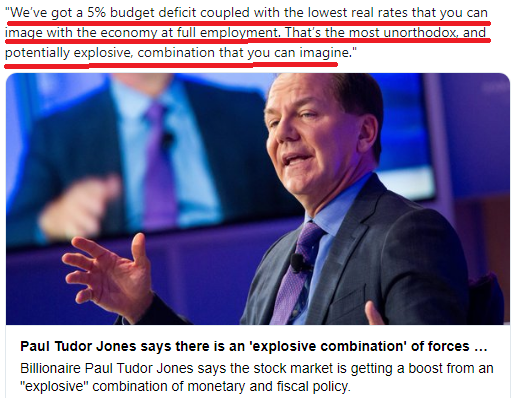
Spostandoci verso i mercati finanziari, ci accorgiamo subito che anche in questo ambiente si osservano cose strane, dati che non hanno precedenti, eccessi che non si erano mai registrati prima.

Lo diceva anche, qualche giorno fa, uno dei più esperti e dei più noti gestori di portafoglio del Pianeta e lo lette sotto nell’immagine.

week_03_Nov_2019_003.png

Questi sono i fatti: poi ci sono le emozioni, la psicologia, l’atteggiamento degli operatori di mercato: anche in questo caso, gli eccessi sono evidenti.

week_03_Nov_2019_014.png

Come vedete chiaramente nell’immagine in alto, anche qui siamo in una fase di surriscaldamento: e fa talmente caldo che tra gli operatori cresce la confusione. E qualcuno comincia anche a vedere immagini false: ritornano i miraggi, dei quali tante volte abbiamo parlato e scritto nel 2018.

week_03_Nov_2019_016.png

Suscita una grande sorpresa, ed anzi ci lascia attoniti, leggere il titolo qui sopra, e poi leggere i numeri della tabella qui sotto. Anche questi sono numeri clamorosi, e persino senza precedenti: una caduta del genere, in un solo mese, noi non la ricordiamo.

week_03_Nov_2019_026.png

La tabella qui sopra, e il grafico che segue, ci raccontano qualche cosa che, per tutti noi investitori, è della massima importanza. Noi ne torneremo a parlare, con una analisi di dettaglio, durante la settimana in The Morning Brief.

week_03_Nov_2019_029.png

Ma ritorniamo al tema del nostro Post: che è il surriscaldamento.

Non sappiamo dire come finirà la cosa per l’ecosistema e per il nostro Pianeta. Ma sappiamo bene come finiscono le fasi di surriscaldamento sui mercati finanziari.

Anche perché … è appena successo. E’ successo pochi giorni fa, per i titoli quotati alla Borsa di New York, di Società che producono prodotti di “marijuana legale”.

E la fine è quella solita: leggete nell’immagine qui sotto frasi che già avete letto in passato. E che nel prossimo futuro leggerete nuovamente, e con riferimento a categorie di asset molto più grandi.

  • “la bolla è scoppiata”

  • “i mercati in pochi giorni sono passati dall’essere surriscaldati all’essere completamente chiusi”

  • “Wall Street in pochissimo tempo è passata dall’esuberanza alla realtà”

  • “la fiamma si è spenta in pochi mesi”

  • “molti titoli hanno perso due terzi del proprio valore”

week_03_Nov_2019_030.png
Mercati oggiValter Buffo
Preservare l'ambiente: è interesse di tutti?
week_03_Nov_2019_028d.png

Come vedete nell’immagine sopra, la giovane Greta si è un po’ annoiata e si è fatta anche le trecce.

I problemi dell’ambiente si trascinano e non si risolvono. La politica sceglie, giorno dopo giorno, di non affrontare questioni che sono sotto gli occhi di tutti, di spostare la cosa più in là, di rinviare.

Il tutto in attesa che una grave devastazione, come quella di Venezia a cui tutti assistiamo in questi giorni con orrore , riporti in modo improvviso l’attenzione del Mondo intero sugli squilibri del clima.

Questa vicenda a noi ricorda un’altra vicenda.

Meno drammatica di quella di Venezia, per ora: ma chi, tra i nostri lettori, si sente di affermare che questa vicenda NON si trasformerà in qualche cosa di più grave? Tra gli operatori più esperti sui mercati finanziari, ci sono numerosi accenni alla possibilità di una vera e propria guerra.

week_03_Nov_2019_001.png

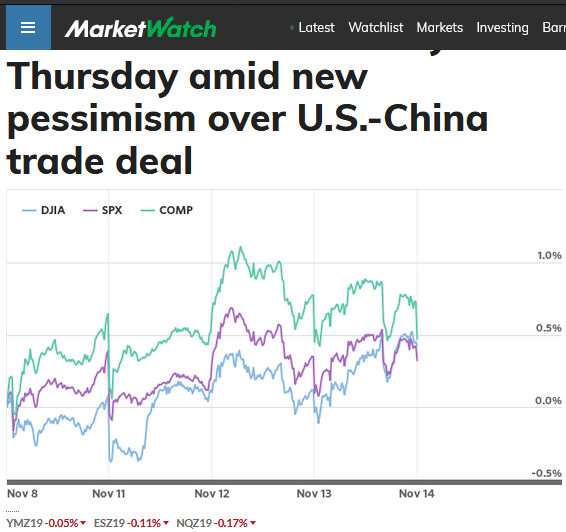
Il grafico qui sopra ci ricorda che la Borsa più importante del Mondo, la settimana scorsa, è rimasta di fatto ferma per quattro sedute. Lunedì, martedì, mercoledì, e giovedì. Senza idee, senza direzione, e soprattutto senza un senso.

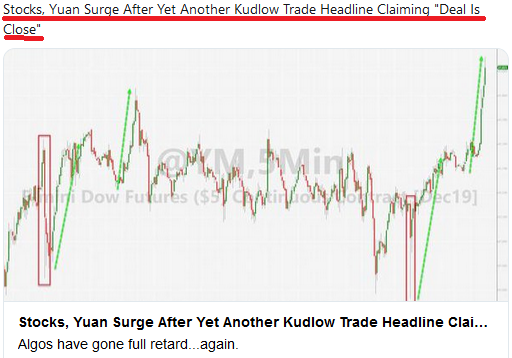
Proprio per questo nella notte americana di giovedì è arrivata, dalla Casa Bianca, una dichiarazione sulle trattative sulla Cina. “Siamo vicini alla chiusura” ci ha detto Larry Kudlow.

Per la cinquecentesima volta (più o meno) negli ultimi 24 mesi.

week_03_Nov_2019_002.png

Sono forse tutti stupidi, quelli che vanno dietro a queste dichiarazioni? Siamo solo noi, gli scemi che non ci facciamo guidare da queste dichiarazioni nelle scelte del portafoglio titoli?

No: non sono tutti stupidi, e allo stesso tempo noi non siamo scemi.

Lo abbiamo spiegato, nell’ultima settimana ed anche nella settimana precedente all’ultima, in The Morning Brief. Ci sono interessi diversi, che si confrontano e contrastano sui mercati finanziari: non tutti operano con i medesimi obbiettivi.

Se siete convinti che Larry Kudlow, con le sue dichiarazioni, abbia a cuore gli interessi di voi investitori finali, siete del tutto fuori strada. Se pensate che le banche di investimento agiscano, e producano analisi, nel vostro interesse, vi sbagliate del tutto. Se credete che l’industria dei Fondi Comuni di investimento operi per rendere massimo il risultato dei loro Clienti, siete completamente fuori strada.

Mercati oggiValter Buffo
Riciclare la roba vecchia che non funziona più
week_03_Nov_2019_028c.png

Guardate lo sguardo di Greta nella foto: pur avendo soltanto 11 anni, lei si rende conto che non è possibile andare avanti con i vecchi metodi, i vecchi arnesi, le vecchie pratiche: il Mondo ha bisogno di rinnovarsi, di cambiare metodi ed atteggiamento, di muoversi verso il futuro.

A molti investitori, questo non risulta: stanno ancora lì’, con l’industria del carbone e i treni a vapore e il transatlantico Titanic (di cui vi parlammo solo sette giorni fa).

I giornali in Italia fanno pubblicità (senza dichiaralo: pubblicità occulta, naturalmente) all’accordo tra la società di consulenza per gli investimenti Money Farm e Poste Italiane. Vi invitiamo a visitare il sito di Money Farm, ad apprezzarne la cura dell’estetica, ed anche di approfondire i contenuti di quell’offerta di servizi.

Potrete facilmente riscontrare che quelle proposte (come molte altre, nel settore che si auto-definisce Fintech in Italia) sono basate su una asset allocation tradizionale, e che hanno come modelli di riferimento strumenti che furono sviluppati, testati (e bocciati) negli anni Novanta, ovvero trent’anni fa (ad esempio, Black - Litterman).

Vista la pubblicità che viene fatta a questi strumenti, può essere utile mettere a confronto questa proposta con ciò che nel resto del Mondo si dice e si scrive, in merito alle tradizionali tecniche di asset allocation.

Per questa ragione, proponiamo alla lettura un articolo molto significativo pubblicato pochi giorni fa sul Financial Times. L’articolo parla di temi “alla moda”, come la Dynamic Asset Allocation (DAA), che noi non abbiamo la possibilità di approfondire in questo Post: lo faremo però, entrando nel dettaglio, in una pubblicazione riservata ai nostri Clienti.

Perché il tema delle strategie con le quali va gestito il portafoglio è un tema cruciale, in questa fase di mercato.

Anche se in questo Post non affronteremo gli aspetti più tecnici, resta chiaro il messaggio che emerge dall’articolo del Financial Times: l’industria dei Fondi Comuni è in difficoltà, va alla ricerca di nuovi contenitori, di nuove soluzioni di facciata, che consentano di riciclare vecchi prodotti (i Fondi Comuni di Investimento) appiccicandogli nuove etichette. Ed ecco perché l’articolo si chiude con un accenno ai “venditori di balsami miracolosi alle fiere”.

Is it my imagination or are there a rising number of heads of asset allocation lurking in the corridors of investment houses? They are intelligent, inquisitive and analytical but I cannot help wondering what value they add to long-term investing. Are they not just another iteration of active fund management, replacing active stock picking with active selection of asset classes?

Given how the numbers turned out for the former (stockpickers), maybe one can be a bit suspicious especially given the fact that the data sets manipulated by asset allocators are huge (the global economy plus long-term asset class return studies).

It also does not help that many key signals are influenced by non-economic actors which are hard to predict. Fancy guessing what US president Donald Trump might tweet next? Thought not.

At this point in my investigations I usually seek the counsel of academics. Some, such as William Sharpe, are obviously receptive to ideas of a more dynamic/active form of asset allocation, based in part on their research, whereas other academics, such as Elroy Dimson at Cambridge, seem to be wedded to boring old strategic asset allocation. Ideas around dynamic asset allocation (DAA) developed by the New Zealand super fund have emerged in the mainstream.

Big investors with serious asset liability management mandates started to embrace a more dynamic approach to asset allocation and investors generally became more demanding. Gone are the days when investors simply want the best risk adjusted returns. Now they want a set of assets tailored to a set of investment targets and needs, many involving minimum drawdown, liability matching and so on.

The cynic in me wonders whether this gave tactical asset allocators a chance to rebrand themselves as DAA. All sorts of strategies crept into the lexicon of asset allocation such as dynamic rebalancing, better benchmark design, risk factor allocations and downside protection. Gabriel Petre at the World Bank has penned an excellent overview of this new church of DAA in a paper called A Case for Dynamic Asset Allocation for Long Term Investors. His bottom line is that the “results so far seem to be mixed”.

His is a careful examination of various DAA strategies but two worries keep popping up. The first is the substance of the various strategies, many of which are overly dependent on mean reversion helped along by a range of signals. The catch is that in many cases investors end up waiting for valuation signals to reach extreme levels before initiating a position. And even if the signals themselves prove effective that does not mean it is any “easier to forecast future returns than before, as the uncertainty around these forecasts is quite large and the horizon is long”.

But for me the most formidable criticism is one of methodology — even if you find a great theory, back test it and then look for the signals, that does not mean it is easy to trade. It is also worth noting that most DAA approaches are data intensive, require very detailed risk budgets and force investors to have an incredibly disciplined approach to entry and exit points. Mr Petre suggests that from a governance perspective, investors need to be happy with long periods of inactivity, difficult to measure results, potential significant underperformance and a requirement for timely decision making.

One can see this played out in one concrete example which Mr Dimson cites. Volatility-based strategies have proved popular but as he points out, the half-life of many volatility eruptions is usually a matter of just a handful of days. For many institutional DAA investors by the time you have clocked the volatility signal and checked in with the right governance committee, it is probably too late. One final insight comes from the consultants who have been monitoring diversified growth funds (DGFs), many of which have varying degrees of DAA at work.

A KPMG report for the 10 years to December 2016 found “average DGF had risk-adjusted returns similar to that of equities and lower risk-adjusted returns than the equity bond portfolio”. Another report by Willis Towers Watson concluded that “high returns can be attributed to beta rather than alpha. Further, and crucially, we question how effective traditional, liquid DGFs will be if market returns are subdued”. So, I return to my initial observation. Is a new form of snake oil salesman patrolling the corridors of high finance? I await my invite to the Christmas shindig of the Guild of DAAs with trepidation.

Mercati oggiValter Buffo
Iceberg in vista
week_02_Nov_2019_032.png

L’iceberg si avvicina.

E quando un enorme montagna di ghiaccio si fa più vicina, la temperatura scende i su rischia il congelamento.

Ecco spiegato perché, proprio la settimana scorsa, abbiamo letto il titolo “Congelati dalla paura” che tutti potete rileggere subito qui sotto.

week_02_Nov_2019_012.png

A che cosa si riferisce, il titolo qui sopra? Ai Fondi Comuni di Investimento in Europa. E nello specifico, a che cosa si riferisce? Alla crisi che è in atto da mesi, della quale avete avuto, attraverso questo sito, una puntuale e qualificata informazione.

Avete avuto informazione da noi di Recce’d e da pochi altri mezzi di informazione in Italia.

Il che è davvero curioso, perché la notizia è di prima pagina nel Mondo.

Riportiamo, allo scopo di ricapitolare (in modo sintetico) quello che sta succedendo, il testo dell’articolo qui di seguito.

Dopo avere letto questo articolo, date uno sguardo anche al grafico che abbiamo ricavato da un articolo del Financial Times che tratta del medesimo tema.

Ed infine, dopo che avete visto il grafico del Financial Times, rileggete ciò che disse il Grande Capo della Società Amundi (Fondi Comuni) solo qualche settimana, fa, a proposito della liquidità REALE e non di fantasia dei vostri Fondi Comuni.

Fatte queste tre cose, però, il nostro suggerimento è: NON fermatevi, fate qualche cosa, agite, difendetevi.

Non state lì paralizzati dalla paura: anzi congelati dalla paura, come scrive Bloomberg poco sopra.

The warning signs are piling up for investors in funds that sink their money into hard-to-sell securities. In recent months we’ve seen the demise of Neil Woodford’s business empire and a crisis at H2O Asset Management, triggered by their holdings of unlisted companies and unrated bonds. Now Woodford’s protege Mark Barnett has fallen into a similar trap, resulting in Morningstar Inc.’s downgrade of two funds he runs at Invesco Ltd.

All this drama has left unnerved investors wondering: who’s next? Here’s a timeline of the main events that brought us here:

June 3

Woodford, long one of Britain’s most celebrated money managers, stops redemptions from his flagship LF Woodford Equity Income Fund. The freeze is meant to buy him time to sell down the fund’s “unquoted and less liquid stocks” and meet the demands of clients who want their money back after a run of poor performance.

June 19

Morningstar suspends its rating of an H2O Asset Management fund, citing concerns about the “liquidity and appropriateness” of some corporate-bond holdings. H20 is a major holder of rarely traded bonds issued by companies linked to German financier Lars Windhorst. The fund also allows clients to make frequent withdrawals, creating the potential for a liquidity crunch.

June 24

Natixis SA goes into crisis-fighting mode to stem a wave of outflows from its H2O Asset Management unit, selling about 300 million euros ($332 million) of its unrated private bonds and marking down the balance to remove incentives for investors to pull even more.

June 26

Bank of England Governor Mark Carney reprimands investment funds that hold illiquid assets while allowing unlimited withdrawals. “These funds are built on a lie,” he tells Parliament, heaping pressure on Woodford and H2O.

July 1

H2O Asset Management halts an eight-day skid during which a group of six key funds plunged by more than 8 billion euros. The firm had taken steps to arrest the decline in assets by dropping entry fees for all of its funds, selling some unrated private bonds and proposing to create a so-called “deep value” fund for thinly traded assets.

July 11

Carney says Woodford’s decision to lock his main fund is “symptomatic of a broader problem.” The central bank says in a report that the mismatch created when funds offer daily redemptions while loading up on hard-to-sell assets could lead to runs, and this has the potential to become a financial-stability risk.

July 29

Woodford’s listed investment trust says it’s considering replacing him as portfolio manager, deepening his career crisis. On the same day, the administrator of his flagship fund says it may remain locked until December.

September 30

The U.K.’s Financial Conduct Authority stiffens its rules for funds that invest in hard-to-sell property assets in the first major rule change since the crises that struck Woodford and H2O.

October 15

Woodford runs out of road in his attempt to salvage his investment business. The administrator of his flagship fund ousts Woodford as manager and sends it into liquidation. Woodford objects, but before the day’s done he announces that he’s shutting his firm, Woodford Investment Management. The firm terminates its agreement to manage Woodford Patient Capital Trust.

November 6

Barnett, who followed Woodford’s lead in loading up on less liquid securities, is hit with rating downgrades on two of his funds at Invesco. Morningstar cites concerns about the way he’d changed the focus of his funds to buy smaller companies that are harder to sell.

week_05_Oct_2019_006.png

Amundi’s   chief investment officer has warned the asset management sector could be on the verge of a wider liquidity crisis, amid heightened scrutiny by investors in the wake of Neil Woodford’s downfall.

“This business is a trade-off between risk, return and liquidity. We have the ingredients of looming liquidity mismatches across the industry,” said Pascal Blanqué.

The CIO’s comments reflect growing concerns that some open-ended funds could suffer the same fate as Woodford by struggling to sell some of their holdings fast enough to pay back investors.

According to Blanqué, a cause for concern is that banks have reduced their dealer and market making activity following the global financial crisis. Banks have retreated from their past role by scaling back the amount of risk they take in part because of more stringent capital requirements from regulators.

Blanqué said that banks’ diminished ability to absorb liquidity demand during selloff periods could pose wider problems for fund managers.

“We’ve seen a frantic search for yield on the buy side, pushed by [central banks’ quantitative easing programs],” said Blanqué. “The combination of a frantic search for yield, and the deterioration of market liquidity, can create mismatches.”

Blanqué’s comments come as fund liquidity has been thrown into the spotlight following liquidity problems encountered by high profile asset managers including Woodford, H2O and GAM.

In June, Morningstar suspended its bronze rating on H2O’s Allegro fund due to concerns over the liquidity of bonds linked to Lars Windhorst, the German entrepreneur with a history of bankruptcies. H2O subsequently offloaded a significant chunk of private, nonrated debt and removed entry fees in an attempt to stem investor outflows.

Woodford, once a star stock picker in the U.K., was forced to close his investment business on October 16 after being sacked as manager on his flagship £2.9bn Equity Income fund.

Link Fund Solutions, which acts as the authorized corporate director to the Equity Income fund, took the decision to suspend dealing in the vehicle on June 3 to allow some of its most illiquid holdings to be sold to pay back investors wanting to exit.

In 2018, Swiss asset manager GAM was forced to close several bond funds managed by Haywood to stem investor outflows and sell off some of the products’ most illiquid holdings to pay back investors.

Blanqué said: “There is a severe underestimation of the effective liquidity of what is supposed to be liquid.”

“At the fund level, the regulators are going in the direction where the buy side must be ready to show effective liquidity policies.

“At the corporate level, we think that asset managers are, generally speaking, under-capitalised relative to the liquidity they may face.”

He added: “The very concept of liquidity is poorly defined. You will see regulators asking buy side actors to at least be more precise about what they mean by liquidity and explain their crisis management.”

Valter Buffo