Posts in Mercati oggi
Preservare l'ambiente: è interesse di tutti?
week_03_Nov_2019_028d.png

Come vedete nell’immagine sopra, la giovane Greta si è un po’ annoiata e si è fatta anche le trecce.

I problemi dell’ambiente si trascinano e non si risolvono. La politica sceglie, giorno dopo giorno, di non affrontare questioni che sono sotto gli occhi di tutti, di spostare la cosa più in là, di rinviare.

Il tutto in attesa che una grave devastazione, come quella di Venezia a cui tutti assistiamo in questi giorni con orrore , riporti in modo improvviso l’attenzione del Mondo intero sugli squilibri del clima.

Questa vicenda a noi ricorda un’altra vicenda.

Meno drammatica di quella di Venezia, per ora: ma chi, tra i nostri lettori, si sente di affermare che questa vicenda NON si trasformerà in qualche cosa di più grave? Tra gli operatori più esperti sui mercati finanziari, ci sono numerosi accenni alla possibilità di una vera e propria guerra.

week_03_Nov_2019_001.png

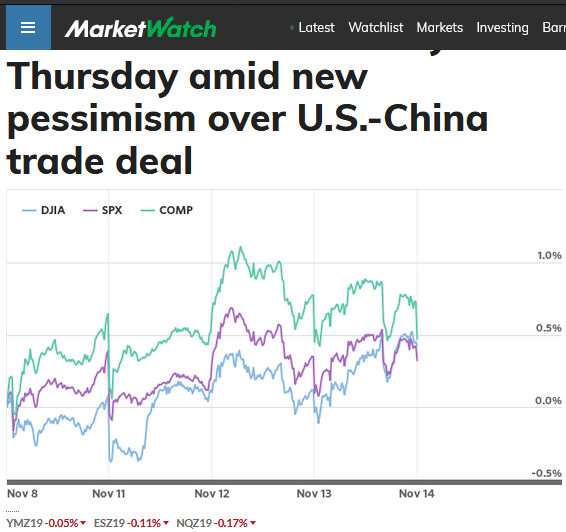
Il grafico qui sopra ci ricorda che la Borsa più importante del Mondo, la settimana scorsa, è rimasta di fatto ferma per quattro sedute. Lunedì, martedì, mercoledì, e giovedì. Senza idee, senza direzione, e soprattutto senza un senso.

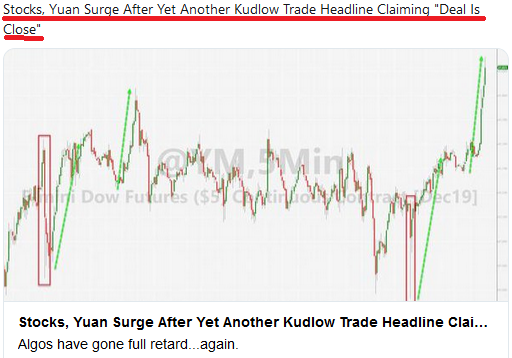
Proprio per questo nella notte americana di giovedì è arrivata, dalla Casa Bianca, una dichiarazione sulle trattative sulla Cina. “Siamo vicini alla chiusura” ci ha detto Larry Kudlow.

Per la cinquecentesima volta (più o meno) negli ultimi 24 mesi.

week_03_Nov_2019_002.png

Sono forse tutti stupidi, quelli che vanno dietro a queste dichiarazioni? Siamo solo noi, gli scemi che non ci facciamo guidare da queste dichiarazioni nelle scelte del portafoglio titoli?

No: non sono tutti stupidi, e allo stesso tempo noi non siamo scemi.

Lo abbiamo spiegato, nell’ultima settimana ed anche nella settimana precedente all’ultima, in The Morning Brief. Ci sono interessi diversi, che si confrontano e contrastano sui mercati finanziari: non tutti operano con i medesimi obbiettivi.

Se siete convinti che Larry Kudlow, con le sue dichiarazioni, abbia a cuore gli interessi di voi investitori finali, siete del tutto fuori strada. Se pensate che le banche di investimento agiscano, e producano analisi, nel vostro interesse, vi sbagliate del tutto. Se credete che l’industria dei Fondi Comuni di investimento operi per rendere massimo il risultato dei loro Clienti, siete completamente fuori strada.

Mercati oggiValter Buffo
Riciclare la roba vecchia che non funziona più
week_03_Nov_2019_028c.png

Guardate lo sguardo di Greta nella foto: pur avendo soltanto 11 anni, lei si rende conto che non è possibile andare avanti con i vecchi metodi, i vecchi arnesi, le vecchie pratiche: il Mondo ha bisogno di rinnovarsi, di cambiare metodi ed atteggiamento, di muoversi verso il futuro.

A molti investitori, questo non risulta: stanno ancora lì’, con l’industria del carbone e i treni a vapore e il transatlantico Titanic (di cui vi parlammo solo sette giorni fa).

I giornali in Italia fanno pubblicità (senza dichiaralo: pubblicità occulta, naturalmente) all’accordo tra la società di consulenza per gli investimenti Money Farm e Poste Italiane. Vi invitiamo a visitare il sito di Money Farm, ad apprezzarne la cura dell’estetica, ed anche di approfondire i contenuti di quell’offerta di servizi.

Potrete facilmente riscontrare che quelle proposte (come molte altre, nel settore che si auto-definisce Fintech in Italia) sono basate su una asset allocation tradizionale, e che hanno come modelli di riferimento strumenti che furono sviluppati, testati (e bocciati) negli anni Novanta, ovvero trent’anni fa (ad esempio, Black - Litterman).

Vista la pubblicità che viene fatta a questi strumenti, può essere utile mettere a confronto questa proposta con ciò che nel resto del Mondo si dice e si scrive, in merito alle tradizionali tecniche di asset allocation.

Per questa ragione, proponiamo alla lettura un articolo molto significativo pubblicato pochi giorni fa sul Financial Times. L’articolo parla di temi “alla moda”, come la Dynamic Asset Allocation (DAA), che noi non abbiamo la possibilità di approfondire in questo Post: lo faremo però, entrando nel dettaglio, in una pubblicazione riservata ai nostri Clienti.

Perché il tema delle strategie con le quali va gestito il portafoglio è un tema cruciale, in questa fase di mercato.

Anche se in questo Post non affronteremo gli aspetti più tecnici, resta chiaro il messaggio che emerge dall’articolo del Financial Times: l’industria dei Fondi Comuni è in difficoltà, va alla ricerca di nuovi contenitori, di nuove soluzioni di facciata, che consentano di riciclare vecchi prodotti (i Fondi Comuni di Investimento) appiccicandogli nuove etichette. Ed ecco perché l’articolo si chiude con un accenno ai “venditori di balsami miracolosi alle fiere”.

Is it my imagination or are there a rising number of heads of asset allocation lurking in the corridors of investment houses? They are intelligent, inquisitive and analytical but I cannot help wondering what value they add to long-term investing. Are they not just another iteration of active fund management, replacing active stock picking with active selection of asset classes?

Given how the numbers turned out for the former (stockpickers), maybe one can be a bit suspicious especially given the fact that the data sets manipulated by asset allocators are huge (the global economy plus long-term asset class return studies).

It also does not help that many key signals are influenced by non-economic actors which are hard to predict. Fancy guessing what US president Donald Trump might tweet next? Thought not.

At this point in my investigations I usually seek the counsel of academics. Some, such as William Sharpe, are obviously receptive to ideas of a more dynamic/active form of asset allocation, based in part on their research, whereas other academics, such as Elroy Dimson at Cambridge, seem to be wedded to boring old strategic asset allocation. Ideas around dynamic asset allocation (DAA) developed by the New Zealand super fund have emerged in the mainstream.

Big investors with serious asset liability management mandates started to embrace a more dynamic approach to asset allocation and investors generally became more demanding. Gone are the days when investors simply want the best risk adjusted returns. Now they want a set of assets tailored to a set of investment targets and needs, many involving minimum drawdown, liability matching and so on.

The cynic in me wonders whether this gave tactical asset allocators a chance to rebrand themselves as DAA. All sorts of strategies crept into the lexicon of asset allocation such as dynamic rebalancing, better benchmark design, risk factor allocations and downside protection. Gabriel Petre at the World Bank has penned an excellent overview of this new church of DAA in a paper called A Case for Dynamic Asset Allocation for Long Term Investors. His bottom line is that the “results so far seem to be mixed”.

His is a careful examination of various DAA strategies but two worries keep popping up. The first is the substance of the various strategies, many of which are overly dependent on mean reversion helped along by a range of signals. The catch is that in many cases investors end up waiting for valuation signals to reach extreme levels before initiating a position. And even if the signals themselves prove effective that does not mean it is any “easier to forecast future returns than before, as the uncertainty around these forecasts is quite large and the horizon is long”.

But for me the most formidable criticism is one of methodology — even if you find a great theory, back test it and then look for the signals, that does not mean it is easy to trade. It is also worth noting that most DAA approaches are data intensive, require very detailed risk budgets and force investors to have an incredibly disciplined approach to entry and exit points. Mr Petre suggests that from a governance perspective, investors need to be happy with long periods of inactivity, difficult to measure results, potential significant underperformance and a requirement for timely decision making.

One can see this played out in one concrete example which Mr Dimson cites. Volatility-based strategies have proved popular but as he points out, the half-life of many volatility eruptions is usually a matter of just a handful of days. For many institutional DAA investors by the time you have clocked the volatility signal and checked in with the right governance committee, it is probably too late. One final insight comes from the consultants who have been monitoring diversified growth funds (DGFs), many of which have varying degrees of DAA at work.

A KPMG report for the 10 years to December 2016 found “average DGF had risk-adjusted returns similar to that of equities and lower risk-adjusted returns than the equity bond portfolio”. Another report by Willis Towers Watson concluded that “high returns can be attributed to beta rather than alpha. Further, and crucially, we question how effective traditional, liquid DGFs will be if market returns are subdued”. So, I return to my initial observation. Is a new form of snake oil salesman patrolling the corridors of high finance? I await my invite to the Christmas shindig of the Guild of DAAs with trepidation.

Mercati oggiValter Buffo
Iceberg mentre sul ponte si balla
week_02_Nov_2019_032.png

Mentre il grande naviglio con quattro camini si avvia lento verso il colossale iceberg, sul ponte più in alto si balla felici.

Che cosa c’è di più festoso di una lunga crociera, un’orchestra che suona, champagne a volontà, e la mancanza di ogni preoccupazione?

Gira voce, tra i ballerini, che ci sia la possibilità di un iceberg: ma la risposta della maggior parte dei viaggiatori è sempre la stessa. “Non è ancora successo”. “Non ho sentito il botto”. “Lo dicono sempre, ma non succede mai”.

E soprattutto: “Ma perché dovrei essere io il primo ad occuparmene?”, “Qui tutti ballano, e io non sarò certo il primo a smettere”, “Sono tutti felici: mica saranno tutti dei fessi”.

C’è però chi insiste sull’iceberg che si avvicina: ma viene etichettato come “allarmista”, “disfattista”, e peggio ancora “contrarian”. Che significa poi: uno che dice il contrario di quello che dicono tutti, e per partito preso.

Per queste ragioni, in Recce’d ci colpì moltissimo leggere, pochi giorni fa, il titolo ed il contenuto dell’articolo di Bloomberg che anche voi potete leggete qui sotto.

Articolo che (come abbiamo messo per voi in evidenza in questa immagine) è firmato dalla Redazione, il che significa che è un articolo a cui si affida la linea editoriale di Bloomberg.

Bloomberg oggi è il mezzo di informazione più autorevole, e più diffuso, sui mercati finanziari.

Quella che leggete qui sotto è la loro presa di posizione ufficiale.

Quando Recce’d scrive queste medesime cose (e non da oggi), c’è sempre qualcuno che ci etichetta come “contrarian” (sbagliando completamente nell’utilizzo di questa etichetta, come abbiamo già spiegato).

Allora, quel 21 ottobre, ci siamo tutti domandati, in Recce’d, come fosse possibile che il mezzo di informazione più diffuso, il mainstream per eccellenza, fosse su posizioni che il pubblico giudica “contrarian”.

Può darsi che si sbagli Bloomberg? Oppure, più probabilmente, chi appiccica l’etichetta di “contrarian” non è bene informato.

Per mettere tutti i lettori nella migliore condizione per giudicare, noi abbiamo deciso di riportare tutto l’articolo di seguito al grafico. E dopo l’avere letto l’articolo, noi vi proporremo le nostre considerazioni.

week_02_Nov_2019_011.png

The world’s finance ministers and central-bank governors gathered this past weekend in Washington and looked out at a global economy badly in need of treatment. Most say they understand the dangers, but that seems open to question. With the facts in plain sight and the need for policy changes all too apparent, they’ve shown little sense of urgency, and even less sign of action. Prodded by an unhinged U.S. administration, the world could be stumbling into the next global recession.

The International Monetary Fund has lowered its growth forecasts yet again. Global output is projected to rise by just 3% this year (down from the 3.3% predicted in the spring) and by a still-sluggish 3.4% (down from 3.6%) in 2020. Economic momentum is fading almost everywhere — the IMF calls it a “synchronized slowdown.” The revised outlook is already the weakest since the crash 10 years ago, and the risks in the forecast are very much, as economists say, to the downside.

This would be concerning under any circumstances, but the prospect of recession under current conditions is truly alarming. The hesitant recovery of the past decade has depleted the conventional tools of macroeconomic policy. In many countries — not least the U.S. — fiscal stimulus and persistent budget deficits have boosted ratios of public debt to national income. Next time, governments will be reluctant to lean as heavily on extra public borrowing to raise demand, rightly or wrongly fearing lack of fiscal space. Monetary policy is all but exhausted too, with interest rates either close to their effective lower bound (as in the U.S.) or slammed down against it (as in the European Union).

Another legacy of that previous recession, and the extraordinary measures taken to contain it, is heightened financial fragility. With abundant quantitative easing and super-low interest rates, financial conditions have been kept loose to support asset prices, press down on yields and strengthen demand. The measures were necessary, but the result is outlandish asset valuations and heightened credit risk. Recklessly inflated house prices were a main cause of the crash; in many countries, they’ve soared again on the back of cheap credit. Banks have added capital since 2009, but not enough to make them safe in another big downturn. The notorious “doom loop” of risky sovereign debt and bank insolvency — recognized as a major risk after 2008 — remains substantially unaddressed in Italy and other countries.

With all these vulnerabilities to the fore, and with few if any policy options for dealing with the crash they might cause, U.S. President Donald Trump chose to embark on his trade war with China, and threatened any other country that caught his attention with the same. This astounding recklessness, unaccountably tolerated by Congress, has already caused enormous economic damage, not least in the U.S. Should the synchronized slowdown become an outright worldwide recession, the U.S. government will get, and deserve, much of the blame.

But the responsibility goes wider. Other countries could be doing far more to guard against these heightened risks.

China, for instance, has been too slow to address its financial imbalances. No doubt, Trump’s trade war has made this harder, but the Beijing government has made little progress in repairing its credit-allocation system. Under pressure, the resulting financial vulnerabilities could surface abruptly, with consequences not just for China. The U.K. has lately seemed intent on wrecking its economy and system of government in pursuit of Brexit. The EU has had years to equip the euro area with two basic necessities of a single-currency area — a common budget to mitigate recessions and a functioning banking union — and has provided neither. In every part of the world, governments have dithered over reforms that would make their economies more productive and robust. With risks mounting almost wherever you look, political dysfunction has conspired to make things worse.

Given the will, all of these problems are fixable. Some, to be sure, could be solved at a stroke. The risks posed by Trump’s trade wars, for instance, would evaporate if he merely refrained from stirring pointless conflict. Others are much more complex. Reducing fragility requires smarter regulation, to recognize the risks that arise from constantly evolving financial systems. Reviving macroeconomic policy in a world of persistently low interest rates demands fresh thinking on both monetary and fiscal fronts. Answers will be found and are starting to emerge, but governments should step up the pace.

These questions can’t wait any longer. The world economy is at a dangerous juncture, and stands desperately in need of wiser and more effective leadership. Until it gets some, the risks are unlikely to subside.

week_02_Nov_2019_022.png

Le affermazioni di Bloomberg, che avete appena letto nell’articolo che noi vi abbiamo riproposto, sono fondate su fatti: e per questo, sono indiscutibili.

Non siamo noi di Recce’d a dirvelo: attenzione. Sono Mario Draghi e Jay Powell, e da ormai alcuni mesi: con le parole, ma soprattutto con i fatti. Primo fra tutti la scelta di riprendere le politiche da “crisi economica profonda” come il QE, scelta che la BCE e la Federal Reserve (immagine qui sopra) hanno fatto nel mese di settembre (anche se la Fed NON lo vuole ammettere: ma i numeri del grafico vanno ben al di là delle parole)

Al tempo stesso, in Recce’d siamo stati molto colpito dal tono dell’articolo in questione: esplicito e persino aggressivo, non in linea con la tradizione delle stampa anglosassone che si occupa di finanza (non stiamo per carità parlando della stampa in Italia, e neppure di macchine della propaganda come FOX News oppure CNBC).

Per questo motivo, noi colleghiamo quell’articolo molto esplicito ad una notizia di pochi giorni fa, che vi riportiamo con l’immagine che chiude questo Post.

Il contenuto dell’articolo, lo ripetiamo, è del tutto condivisibile, a nostro parere. Ma ci auguriamo che l’utilizzo dei mezzi di informazione come strumenti di propaganda, portato a livelli mai visti prima dalla Amministrazione Trump, NON venga adottato anche dai suoi oppositori.

Non avremmo alcuna voglia, in quanto professionisti della gestione dei portafogli in titoli, di dovere affrontare un diluvio di “fake news” da una parte e poi anche dall’altra. Ma naturalmente, nel vostro e nel nostro interesse, ci siamo già messi in allerta.

week_02_Nov_2019_005.png
Mercati oggiValter Buffo
Iceberg e il Capitano della nave
week_02_Nov_2019_032.png

Mentre il transatlantico si avvicina all’iceberg, sul ponte principale del transatlantico l’orchestra continua a suonare, e una parte dei passeggeri continua a ballare.

Preferiscono non sapere. Preferiscono continuare a godere. Anche se si tratta di una illusione, preferiscono godersi un momento indimenticabile.

Ma il Capitano? Il Capitano del transatlantico non dovrebbe proteggere i passeggeri?

Il Capitano ha paura, è preoccupato, teme il licenziamento e la rovina. E quindi, non soltanto non informa i passeggeri. Il Capitano punta sul “tenere tutti tranquilli”, e per questo ripete ogni minuto all’impianto interfono sempre la stessa frase: “va tutto benissimo, state tranquilli”.

E lo fa con impressionante regolarità. Rivediamo ad esempio con voi i messaggi arrivati nella settimana appena conclusa.

Primo messaggio di lunedì 4 novembre.

week_02_Nov_2019_004octies.png

Un secondo messaggio di lunedì 4 novembre-

week_02_Nov_2019_004septies.png

Passiamo a martedì 5 novembre.

week_02_Nov_2019_004sexies.png

Passiamo poi a mercoledì 6 novembre: un messaggio dal quale (è evidente) traspare lo stato di agitazione del Capitano, e la sua conseguente confusione mentale.

week_02_Nov_2019_004quinquies.png

Per arrivare poi a giovedì 7 novembre: e qui, come leggete, c’è qualche viaggiatore del transatlantico che si fa una domanda, e comincia a dubitare che il Capitano sappia quello che dice.

week_02_Nov_2019_004ter.png

Venerdì 8 novembre, però, la situazione esplode: per rispondere a ciò che dice la stampa, prima del Capitano parlano i membri dell’equipaggio, e così si crea un gran caos.

Vediamo prima che cosa si legge sui giornali.

week_02_Nov_2019_019.png

Poi, vediamo che cosa ci racconta un Alto Ufficiale del Transatlantico.

week_02_Nov_2019_018.png

Un ufficiale della nave dice che “forse c’è un iceberg davanti a noi”. Subito, interviene però un secondo ufficiale, a rassicurare tutti: l’orizzonte è libero da ostacoli.

week_02_Nov_2019_017.png

Ed alla fine, interviene il Capitano: che dice alcune frasi, ma non chiarisce e sembra essere in confusione (lo leggete sotto nell’ultima immagine del Post).

I viaggiatori del Transatlatico, loro, continuano a ballare: fanno attenzione alla musica che suona, un allegro fox-trot, e non si occupano della rotta.

Per la rotta, si affidano al Capitano.

E voi, lettori, che fate? Vi affidate al Capitano, per decidere che cosa fare dei vostri risparmi e per i vostri investimenti?

week_02_Nov_2019_015.png
Mercati oggiValter Buffo
Iceberg e la terza classe
week_02_Nov_2019_032.png

Come sempre accade, sono i più deboli a pagare per gli errori del Capitano.

Ed è per questo che, su un ponte più in basso, non sul punto dove ci sono orchestra e ballerini, circola un diffuso allarme. Mentre più sopra invece non si vuole sentire, non si vuole sapere, e si continua a ballare.

week_02_Nov_2019_013.png

Ed i segnali diventano, ora dopo ora sempre più evidenti.

Ce lo racconta anche Bloomberg, con un grafico molto efficace (sotto) che Bloomberg ha commentato come segue.

From Hong Kong to Chile and Lebanon, violent clashes between protesters and police have turned capital cities into danger zones, sparking growth fears and market slumps. Different countries have different challenges, but at the same time, there are common factors at work, according to research by Bloomberg Economics. Throwing most of the world’s economies onto a chart with inequality on one axis and government effectiveness on the other shows that the current trouble spots are by no means the worst performers. As global growth slows, the problem of social instability could turn out to be rather widespread.

week_05_Oct_2019_022.png
Mercati oggiValter Buffo