
Tra Panglossiano e stagflazione
 

In Recce’d sono poche le occasioni nelle quali la nostra visione dello stato delle cose coincide con quella di Nouriel Roubini, notissimo commentatore di ampia fama anche sui media tradizionali, al quale è stata attribuito il merito di “avere previsto la Grande Crisi Finanziaria 2007-2009”.

2021_Jan_1183.png

Non entreremo nel merito delle capacità di previsione di Nouriel Roubini, ma ripetiamo che negli anni precedenti e successivi alla GCF noi di Recce’d ci siamo spesso trovati in disaccordo con lui, soprattutto per i toni (catastrofisti) utilizzati, ma pure di frequente nel merito delle analisi e delle conclusioni.

Se oggi vi presentiamo un recentissimo articolo di Roubini, pubblicato la settimana scorsa, è perché a nostro giudizio contiene alcuni spunti originali, che sono degni di approfondimento e che possono aiutare i lettori di Recce’d a rendersi conto di quale è, oggi, lo stato delle cose sui mercati finanziari. Che non è lo “scenario Panglossiano” offerto, ancora oggi, dalle Reti dei private bankers, che sono rimasti ancora oggi fermi al “boom economico” che andava di moda fino ad aprile 2021. Allora “vendeva bene” ma oggi “non vende più”.

In particolare, ci sembra utilissima la classificazione offerta da Roubini, che chiama lo scenario nel quale ci troviamo oggi una “moderata stagflazione” e che poi etichetta i quattro possibili (secondo l’autore) scenari futuri come:

  • Boccoli d’oro

  • surriscaldamento

  • piena stagflazione

  • recessione

2021_Jan_1206.png

Che cosa c’è di utile in questa classificazione, per noi investitori? Suggeriamo un processo in tre stadi:

  1. primo stadio: scorrendo le caratteristiche dei quattro scenari, ogni investitore potrà fare un confronto e scegliere quale è lo scenario che giudica più probabile (ad esempio: giudicate sostenibili le previsioni OCSE che leggete nell’immagine? e perché sono così tanto diverse da quelle di inizio 2021?)

  2. sulla base dello scenario che all’investitore risulta più probabile, non sarà difficile stimare il comportamento dei diversi asset finanziari proprio in quello scenario

  3. infine, l’investitore potrà prendere in mano il proprio portafoglio, e calcolare (applicando le previsioni di cui al punto 2) quanto potrà perdere, o guadagnare, nello scenario da lui prescelto, da qui a fine 2021 e poi nel 2022.

Se l’investitore non si sentisse in grado di effettuare queste (semplici) operazioni, potrà quanto meno chiedere al proprio private banker, personal banker, al wealth manager, al promotore finanziario, e anche al robot-advisor: “quale dei quattro scenari ritieni più probabile? e come si sposa questa visione con il portafoglio di Fondi Comuni che mi hai appena venduto, al modico prezzo del 3% l’anno fatto di commissioni che io pago senza che mi vengano esplicitate?

In alternativa, può contattare Recce’d e risolvere ogni problema oggi esistente nel suo portafoglio titoli, e per sempre.

Given today’s high debt ratios, supply-side risks, and ultra-loose monetary and fiscal policies, the rosy scenario that is currently priced into financial markets may turn out to be a pipe dream. Over the medium term, a variety of persistent negative supply shocks could turn today’s mild stagflation into a severe case.

How will the global economy and markets evolve over the next year? There are four scenarios that could follow the “mild stagflation” of the last few months.

The recovery in the first half of 2021 has given way recently to sharply slower growth and a surge of inflation well above the 2% target of central banks, owing to the effects of the Delta variant, supply bottlenecks in both goods and labor markets, and shortages of some commodities, intermediate inputs, final goods, and labor. Bond yields have fallen in the last few months and the recent equity-market correction has been modest so far, perhaps reflecting hopes that the mild stagflation will prove temporary.

The four scenarios depend on whether growth accelerates or decelerates, and on whether inflation remains persistently higher or slows down.

Wall Street analysts and most policymakers anticipate a “Goldilocks” scenario of stronger growth alongside moderating inflation in line with central banks’ 2% target. According to this view, the recent stagflationary episode is driven largely by the impact of the Delta variant. Once it fades, so, too, will the supply bottlenecks, provided that new virulent variants do not emerge. Then growth would accelerate while inflation would fall.

For markets, this would represent a resumption of the “reflation trade” outlook from earlier this year, when it was hoped that stronger growth would support stronger earnings and even higher stock prices. In this rosy scenario, inflation would subside, keeping inflation expectations anchored around 2%, bond yields would gradually rise alongside real interest rates, and central banks would be in a position to taper quantitative easing without rocking stock or bond markets. In equities, there would be a rotation from US to foreign markets (Europe, Japan, and emerging markets) and from growth, technology, and defensive stocks to cyclical and value stocks.

The second scenario involves “overheating.” Here, growth would accelerate as the supply bottlenecks are cleared, but inflation would remain stubbornly higher, because its causes would turn out not to be temporary. With unspent savings and pent-up demand already high, the continuation of ultra-loose monetary and fiscal policies would boost aggregate demand even further. The resulting growth would be associated with persistent above-target inflation, disproving central banks’ belief that price increases are merely temporary.

The market response to such overheating would then depend on how central banks react. If policymakers remain behind the curve, stock markets may continue to rise for a while as real bond yields remain low. But the ensuing increase in inflation expectations would eventually boost nominal and even real bond yields as inflation risk premia would rise, forcing a correction in equities. Alternatively, if central banks become hawkish and start fighting inflation, real rates would rise, sending bond yields higher and, again, forcing a bigger correction in equities.

A third scenario is ongoing stagflation, with high inflation and much slower growth over the medium term. In this case, inflation would continue to be fed by loose monetary, credit, and fiscal policies. Central banks, caught in a debt trap by high public and private debt ratios, would struggle to normalize rates without triggering a financial-market crash.

Moreover, a host of medium-term persistent negative supply shocks could curtail growth over time and drive up production costs, adding to the inflationary pressure. As I have noted previously, such shocks could stem from de-globalization and rising protectionism, the balkanization of global supply chains, demographic aging in developing and emerging economies, migration restrictions, the Sino-American “decoupling,” the effects of climate change on commodity prices, pandemics, cyberwarfare, and the backlash against income and wealth inequality.

In this scenario, nominal bond yields would rise much higher as inflation expectations become de-anchored. And real yields, too, would be higher (even if central banks remain behind the curve), because rapid and volatile price growth would boost the risk premia on longer-term bonds. Under these conditions, stock markets would be poised for a sharp correction, potentially into bear-market territory (reflecting at least a 20% drop from their last high).

The last scenario would feature a growth slowdown. Weakening aggregate demand would turn out to be not just a transitory scare but a harbinger of the new normal, particularly if monetary and fiscal stimulus is withdrawn too soon. In this case, lower aggregate demand and slower growth would lead to lower inflation, stocks would correct to reflect the weaker growth outlook, and bond yields would fall further (because real yields and inflation expectations would be lower).

Which of these four scenarios is most likely?

While most market analysts and policymakers have been pushing the Goldilocks scenario, my fear is that the overheating scenario is more salient. Given today’s loose monetary, fiscal, and credit policies, the fading of the Delta variant and its associated supply bottlenecks will overheat growth and will leave central banks stuck between a rock and a hard place. Faced with a debt trap and persistently above-target inflation, they will almost certainly wimp out and lag behind the curve, even as fiscal policies remain too loose.

But over the medium term, as a variety of persistent negative supply shocks hit the global economy, we may end up with far worse than mild stagflation or overheating: a full stagflation with much lower growth and higher inflation. The temptation to reduce the real value of large nominal fixed-rate debt ratios would lead central banks to accommodate inflation, rather than fight it and risk an economic and market crash.

But today’s debt ratios (both private and public) are substantially higher than they were in the stagflationary 1970s. Public and private agents with too much debt and much lower income will face insolvency once inflation risk premia push real interest rates higher, setting the stage for the stagflationary debt crises that I have warned about.

The Panglossian scenario that is currently priced into financial markets may eventually turn out to be a pipe dream. Rather than fixating on Goldilocks, economic observers should remember Cassandra, whose warnings were ignored until it was too late.

Mercati oggiValter Buffo
L'angolo del divertimento: una barzellettina veloce veloce
 

Del Salone del Risparmio, lo riconosciamo, noi di Recce’d non abbiamo mai capito il senso.

In generale, un Salone è un’occasione per esporre le proprie merci al pubblico, ed in particolare al pubblico dei grossisti che poi si rivolgono al cliente finale. Il Salone, in generale, serve al compratore per fare al meglio le proprie scelte, il proprio interesse.

Ma è chiaro come l’acqua che nel settore del risparmio non esistono prodotti da smerciare: non esistono prodotti con caratteristiche proprie, soltanto contenitori di cartone dentro ai quali, alla fine, ci ritrovate sempre la stessa roba, magari mischiata in un modo un po’ diverso.

Ecco quindi il caso di un Salone, il Salone del Risparmio, che serve solo ai venditori, e per nulla ai compratori, ovvero i risparmiatori, come noi.

I contenitori nel settore del risparmio servono per ingannare e per guadagnare. L’inganno sta nel fatto che si fa credere all’investitore individuale che dentro la scatola di cartone ci sia qualche cosa di diverso da ciò che si ritrova in tutte le altre scatole di cartone.

Il guadagno (e questo va ancora una volta sottolineato) è tutto per il distributore: l’industria del risparmio, nella sua versione attuale (abominevole) riconosce a chi piazza la merce quasi per intero il guadagno che viene dagli addebiti al Cliente.

Il produttore (la Società di gestione del Fondi Comuni) non percepisce più nulla o quasi, e questo dimostra in modo non equivocabile che il produttore in questo caso non produce nulla, solo confezioni, involucri, pacchi e pacchettini, senza metterci dentro nulla che l’investitore non potrebbe trovare da solo senza sforzo, e soprattutto senza costi.

Ad esempio, parlando con Recce’d.

Detto della totale inutilità del Salone del Risparmio, noi di Recce’d abbiamo però colto uno spunto, che potrebbe risultare utile per chi legge il nostro Blog.

2021_Jan_1194.png

Come leggete qui sopra, il più importante quotidiano nazionale ha colto l’occasione del Salone del Risparmio per pubblicare le Tavole della Legge: ovvero l’elenco dei cinque consigli più utili di ogni tempo per il risparmiatore, che consentono al risparmiatore di mettere a frutto “l’arte di investire e fare fruttare il risparmio”.

Fantastico.

E quindi, leggiamoli e … il gioco è fatto.

Li ripetiamo qui per voi:

  1. Rendimenti troppo alti? Il pericolo è in agguato

  2. Un secondo grave sbaglio: mettere tutto in un unico paniere

  3. Calcolare male i tempi: e se i soldi investiti mi servissero prima del previsto?

  4. Non sapere quanto si è disposti a perdere

  5. Ignorare la possibilità di eventi negativi straordinari: la metafora del cigno nero

Lo sforzo fatto dal Corriere della Sera è apprezzabile, e lo spirito è condivisibile. la semplificazione è necessaria, giornalisticamente parlando, ma Recce’d su numerosi temi che vengono qui accennati ha scritto in modo più esteso e (almeno a nostro giudizio) appropriato.

Beh, che dire? Tutto a posto.

Oppure … oppure si potrebbe osservare che questi “criteri di investimento” non sono molto apprezzati, oggi, dai “piccoli investitori”. Si potrebbe forse notare che (come gli stessi quotidiani, anche in Italia, hanno scritto in varie occasioni) l’attività dei piccoli investitori è andata esattamente nella direzione opposta.

Poi, volendo, ci si potrebbe domandare perché, di fronte ad evidenze clamorose di atteggiamenti sconsiderati e privi di raziocinio non ci sia stata una sola voce capace non diciamo di esprimere una critica, ma quanto meno di farsi delle domande.

Volendo, si poteva chiedersi perché visto e considerato che i piccoli investitori non agiscono nel modo che qui è suggerito, non ci sia stato un solo intervento concreto per orientare gli investitori nella direzione qui indicata.

Perché nessuna delle Autorità competenti ha ritenuto quanto meno di valutare il rischio per l’intero sistema di atteggiamenti opposti a quelli qui indicati.

Si potrebbe persino arrivare a farsi domande scomode, del tipo: se gli investitori si comportando nel modo opposto a quello da noi indicati, non sarà che, forse, magari, vengono spinti a fare in quel modo dalle scelte delle Banche Centrali?

Il Corriere della Sera non ha ritenuto di farlo, in questa sede, oppure al Salone del Risparmio. E tutti, ma proprio tutti, gli altri ci hanno spiegato che ciò che vediamo sembra folle, ma è assolutamente normale e tranquillo e accettabile e non mette in pericolo la nostra futura stabilità finanziaria.

E quindi, tutto a posto.

E ci aspettiamo, da domani, sul Corriere della Sera, di rivedere articoli come quello che trovate qui sotto., datato 23 agosto 2021, giusto pochi giorni prima del Salone del Risparmio.

Naturalmente è un articolo “di servizio”, vi spiegheranno gli amici del Corriere: che non ritengono utile, però, scrivere articoli “di servizio” sulle centinaia di altri temi che i mercati finanziari ogni giorno offrono.

2021_Jan_1199.png
Mercati oggiValter Buffo
E' sufficiente un po' di semplice aritmetica
 

Già quindici mesi fa, nell’agosto del 2020, scrivemmo che per tutti noi investitori (alcuni consapevoli, e la grande maggioranza inconsapevoli) oggi il principale nemico sono le Banche Centrali.

Noi scrivemmo, quindici mesi fa in questo Blog: “Fight the Fed”, combatti la Federal Reserve.

Oggi, quel nostro atteggiamento è largamente condiviso, almeno tra chi è consapevole di ciò che sta facendo e raccontando in giro.

Come vedete nell’immagine qui vicino, gli stessi Banchieri centrali, o almeno ex-banchieri centrali, si rendono conto degli enormi rischi che l’azione della Banche Centrali ha accollato a tutti noi investitori finali.

Ci siamo impegnati, pubblicamente, a non scrivere più di Banche centrali per qualche tempo: questo perché l’azione delle Banche Centrali oggi è del tutto irrilevante, per noi investitori, per i nostri portafogli in titoli, e per i rischi e rendimenti degli asset finanziari. Le Banche Centrali non hanno più spazi di manovra e possibilità di decisione: sono costrette a fare la sola cosa che possono fare.

2021_Jan_1195.png

Ribadito tutto questo, oggi siamo qui a presentarvi un recente articolo di John B. Taylor, che qualcuno di voi ricorderà come teorico della “Taylor Rule” di cui si discute con sempre maggiore frequenza dentro e fuori i mercati finanziari internazionali.

La ragione per la quale vi sottoponiamo questo articolo è presto spiegata: in poche righe Taylor spiega le ragioni per le quali oggi tutte le Banche Centrali si trovano in un vicolo cieco. Il tema è di particolare attualità, in vista della riunione di settimana prossima della Federal Reserve, che nelle ultime sedute ha generato grande nervosismo sui mercati finanziari, come potete vedere anche dal cambio tra dollaro USA ed euro del venerdì 17 settembre 2021.

Vi chiediamo un pizzico di pazienza, per leggere la lingua inglese. E poi vi chiediamo un poco (ma molto poco) di calcolo aritmetico, per fare solo somme e sottrazioni. Nessuno meglio di John B. Taylor vi può illustrare la ragione per la quale il costo ufficiale del denaro, negli Stati Uniti, oggi dovrebbe stare al 5% invece che a zero.

E non c’è un modo più semplice, ed efficace, per mettere tutti voi lettori di fronte ai rischi, davvero folli, che tutti state correndo a causa delle politiche della Federal Reserve.

I rischi sono, per dirla in parole povere, quelli che vi porterebbero a perdere molti soldi.

The Fed’s State of Exception

Aug 12, 2021 John B. Taylor

Despite the recent surge of inflation in the United States, the Federal Reserve is keeping the federal funds rate in a range far below what its own monetary-policy rules would prescribe. But since history shows that this deviation cannot last indefinitely, it would be better to normalize sooner rather than later.

STANFORD – Over the past few months, there has been a growing chorus of economic observers voicing concerns about the increase of inflation in the United States. Much of the commentary (including my own) has focused on the US Federal Reserve’s apparent continuation of easy monetary policy in the face of rising prices. Despite a sharp increase in the rate of money growth, the central bank is still engaged in a large-scale asset-purchase program (to the tune of $120 billion per month), and it has kept the federal funds rate in the range of 0.05-0.1%.

That rate is exceptionally low compared to similar periods in recent history. To understand why it is exceptional, one need look no further than the Fed’s own July 9, 2021, Monetary Policy Report, which includes long-studied policy rules that would prescribe a policy rate higher than the current actual rate.

One of these is the “Taylor rule,” which holds that the Fed should set its target federal funds rate according to the gap between actual and targeted inflation. The Taylor rule, expressed as a straightforward equation, has worked well when it has been followed over the years. If you plug in the current inflation rate over the past four quarters (about 4%), the gap between GDP and its potential for the second quarter of 2021 (about -2%), a target inflation rate of 2%, and a so-called equilibrium interest rate of 1%, you get a desired federal funds rate of 5%.

Moreover, the Taylor rule implies that even if the inflation rate falls to 2% by the end of this year (which would be well below most forecasts), and economic output reaches its potential, the federal funds rate still should be 3%. That is a long way from the near-zero level implied by the Fed’s forward guidance.

Since these calculations use the inflation rate averaged over the past four quarters, they are consistent with a form of “average inflation targeting” that the Fed itself endorsed last summer. They also follow the Fed’s own recently suggested equilibrium interest rate of 1%, rather than the 2% rate that has traditionally been used. If the latter had been used, the discrepancy between the policy rate in the rule and the actual level of the funds rate would be even larger.

These higher possible levels for the federal funds rate are largely being ignored in the Fed’s reported discussions. Instead, the Fed insists that today’s higher inflation is a temporary byproduct of the pandemic’s effect on inflation last year. Those who defend its current stance point out that market interest rates on longer-term bonds remain very low. On safe Treasury assets, the five-year yield is only 0.81%, and the ten-year yield is only 1.35% – well below the rates suggested by the Taylor rule when averaged over these maturities. Considering these factors, many commentators are saying not to worry: the markets are probably being rational when they forecast low rates.

The problem with this line of reasoning is that the low longer-term rates are likely being caused by the Fed’s own insistence on keeping low rates as far as the eye can see. As Josephine M. Smith and I show in a 2009 study, there is a “Term Structure of Policy Rules” to consider. Effectively, the policy rule for longer-maturity bonds depends on the policy rule for the much shorter-term federal funds rate, as perceived by people in the market. If the Fed convinces the market that it will stay low, the term structure of interest rates will imply lower longer-term rates.

Today’s situation is similar to that of 2004, when then-Fed Chair Alan Greenspan noticed that ten-year Treasury yields did not seem connected to moves in the federal funds rate. He called this a “conundrum,” because the actual short-term interest rate was not generating as large of an increase in long-term interest rates as one would expect based on previous experience. Monetary-policy tightening was not having as much of an effect on longer-term rates as it had in previous periods of tightening.

During this period, the federal funds rate deviated significantly from what would have been predicted by the Fed’s typical response, much as it is doing today. When the actual federal funds rate deviated significantly from the level suggested by policy rules, the short-term interest-rate response to inflation appeared to be much lower, at least from the perspective of market participants trying to assess Fed policy. And this perception of a smaller response coefficient in the policy rule may have led market participants to expect smaller longer-term interest-rate responses to inflation, and therefore lower long-term interest rates.

Today, it appears that the Fed is deviating from monetary-policy rules. It has beaten its own path for forward guidance, and the market is basing its estimates of future rates on the expectation that this deviation will continue. But history tells us that it cannot continue indefinitely. Eventually, the Fed will have to return to a policy rule, and when it does, the conundrum will disappear. The sooner this occurs, the smoother the recovery will be. There is still time to adjust and get back to a policy rule, but time is running out.

John B. Taylor, a former under-secretary of the US Treasury (2001-05), is Professor of 999Economics at Stanford University and a senior fellow at the Hoover Institution. He is the author of Global Financial Warriors and co-author (with George P. Shultz) of Choose Economic Freedom.

Mercati oggiValter Buffo
Quando davvero è utile guardare al lungo termine
 

Vi dicevano tutti, solo 12 mesi fa: “E’ il momento di investire, e di guardare al lungo termine. Nel lungo termine con le azioni si guadagna sempre”.

Era, lo abbiamo scritto più volte e lo ripetiamo anche oggi, un abbaglio colossale. Un errore, da parte dei più ingenui. Una manipolazione, da parte dei male intenzionati..

Oggi, al contrario, nel settembre 2021, adesso è il momento giusto. Adesso è venuto il momento di ragionare sul lungo termine.

Nel lungo termine, succedono tante cose diverse. Nel lungo termine “le azioni salgono sempre” ma solo in alcuni Paesi. In altri Paesi, tra i quali l’Italia, non è vero.

Nel lungo, anzi nel lunghissimo termine, le azioni (equity, stocks) non sono mai state così tanto care come oggi, nel senso di sopravvalutate. Mai prima nella storia. Neppure nel tragico 2001.

2021_Jan_1187.png

Nel lungo termine, è documentato che da momenti come quello attuale si è sempre rientrati, e con perdite pesantissime.

Nel lungo termine, le economie sono sempre uscite da fasi di debito eccessivo, come è quella attuale, con crisi profonde e prolungate.

Nel lungo termine, momenti di elevata inflazione e crescita debole sono stati chiamati stagflazione.

Ed oggi … sorpresa!!! L’inflazione non è più “transitoria” ed il COVID non è più “transitorio”. Al contrario di ciò che vie era stato venduto dal welath manager, dal private banker, dal consulente venditore, e dal robot-advisor. Insomma dal vostro promotore finanziario.

Se seguite questo Blog, ricorderete che di stagflazione noi ne scrivevamo già nell’agosto 2020. Tredici mesi fa. Con i nostri Clienti da quindici mesi ne abbiamo fatto la base della strategia di investimento.

2021_Jan_1188.png

Questo è il nostro lavoro per il Cliente. Questo è il lavoro che fa OGNI GIORNO un consulente che sia serio, competente e degno di questa qualifica.

Se non sapete cosa sia la stagflazione, andate a cercare il termine sul Web, e rileggete in nostri Post dove ve ne abbiamo scritto. Oppure scriveteci: vi richiameremo per confrontarci, dare informazioni, offrire approfondimenti.

Le occasioni non mancheranno, ed anzi saranno numerosissime: perché questo è il tema centrale di investimento oggi. E lo sarà, ancora di più, domani, e poi tra tre mesi, e poi tra dodici mesi e poi tra due anni.

Leggete poi anche che cosa ne ha scritto il Financial Times in settimana, nell’articolo che segue. Un articolo che aiuta a capire, ed offre anche un prezioso aggiornamento, su un tema del quale il vostro wealth manager non parla, un tema che il vostro private banker preferisce evitare, un tema che per ora non è arrivato al TG Economia, un tema non abbastanza “eccitante” per canali TV come CNBC. Neppure il robot-advisor se ne è occupato, per il momento.

E soprattutto muovetevi: non sarete ancora lì a sognare ad occhi aperti lo scenario di “boom economico” che vie era stato venduto dal vostro promotore finanziario, vero?


Hearing that I was flying to the UK, a friend of mine sent me a picture of a partially empty supermarket shelf with a simple message: “You’ll be coming back to Soviet-era shelves.”

Unlike that era, however, this is not happening in a closed economy with inefficient state-run production protected by high tariff and quota walls. Nor is it UK specific. It is due to supply disruptions faced by many countries.

They will be with us for a while, complicating corporate and policy plans, and could undermine investments based on the ample liquidity injections from central banks that have pushed many markets ever higher. The phenomenon in play is evident in macroeconomic data and corporate signals. Producer price inflation is soaring around the world. Sizeable gaps have emerged between factory orders and output. Transportation costs from China to Europe and the US have risen seven to 10 times in the past year. More companies in more sectors are supply-constrained.

The culprit is some mix of disrupted supply chains, high transportation costs, container scarcity and congested ports. Labour shortages are also an issue, forcing companies in manufacturing and services to operate below capacity and with constant wage pressures. In the UK, the CBI has warned labour shortages may last up to two years. Fewer chief executives have confidence that such disruptions are temporary and quickly reversible. This will restrain growth plans despite robust demand, and increase pressure to raise prices to offset higher costs.

Rather than a one-off dynamic, the global economy is experiencing waves of supply disruptions suggesting that longer-term forces are also in play. Yet some policymakers and market participants continue to assert that supply-demand imbalances are transitory, soon to be resolved by market forces. For support, they point to how lumber has reversed its big price rise. Some reversible factors are indeed in play. Already, time has helped overcome some of the initial Covid-19 shock to the economy — a “sudden stop” more generalised than under the 2008 financial crisis. It is also not to deny that the latest Covid wave fuelled by the Delta coronavirus variant has temporary and reversible elements, such as the shutdown of ports in China and Vietnam. The same is true for destination ports, such as California’s Long Beach, where one chief executive characterised the bottleneck to me as being worse than last March’s Suez Canal blockage.

The key point is that such reversible factors are accompanied by supply side troubles that could last for one to two years, if not more. Already, their persistence is leading more companies to revise their supply chain management with a view to enhancing resilience, even at the cost of efficiency. But the beneficial longer-term mitigation effects of vendor/country diversification have short-term disruptions. Labour market rigidities are also unlikely to pass anytime soon. Recent indicators suggest that the reopening of schools and, in the US, the termination of supplementary unemployment support are unlikely to lead to an immediate jump in labour force participation. This is despite record job openings.

The longer this continues, the more companies adapt. How Covid has strained the world's ports Added to inflation already in the pipeline, all this translates into stagflationary winds for the global economy that are unfamiliar to those that did not live through the 1970s. It is a scenario that more companies are putting front and centre in their planning. Yet too many policymakers and, therefore, market participants lag behind realities on the ground. Having missed the window at the start of summer to taper the massive asset purchases implemented at the height of last year’s Covid shock, the Federal Reserve now risks a particularly difficult policy dilemma: having to lessen stimulus because of inflation consistently well above its target but hesitant to do so because of lower growth.

This could become an issue for many asset classes where valuations embody a considerable bet on the predictability and effectiveness of central bank support, including a monetary policy soft-landing in a Goldilocks economy that is not too hot or too cold. The dominant structural theme post the financial crisis — that of deficient aggregate demand — has given way to frustrating supply rigidities. They are not going away any time soon. It is so much better for companies and policymakers to adjust now. Containing further disruptions is cheaper and easier than having to clean up the damage.

Mercati oggiValter Buffo
E voi: come pensate di guadagnare, nei prossimi quattro mesi? E nei prossimi 12? E nei prossimi cinque anni?
 

Sono passati solo sei mesi.

2021_Jan_1161.png

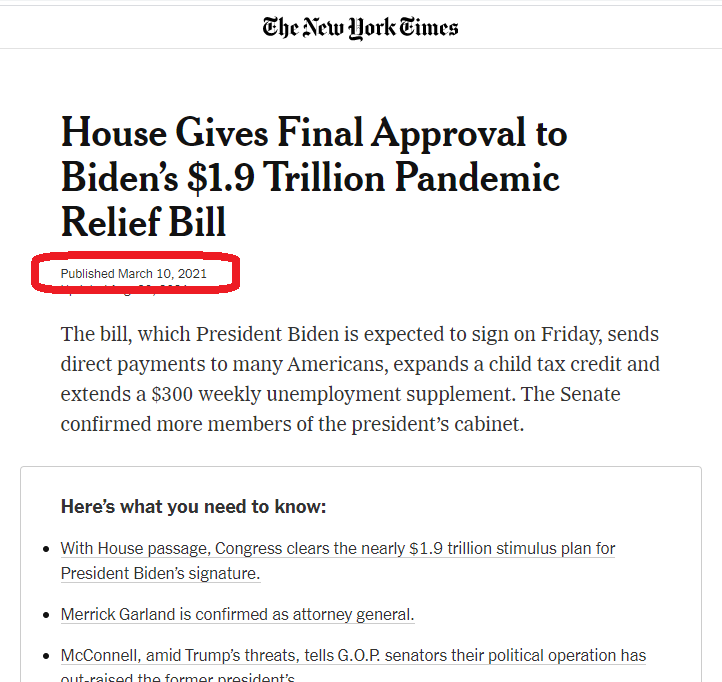
Esattamente sei mesi fa, il Parlamento degli Stati Uniti approvava il Piano Biden.

Nel mondo degli investimenti, sei mesi fa (180 giorni fa) tutti erano ottimisti. Molto ottimisti. Erano ottimisti Goldma Sachs, Morgan Stanley, UBS, Credit Suisse, Bank of America, BNP Paribas.

Erano ottimisti, molto, moltissimo, Azimut, FINECO, Fideuram, Mediolanum, Allianz e tutti i loro compari.

Erano tremendamente ottimisti i wealth managers, i private bankers, i personal bankers, i family bankers, i promotori finanziari, i consulenti. E naturalmente i robot advisors. Nessun dubbio nella mente e nessun problema all’orizzonte. E quindi nessuna prudenza nella gestione dei portafogli titoli.

Tutto questo 180 giorni fa.

2021_Jan_1164.png

Che cosa è cambiato, negli ultimi 180 giorni? Fatevi questa domanda, e guardatevi intorno: nella realtà della vostra vita, nel vostro quotidiano, nella realtà dei fatti intorno a voi, che cosa è cambiato in 180 giorni?

2021_Jan_1165.png

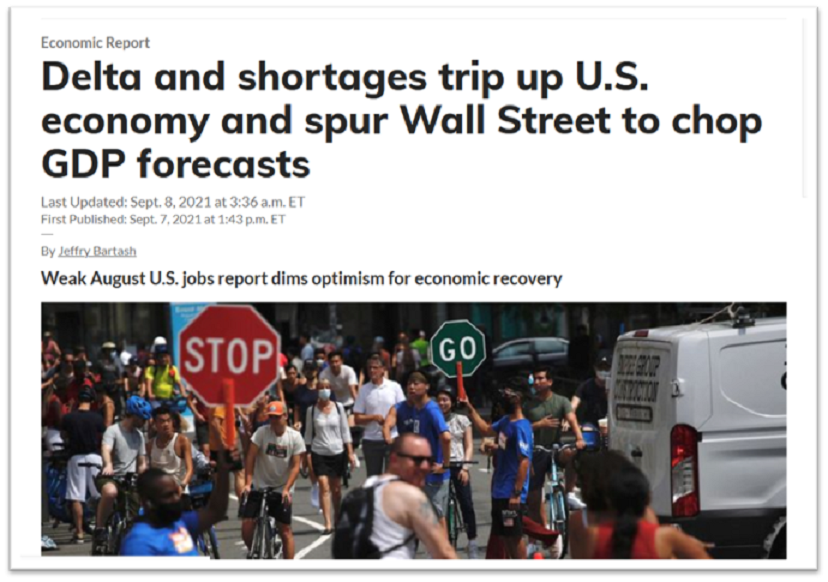
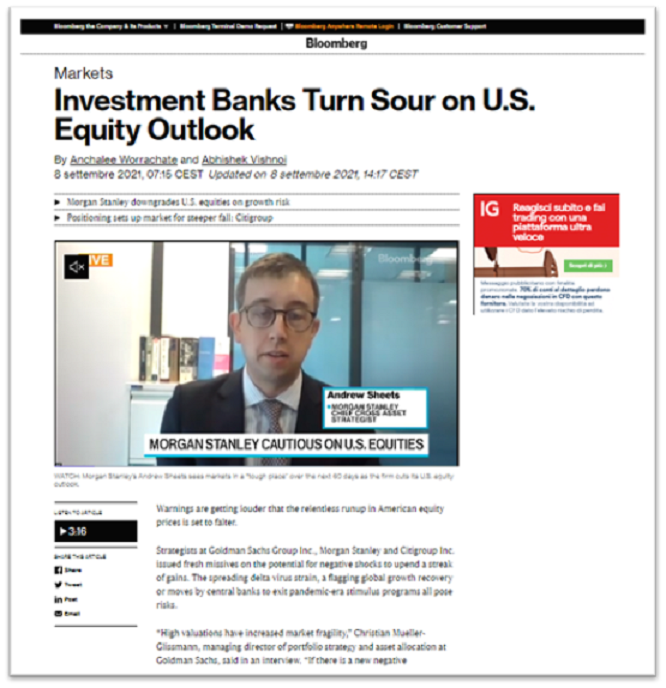
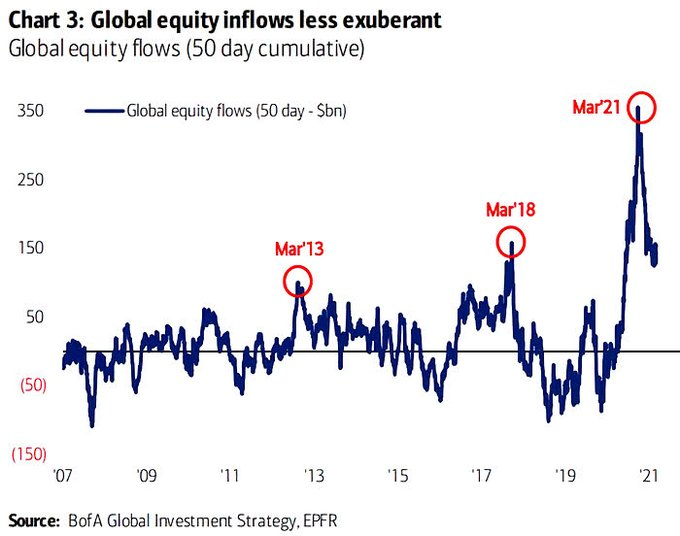
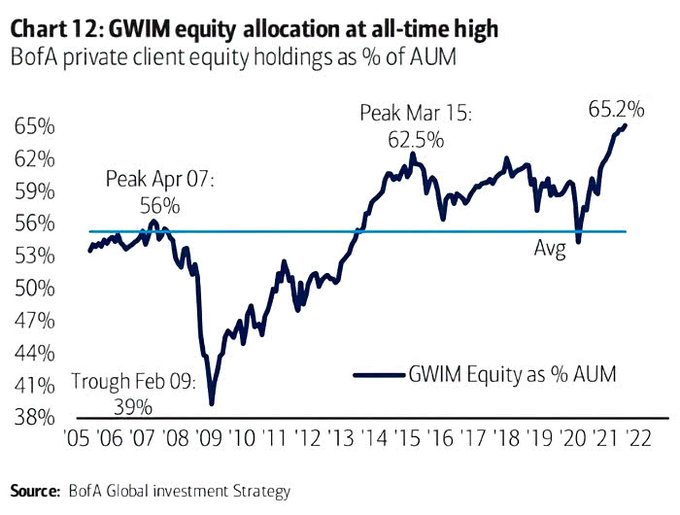
Le prime due immagini di questo Post a noi dicono che è cambiato tutto a Wall Street. Nel cuore della finanza internazionale. Sei mesi fa, tutti esuberanti, ottimisti ed eccitati. Solo 180 giorni dopo, tutti moderati, tutti spenti. Forse pessimisti?

2021_Jan_1170.png

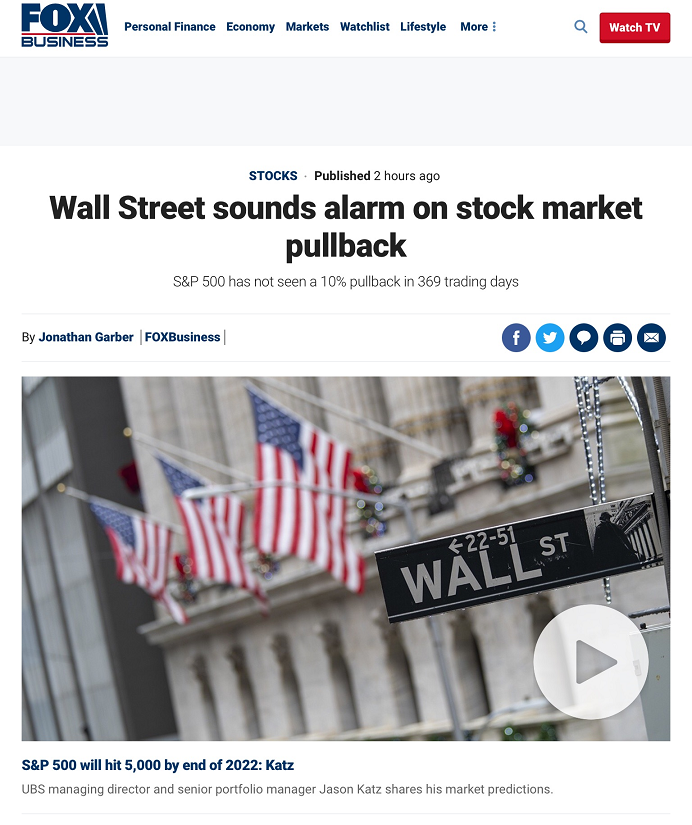
Il contrasto che salta agli occhi, il contrasto che suscita non solo perplessità ma proprio una grassa risata, è leggere (titolo sopra) che “Wall Street suona l’allarme sull’azionario”: pensiamo ai poveretti che solo tre mesi fa hanno investito sull’azionario, quando il loro promotore finanziario spiegava che “è il momento giusto per prendere più rischio in portafoglio”.

2021_Jan_1166.png

Il problema dove sta? Sta nell’immagine qui sopra, e nell’immagine qui sotto: il problema sono i Clienti. I Clienti di Goldman Sachs, i Clienti del wealth manager, i Clienti del promotore finanziario.

Come vedete nei due grafici (sopra e sotto) i Clienti sono stati indotti ad investire tutto sull’ottimismo. Sul boom economico senza inflazione. Su una crescita senza fine.

Questi qui sono fregati. Come sempre.

2021_Jan_1167.png

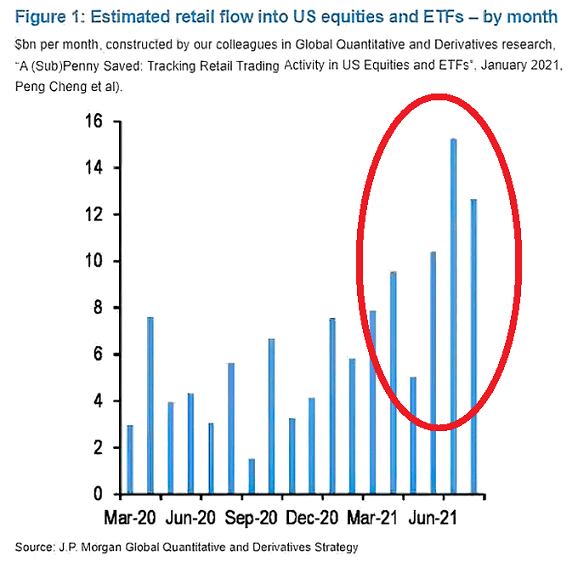
Per ciò che riguarda la gestione di qualsiasi portafoglio titoli, ed in particolare la asset allocation del vostro portafoglio titoli, la domanda oggi è una sola: cosa faranno quelli del circoletto rosso nell’immagine che vedete qui sotto?

2021_Jan_1172.png

Il cosiddetto “consenso” è cambiato nel corso del mese di agosto, come noi abbiamo scritto lungo titto il mese anche qui nel Blog, e come leggete anche nell’articolo che Recce’d ha selezionato per voi, qui di seguito. Un articolo che offre una sintetica ricapitolazione dei temi che oggi vengono discussi tra gli operatori sui mercati finanziari.

Delta worries, labor shortages and fading Washington stimulus — it’s enough to cast a chill on the U.S. economy this fall.

A bevy of Wall Street forecasters chopped their targets for U.S. growth after a poor U.S. jobs report for August. The government on Friday said the economy gained 235,000 new jobs last month — just one-third of what investors were expecting.

Goldman Sachs, Morgan Stanley, BMO Capital Markets, TD Securities and other firms cut their forecasts — some by more than half.

An economy that was expected to grow at a sizzling 7% annual pace from July through September is now seen expanding at a more modest 3% to 3.5% clip, Wall Street forecasts show.

The tepid pace of hiring naturally shone a spotlight on the damage delta is doing to the economy.

The companies that have been hurt the worst during the pandemic — restaurants, hotels, theaters and so forth — added zero new jobs in August. They had created an average of 364,000 new jobs a month since May.

Evidence of a slowdown was found in declining dinner reservations and hotel bookings. The number of people flying on planes also declined. Americans appeared to be more worried about venturing out and being in large crowds.

“The coronavirus situation has deteriorated over the last couple of months,” Goldman Sachs noted.

A possibly even bigger factor in the U.S. employment report is a lack of people willing to go back to work.

Businesses have been complaining for months that they can’t find workers and the August jobs report seemed to underscore the problem. The percentage of people in the labor force either working or looking for a job has been static for the past year.

It’s not just labor shortages, either.

Companies are struggling to obtain the parts and materials they need to produce enough goods and services to satisfy the surge in demand. Automakers in particular have had to cut back production owing to a global shortage of computer chips.

The result is that consumers are spending less because of delta, and even when they want to buy a new car or other goods, they are having trouble finding what they want.

Fading government stimulus could also weigh more heavily on the economy in the second half of the year.

Most of the stimulus cash has been doled out already, economists point out, and a multi-billion dollar infrastructure bill now before Congress is unlikely to shovel much money into the economy anytime soon. Most public works take a long time to plan and get underway.

So all doom and gloom, right? No. The delta wave appears to be cresting, for one thing. The states that experienced the biggest outbreaks early are now seeing cases on the decline.

Most consumers and businesses, what’s more, have adapted to the virus. So has government. Hardly any are putting in place the sort of strict measures that hurt the economy last year.

Businesses are also expected to keep hiring and more people will probably go back to work after the expiration on Monday of extra federal benefits for the unemployed. That will help ease — but not eliminate — the labor shortage.

At the same time, parts and supply shortages should also fade over time and release a big stranglehold on businesses.

“The bottom line is the expansion continues to progress, albeit at a slower pace,” Morgan Stanley economists predicted.

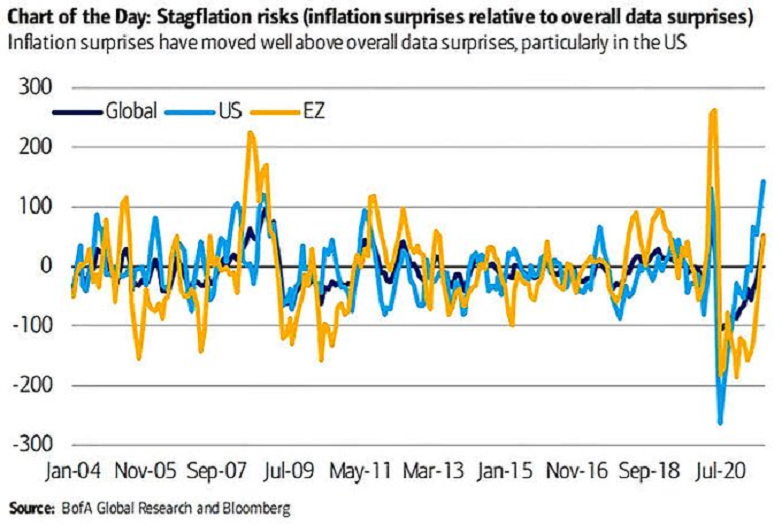
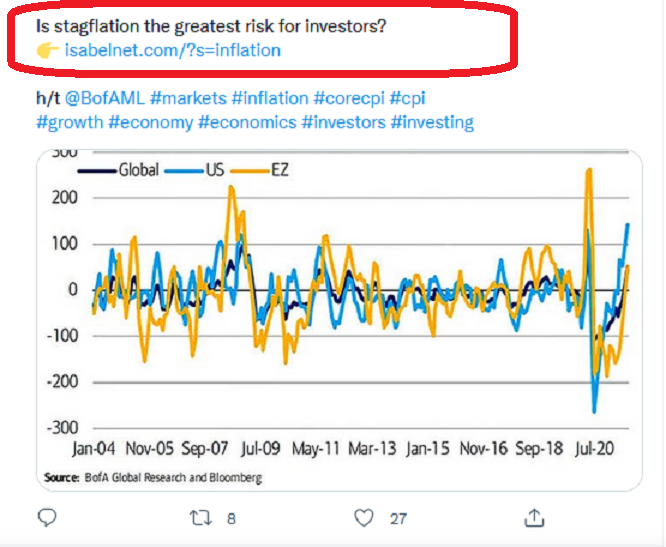
Nell’immediato futuro, che cosa succederà? Nelle prossime settimane, preparatevi ad assistere all’ennesimo capovolgimento. Lo scenario di sei mesi (180 giorni) fa nn va più bene, non si può più raccontare, è diventato ridicolo. Adesso, sui mercati si parla e si discute di stagflazione (immagine qui sotto),

2021_Jan_1168.png

La danza viene condotta così, e chi è capace di fare investimenti, chi è capace di investire, chi è capace di gestire un portafoglio in titoli, ne è ben cosciente. E’ consapevole che il mercato oggi funziona così: “prima li facciamo investire, poi li facciamo disinvestire, in perdita”.

2021_Jan_1169.png

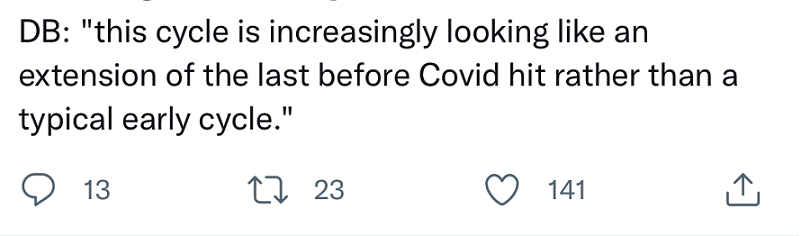
Tutta quanta la situazione che voi oggi vedete, su tutti i mercati finanziari, viene riassunta, nel modo più efficace, dalla frase di Deutsche Bank che leggete qui sotto nell’immagine. “L’attuale fase dei mercati finanziari non sembra l’inizio di un nuovo ciclo. Sembra piuttosto la continuazione del ciclo che era in atto prima della pandemia COVID”. Noi, ve lo avevamo scritto 12 mesi fa. Prima del Piano Biden..

L’articolo del Financial Times che vi regaliamo più sotto aggiunge alcuni elementi di valutazione per il futuro prossimo dei vostri investimenti.

Reserve Bank of Australia Governor Philip Lowe has a coffee mug in his office inscribed with the words “half full.” Lowe says he's an optimist about next year, as do many of his peers. They’ll have to make it through 2021 first. 

The global economy is in for a choppy future that may provide few convincing signals about the vitality and duration of the recovery. Just as analysts and investors were beginning to worry that growth was bouncing back too sharply and bottlenecks were adding to inflation concerns, the Covid-19 delta variant has stalled commercial activity. If we aren’t back to square one, we have lost significant ground.

That’s making central bankers’ task of reining in monetary accommodation — never easy in the best of times — even trickier. Proceed too fast and growth may be set back or, worse, policy makers have to stage a humiliating retreat. Go too slow and risk overheating, should the lull prove to be only a blip.

The varied approach of central banks around the world in recent weeks shows how difficult this needle is to thread. South Korea hiked interest rates and made clear there are a few more to come. New Zealand blinked on a widely forecast increase but wants to try again soon. The Federal Reserve is still likely to proceed with a cautious reduction in bond buying, but discouraging jobs numbers for August have raised questions about precisely when the process can begin.

Lowe opted Tuesday to split the difference. He went ahead with the RBA's planned taper of quantitative easing to $A4 billion ($3 billion) a week from A$5 billion, in what economists described as a close call. At the same time, he extended the timeline for the current pace of buying to February; initially the bank planned to review that amount in November. While gross domestic product will suffer a big decline this quarter thanks to lockdowns, the implication is that the fourth quarter will be better. The variant will “delay, but not derail” the recovery, Lowe said. His strategy is a neat way to be consistent with past communication on tapering while kicking the ball into next year. 

We’ll probably see more of these very small steps, followed by a generous amount of wait-and-see. There's little question the global economy is in better shape than it was a year ago, and far superior to the start of the pandemic. If the stimulus unleashed by global central banks was aimed at preventing a catastrophic financial crisis and nursing businesses and consumers to a recovery, then an important part of what it set out to do has been achieved. For all its severity, the U.S. recession was the shortest on record, 1 though employment remains well below pre-pandemic levels.

So while there isn’t yet a compelling case for adding to accommodation with additional measures, that doesn’t mean it’s the right time to reduce the amount of liquidity pumped in, either. The International Monetary Fund forecasts the global economy will expand 6% this year. On a country-by-country level, momentum has been lost: Goldman Sachs Group Inc. cut its forecast for U.S. growth this year while Morgan Stanley now puts expansion at 2.9% this quarter, down from 6.5%. China is trying to put a floor under a new slowdown. German investor confidence declined for a fourth month in September. Payroll gains in the U.S were the weakest in seven months in August and less than the most pessimistic forecast.

It’s inevitable that the recovery would cool from its torrid pace, but this is a tough time to be making decisions about changing direction, even if it's gradual. Policy makers need to be nimble without being too quick.

Asked in
 parliamentary testimony last month about the meaning of the phrase on his mug, Lowe said: “There is a great deal of uncertainty about how the economy is going to travel over the next few months and much depends upon the health situation, but the experience here and elsewhere is that, once the health situation is brought under control, the economy bounces back quickly.’’

Things have deteriorated in Australia and beyond since then. Still, Lowe seems prepared to look through the noise. Whatever picture emerges will determine the future of once-radical monetary steps, be they slowed, withdrawn or paused. The Fed, European Central Bank and People’s Bank of China face similar reckonings in the months ahead. Communication will be everything. Let's hope our monetary chieftains are at least half-way caffeinated.

The National Bureau of Economic Research’s business cycle dating committee, the academic panel that serves as the arbiter of U.S. expansion dates, said in July that key indicators of employment and production “point clearly to April 2020 as the month of the trough." Many countries define a recession as two negative quarters of gross domestic product. The bureau doesn’t use that definition and instead looks for a significant decline in economic activity, typically lasting more than a few months.

Mercati oggiValter Buffo